Archive for April, 2011

Of Gods and Men

April 10, 2011

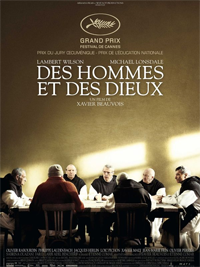
Of Gods and Men, a French film directed by Xavier Beauvois, is based on a real incident. It tells the story of a group of Trappist monks living in a monastery in the Atlas mountains during the Algerian Civil War of the 1990’s. The leader of the monks is Christian (Lambert Wilson). One of the monks, Luc (Michael Lonsdale), is trained as a doctor. He provides treatment for people from the nearby impoverished village. They learn that Islamist rebels have been targeting foreigners. An official urges the monks to return to France, because the government cannot guarantee their safety, but the monks refuse. Luc treats the wounds of one of the rebels. After that, the government suspects the monks of providing aid to the rebels. (In one scene, we see the look of disgust on an officer’s face when he sees Christian praying over the dead body of a rebel.) The monks try to maintain the routines of their existence, despite the pressures on them.

The film mostly depicts the daily lives of the monks. We see their rituals, their prayers, their chores, their dealings with the villagers. The slow pacing of this film may test some people’s patience, but Beauvois wants us to get a sense of how these monks experience time. They grapple with the question of whether they should stay or leave. Although they are afraid, they feel obligated to remain. They have completely committed themselves to their way of life.

In the film’s last scene, we see seven of the monks being led away by the rebels. In the end, faith, duty and honor are not enough to protect us in this world.

James Cockcroft

April 9, 2011

James Cockcroft, scholar, activist, and author of numerous books on Latin America; recently gave a talk on Mexico at the University of Oregon, to promote his new book, Mexico’s Revolution: Then and Now. He began by calling Mexico a “social volcano”. He pointed out that in the 2010 elections in that country, nearly half the eligible voters didn’t vote. There is a deep alienation from the government in that country. He said that after Felipe Calderón stole the 2006 presidential election from López Obrador, he launched a “reign of terror” in the name of the “war on drugs”. He put down the uprising in Oaxaca, and attacked political dissidents. Calderón claims to be fighting against the Mexican drug cartels, but what he has actually done is side with the Sinaloa cartel against the Juarez cartel. The leader of the Sinaloa cartel, who is known as “El Chapo”, is one of the richest men in the world. Every year, billions of dollars in Mexican drug money is laundered through U.S. banks.

Cockcroft argues that Mexico is not a failed state. Quite the contrary, it carries out all the tasks of neoliberalism. Rather, it is a state of failed law. Assassinations and kidnappings are common. The military controls whole regions of the country. 40,000 people are dead as a result of the “war on drugs”. Cockcroft believes that the formation of a civilian-military dictatorship is in progress. He also sees a U.S. occupation of Mexico as a real possibility. He pointed out the Mexican congress is considering a bill that would allow foreign troops to enter Mexican territory. And he claimed that U.S. drones are already flying over Mexico. Because Mexico is the third largest provider of oil to the U.S., as well as the U.S.’s largest trading partner, the U.S. has an interest in how the country is run.

Cockcroft sees three movements of resistance in Mexico: 1) the labor movement (non-corrupt labor unions), 2) the broad-based non-violent movement led by López Obrador, and 3) the Zapatistas. So far, these movements have been working independently. What is needed is for them to come together to challenge the government.

Cockcroft recalled that 105 years ago, the Mexican anarchist, Ricardo Flores Magón, predicted that if the Mexican Revolution were crushed, it would be a disaster for workers in the U.S. Corporations would move their factories south to exploit Mexican workers with no political rights. We saw this begin to happen with the ratification of NAFTA.

Cockcroft concluded by asking a question: Tunisia, Egypt, Libya, Madison, Mexico? He believes the seeds of revolt exist.

The day before his talk, I met Cockcroft at a dinner at a friend’s house. He told stories from his long career as a writer and activist. He recounted how when he was a student at Cornell in the 1950’s, he and some friends invited the black-listed writer, James T. Farrell, who wrote Studs Lonigan, to speak at their school. He arranged to have Farrell have dinner at his apartment, so he cooked some steaks To his amazement, Farrell ravenously devoured one steak after another. Cockcroft had to go out to buy some more, which Farrell duly wolfed down. “I’ve got nothing,” Farrell explained. “If you hadn’t invited me here, I don’t know what I would have done.” This was one of a number examples of he gave of the destructive effects of black-listing. He recounted something I had never heard before, which was that there was a wave of black-listing in the early 1970’s. Many left-wing academics lost their jobs and had to go to other countries to find work.

Cockcroft is a remarkable speaker, and if you get the chance to see him, I strongly urge doing so.
Look Homeward, Angel

April 3, 2011


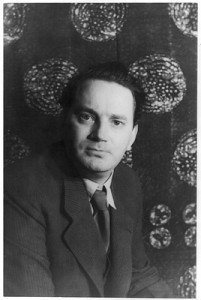
Thomas Wolfe

In his preface to his 1929 novel, Look Homeward, Angel, Thomas Wolfe admits that the work is autobiographical. The novel’s main character, Eugene Gant, is his alter ego, and the novel’s setting, the town of Altamont, is meant to represent Asheville, North Carolina; where Wolfe grew up. The novel is set in the early decades of the twentieth century. This book is by no means a Norman Rockwell celebration of small town life. Those who get teary-eyed over old episodes of The Andy Griffith Show or of The Waltons will not care for this work. Among other things, Wolfe depicts, with shocking bluntness, the racism and anti-Semitism of the town’s inhabitants. (The novel’s hero shares these views. This is clearly self-criticism on Wolfe’s part.) Moreover, they often come across as hypocritical. For example, Eugene’s father is a drunkard, yet he is also a noisy advocate of prohibition, because he thinks that will make him appear “respectable” in the eyes of his neighbors. And, of course, his neighbors completely buy it.

The story follows Eugene through high school and into college. Wolfe portrays the pedantry and philistinism of his professors, as well as the complacency of his fellow students. It seems some things never change.

Wolfe’s prose takes some getting used to. He is prone to launch into strings of poetic associations that are not always easy to follow. (This becomes less frequent as Eugene grows older. It seems to me that Wolfe was trying to convey the intense way that children experience things.) There are sudden changes in point-of-view and passages of stream-of-consciousness writing. Overall, the novel has a sprawling, shapeless feel to it, which has earned Wolfe the hostility of some critics. I, on the other hand, actually like its formlessness. To me, it mirrors the messiness of life as we actually experience it. I have too often read finely crafted novels that ultimately seemed to me to be pointless and dull.

I should warn the reader that Wolfe’s language may offend some people’s racial sensibilities. Wolfe was a product of his place and time: the South in the early twentieth century. What’s more, Wolfe, whose father owned a statuary business, was essentially petite bourgeois in his worldview. However, there is evidence that Wolfe was moving leftwards towards the end of his short life. (He died at the age of 38.) The terrible suffering caused by the Great Depression greatly affected him. He often expressed sympathy for socialist politics.

It’s clear to me that Wolfe must have influenced Ray Bradbury. There is a scene at the end of the novel, in which Eugene meets the ghost of his older brother, which was Bradburyesque before there was Bradbury. Bradbury’s Dandelion Wine is similar to Look Homeward, Angel, although it is sentimental, which Wolfe never is.

Look Homeward, Angel is a rich, hearty meal of a novel. I highly recommend it.