Archive for the ‘Cinema’ Category

Tomboy

April 14, 2012

In Tomboy, the French director, Céline Sciamma, has created a touching and sensitive film about children. Laure (Zoé Héran) and her family have just moved to a new town one summer. Laure decides to make the children she meets think she is a boy named Mikael. Her masquerade is highly successful at first. She becomes romantically involved with a girl, Lisa (Jeanne Disson), who thinks she is a boy. However, her imposture is inevitably revealed.

Tomboy is an examination of how ideas about gender shape children’s sense of identity, as well as their sense of self-importance. It also touches upon how children pick up homophobic ideas from society. After Laure’s real sex is revealed, a boy tells Lisa that it is “disgusting” for girls to kiss one another. Lisa feels compelled to agree, even though she kissed Laure in an earlier scene.

The story is told through a series of quiet vignettes involving either Laure playing with the other children or dealing with her family. The scene in which the other children confront Laure about her deception is emotionally wrenching, but Tomboy never veers into melodrama the way all too many films about childhood trauma do. I found all the child characters in this movie completely believable. Sciamma must be a highly skilled director to be able to get such unaffected performances from children. I highly recommend seeing this film.

Titanic in 3D

April 13, 2012

James Cameron’s Titanic has been re-released in 3D. I was going to use this as an opportunity to write a snarcky review of the film, but Lindy West at Jezebel.com has beaten me to the punch. So, instead I will make a few observations about this movie and what it tells us about Hollywood.

I well remember the year that Titanic first came out. At the risk of sounding melodramatic, I must say that this was a dark period of my life. Everywhere I turned, it seemed, people were talking about how Titanic was the greatest movie ever made. Those of us who found this film vapid and pretentious began to feel like a beleaguered minority. I will never forget the vitriol that was heaped upon Kenneth Turan, the film critic for Los Angeles Times, when he admitted that he hated Titanic. (Turan’s comments provoked a public tantrum from Cameron.) I felt a bit like that character in Ionesco’s Rhinoceros, who watches while other people turn into irrational beasts. Fortunately, this time the response to the film has been more muted. Perhaps this is because America is a different place from what it was in the 1990’s. Titanic 3D has been overshadowed by The Hunger Games, a darker and more disturbing film. After the wars in Iraq and Afghanistan, it seems, people are less inclined to go all to pieces over a sappy romance.

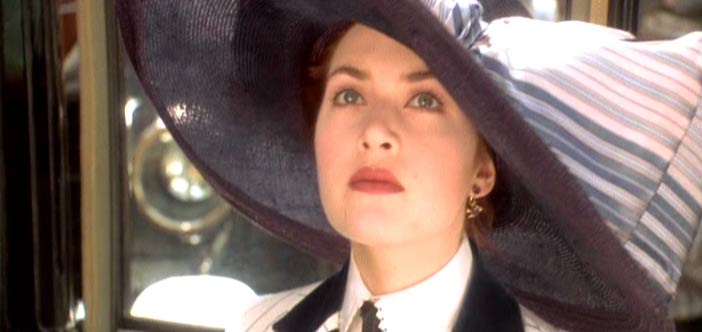
Titanic won the 1997 Academy Award of Best Picture. It beat out L.A. Confidential, which was a better film. The Academy tends to give the Best Picture Award to movies that are considered “uplifting”. This year they gave the award to The Artist, which is a saccharine fairy tale depiction of Hollywood. Last year, they gave it to The King’s Speech, which romanticizes the British royal family. Titanic fits into this pattern. True, 1,500 people freeze to death in the North Atlantic, but Kate Winslet is saved from an unhappy marriage, so everything turns out all right after all. One can see why the Academy preferred this film to L.A. Confidential, which is about corrupt, racist cops – clearly not a movie that makes you feel good about the world. (Besides, as we all know from watching police dramas on TV, cops are never corrupt and racist, are they?)

I know that some will say that I’m being a grump, that Titanic is just meant to be fun. Titanic, however, is not supposed to be escapist fantasy like John Carter. It purports to be an accurate depiction of a real and tragic historical event. (Cameron reportedly went out of his way to make sure the correct star field was in the night sky.) For that reason, it has to be held to a higher standard. The story of the Titanic deserves better than corny dialogue and melodrama.

John Carter

April 9, 2012

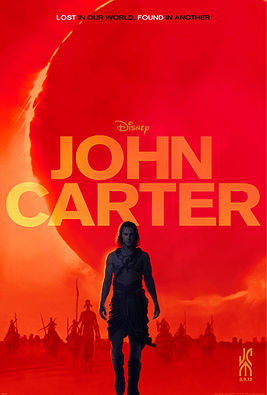
When I was a kid, I read Edgar Rice Burroughs’s Barsoom (Mars) novels. The first few, anyway. I don’t remember much about them, except that the characters struck me as a bit slow. It would take them a long time to figure out things that were immediately obvious to me. So I stopped reading them. However, I’m told that some people have fond memories of these books. One of these is the director, Andrew Stanton, who in John Carter, based on the first novel of the series, A Princess of Mars, has recreated in loving detail Burroughs’s fantasy vision of Mars. I’m starting to think that perhaps I was too hard on the books, for I found this film entertaining, a pleasant way to pass two hours. No one does anything really dumb, except for John Carter, who throws away a medallion that enables him to travel between Earth and Mars. (This turns out to be a big mistake.) One thing that did bother me is that there are a lot of sword fights in this film. I’ve never understood why they have sword fights in science fantasy movies. Why would people who have the technology to make guns use swords? (This is one of the problems I’ve always had with the Star Wars films.)

John Carter cost an enormous amount of money to make, and it is widely believed that it will end up losing money. I think that is a shame, for – dare I say it? – this is actually a better film than Martin Scorceses’s Hugo or Stephen Speilberg’s The Adventures of Tintin. The action scenes all advance the story, and the characters are believable (within the logic of their fantasy world, that is). And there are none of those annoying slow-motion shots that mar Sherlock Holmes: Game of Shadows.

John Carter is played by an actor with the perhaps unfortunate name of Taylor Kitsch. I must say he acquits himself reasonably well in the role. His love interest, Princess Dejah Thoris, is played by Lynn Collins, who is extremely good (think of a sort of an American version of Noomi Rapace).

In perhaps the ultimate nerd touch, we are told that this film is dedicated to Steve Jobs, who, we are told, “inspired us all”. Really? By making overpriced gadgets and exploiting cheap labor in China? Would John Carter have approved of that?

The Hunger Games

March 30, 2012

The Hunger Games is set in a dystopian future in which a group of teenagers are forced to fight to the death on live television. One of the interesting things about this film is its implied criticism of so-called “reality” TV shows. Suzanne Collins, who wrote the novel on which this film is based, has said that she got the idea for it when she switched from a reality TV show to coverage of the U.S. invasion of Iraq. She said the two “began to blur in this very unsettling way”. Indeed, the Iraq invasion was covered somewhat like a reality show. The military and the media colluded, for example, in concocting a fake “dramatic” story about a female army private being held prisoner by the Iraqis. This took place in a context in which innocent civilians were killed. The Hunger Games presents a future in which state-sanctioned murder has become a form of entertainment.

This is a well-made film that is superior to your usual Hollywood blockbuster. It features complex characters and strong performances. I must say, though, that I found some of the fight scenes hard to follow. Also, I would have liked to learn more about the politics of this future world. How does the regime justify itself ideologically? There are extremes of wealth and poverty. Clearly there is exploitation here, but how is it carried out? Perhaps we will learn more about this is the promised sequels.

Early on in The Hunger Games, we see a government propaganda film that starts out by decrying the horrors of war, which then leads into a justification of the blood-letting in the games. This is an interesting portrayal of how, in politics, idealistic language is often used to justify monstrous behavior.

Tinker Tailor Soldier Spy

March 2, 2012

I was not certain whether I should go see the recent film version of Tinker Tailor Soldier Spy, since I vividly remember the television mini-series that starred Alec Guinness as George Smiley. I was afraid the film would not live to up that, but I found it entertaining. Tomas Alfredson has directed a highly polished film that features strong performances. It is perhaps unavoidably a bit hard to follow at times, since it squeezes John le Carré’s sprawling novel into a two-hour film. (Here is the one area where television has an advantage over cinema: one can tell a story over a longer period of time.)

Gary Oldman is good as Smiley, although I prefer Guiness’s performance. Oldman makes the character seem a bit too much like Obi-Wan Kenobi (who was played by Guinness, interestingly enough), a wise old father figure. Guinness did a better job of conveying the character’s insecurities and moments of self-doubt.

In case you don’t know, the film, which takes place during the Cold War, is about a retired intelligence agent, George Smiley, who is called back into service to uncover a Soviet mole who has infiltrated the top level of Britain’s intelligence service. I might have liked this film better if it had dealt more with the political issues of the Cold War. When, for example, Smiley finally confronts the mole, the latter gives a vague explanation of his betrayal. He says the West has “gone to Hell”, although he doesn’t say why he thinks this. One does get the impression that le Carré himself took a lesser evil view of the West. The Soviet agents in this film torture and kill people, whereas the British agents are merely bullying and deceitful.

The Woman in Black

February 25, 2012

When I read Stephen King’s The Shining, I was struck by the fact that I knew everything that was going to happen before it happened. I wondered whether it was possible to do anything new in the horror genre. (In his film adaptation of The Shining, Stanley Kubrick mostly made it into a psychological thriller.) Horror films in recent year s only seem to recycle ideas. The last movie that I found genuinely frightening was the 1998 Japanese horror film, Ring.

The Woman in Black is directed by James Watkins, from a screenplay by Jane Goldman, loosely based on the novel by Susan Hill. It covers familiar ground, but it tries to make up for it by being visually appealing.

The story is set in England during the Edwardian period. Arthur Kipps (Daniel Radcliffe) , a solicitor from London, is sent to a small town on the English coast to settle the estate of a deceased widow. The townspeople are secretive and unfriendly. They not so subtly hint that Arthur should leave. They seem to know something he doesn’t. Unfazed, Arthur goes out to the widow’s house to look for legal papers. The place is called Eel Marsh Manor. (With a name like that, you know there’s going to be trouble). It is located on an island in the middle of a saltwater marsh. It can only be reached when the tide is low. The house is abandoned and surrounded by overgrown shrubbery. When Arthur searches the place, right away he hears strange noises. Through a window, he sees a woman dressed all in black. A lesser man would flee in such circumstances, but Arthur is staunch and fearless, albeit a little slow on the uptake. He is determined to get to the bottom of things.

Watkins has tried to make up for the script’s weaknesses by directing the film in stylish manner. The shots of the island and of the vast saltwater marsh are beautiful. Eel Marsh Manor has everything you could want in a haunted house. The sets were designed with loving attention to detail. Yet the film’s sumptuousness can’t hide the fact that we’ve been here before. Mysterious faces appear and disappear in windows. Doors seem to open and close by themselves. Wind-up toys suddenly start up. People suddenly speak in strange voices.

The Woman in Black will likely appeal to people who are nostalgic for old haunted house movies, but it doesn’t break any new ground.

The Secret World of Arrietty

February 20, 2012

The Secret World of Arrietty is a Japanese anime film that is loosely based on Mary Norton’s popular children’s book, The Borrowers. The screenplay was written by Hayao Miyazaki and Keiko Niwa. It was directed by Hiromasa Yonebayashi. The credits list Miyazaki as a “developing planner” for the film. Not surprisingly it has a look and feel similar to his earlier works.

Sean is a sickly boy who is sent to stay with his great-aunt, Jessica, in the house his mother grew up in. He eventually learns that there is a family of little people, who are 10 cm tall, living under the floorboards of the house. They call themselves “Borrowers”, since they live by “borrowing” things from the humans (who they call “beings”) who live in the house. They believe themselves to be members of a dying race. The family consists of fourteen-year-old Arrietty, her father, Pod, and her mother, Homily. Sean sees Arrietty’s on a couple of occasions, and he eventually succeeds in communicating with her. When Pod learns of this, he tells the family they will have to leave, for it isn’t safe for Borrowers to remain in a house after “beings” have discovered them. They begin preparing to leave. Meanwhile, Sean tries to help them by giving them furniture from a doll’s house, but this only leads to the family servant, Hara, learning of the Borrowers’ existence. She begins plotting to capture them (although the film never makes clear what she plans to do with them). She captures Homily and puts her in a jar. Sean then helps Arrietty to rescue her mother.

The best thing about this film is the detailed and convincing fantasy world it creates. The insides of the walls of the house are a fantastic landscape through which the Borrowers travel, walking on enormous nails and using tiny ropes to haul themselves up. The house that the Borrowers live in is put together from scraps and odds and ends that they find, including postage stamps as wall decorations. And when they go outside the house, the lawn is like a jungle, where they< have to avoid deadly creatures, such as cats and crows

The Secret World of Arrietty lacks the haunting, dream-like quality of Spirited Away, but it is nonetheless an entertaining fantasy adventure.

Troubled Water

February 19, 2012

Troubled Water is a 2008 film by the Norwegian director, Erik Poppe, from a screenplay by Harald Rosenløw Eeg. A teenager, Jan Thomas (Pål Sverre Valheim Hagen), and another boy steal a stroller, resulting in the death of a four-year-old boy. Jan is sent to prison, where he learns to play the organ and performs in religious services. At the recommendation of the prison pastor, Jan, who is now an adult, is paroled and he applies for, and gets, a job as an organist at a Lutheran church. He eventually becomes romantically involved with the church’s priest, Anna (Ellen Dorrit Petersen), while becoming a father figure towards her young son, Jens, who bears a resemblance to Isak. By chance, Isak’s mother, Agnes (Trine Dyrholm) learns that Jan is working at the church. Still haunted by her son’s death, she begins following Jan and learns of his relationship with Jens. She convinces herself that Jan is going to harm Jens, so she ends up abducting the latter, creating a crisis not only for Jan and Anna, but also for Agnes’s own family.

The first half is shown from Jan’s point-of-view, and the second half is shown from Agnes’s point-of-view. There are two main issues in this film. The first is Jan’s unwillingness to admit his responsibility for a terrible crime. The second is Agnes’s unwillingness to forgive Jan or to even see him as a human being. These issues feed off each other during the course of the movie, resulting in its terrifying climax.

Troubled Water is a highly intelligent drama that argues for the necessity of moral responsibility, understanding, and forgiveness. The film benefits from good performances from the cast. Dyrholm is especially powerful as Agnes. She makes the character’s growing anxiety and paranoia convincing. I wish this film had wider distribution here in the US, for it touches upon issues that are relevant to the debate over the death penalty.

The Artist

February 13, 2012

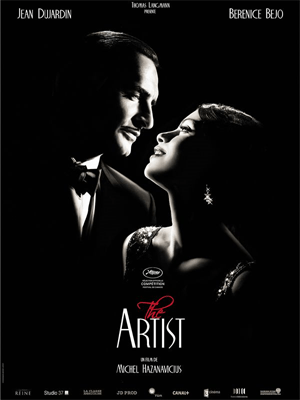
The Artist, written and directed by Michel Hazanavicius, is an homage to the silent film era. There is no recorded dialogue in most of the film. It is described as black-and-white, although it is clear that it was shot in color and then photoshopped into grayscale. (Compare this to any black-and-white film from the 1930’s, and you can see the difference.) Presumably this is because black-and-white film has become prohibitively expensive. It was shot in the 1.33:1 screen ratio that was commonly used up until the advent of television. The period detail is fairly accurate, although in one close-up shot one can see that Dujardin is wearing a synthetic moustache. And in one scene, when two of the characters meet on an upper story staircase in a movie studio (most studio buildings are only one or two stories), there are so many extras rushing back and forth in the background, the place looks almost like an ant colony.

The story is largely lifted from A Star is Born, with a bit of Sunset Boulevard and the Rin Tin Tin movies thrown in. Geroge Valentin (Jean Dujardin) is a silent film star who appears in adventure movies with his dog, Jack. By chance, he meets an extra, Peppy Miller (Bérénice Bejo), and he is immediately taken with her. He persuades a reluctant producer (John Goodman) to give her a bit part in a movie. Within a few years, Peppy (don’t you hate that name?) becomes a big star. When sound films are introduced, Valentin dismisses them. He uses his own money to finance a silent film. However, it comes out the day after the stock market crashes. What’s more, a sound film starring Peppy premieres the same day, and everybody goes to see that. George loses his shirt, and he drifts into poverty and alcoholism. He sells off most of his belongings at an auction, where they are secretly bought by Peppy, who hasn’t forgotten him. However, George’s loyal manservant, Clifton (James Cromwell) stays with him, even though George can no longer pay him. Clifton reluctantly leaves only after George orders him to. (We’re supposed to believe this?) Depressed, George burns his old films, and his house catches fire. Jack runs to alert a policeman, and George is saved. While George is lying unconscious in a hospital, Peppy arranges to have him moved to her home, where, coincidentally, Clifton now works. When he wakes, George wanders through Peppy’s house, where he finds a room full of his old belongings. Shocked, he returns to his house, where he prepares to shoot himself, while Jack pleads with him not to. Peppy shows up and apologizes. The film ends with Peppy and George dancing in a musical number.

The Artist has some amusing moments. For example, when George learns of the new sound film technology, he has a nightmare is which he hears sounds. For the most part, however, I felt as though I had been here many times before. (Think of those movie spoofs on the old Carol Burnett Show.) Hazanavicius says this movie is meant as a tribute. Yet, by filling it with clichés, he shows a condescending attitude towards the silent films he supposedly adores.

Drive

February 11, 2012

Drive is a film directed by Nicolas Winding Refn, from a screenplay by Hossein Amini, from a novel by James Sallis. The Driver (Ryan Gosling) works as a mechanic, as a stunt driver, and as a getaway driver for robberies. He gets into a relationship with his neighbor, Irene (Carey Mulligan), who has a son, Benicio (Kaden Leos). Irene’s husband, Standard Gabriel (Oscar Isaac), returns from prison. He owes protection money to a gangster. The Driver agrees to help him rob a pawn shop. It quickly becomes apparent that the two of them have bee set up.

Drive is a fairly simple gangster story, full of double crosses and car chases. Unfortunately, Refn tries to give the film artistic touches. There are shots of the Driver and Irene gazing into each other’s eyes or into the distance, while pop music blares on the soundtrack. There are also overhead shots of Los Angeles, to remind us, I suppose, that the film takes place in Los Angeles. I would have liked Drive better without such moments. A film like this only needs dialogue and action. It needs to be a “good, swift, violent story” as Dashiell Hammett would have said.