Archive for the ‘Cinema’ Category

Inside Job

November 19, 2010

It is generally accepted that the 2008 financial meltdown was due to criminal behavior by the banks and by Wall Street investment firms, yet no effort is being made to bring these people to justice. Indeed, it is well known that the people responsible for the crisis have gotten richer, while millions of people who lost their jobs are still without work.

The documentary filmmaker, Charles Ferguson, is one person who refuses to accept this state of affairs. His film, Inside Job, is a thorough examination of the events leading up to the meltdown. One of the things I liked about this film is that it is unsparing towards the Obama Administration, pointing out, among other things, that it has done virtually nothing to address the problems that led to the crisis. (This is a refreshing change from the fatuous celebration of Obama’s election victory in Michael Moore’s Capitalism: A Love Story. Years from now, people will watch that film and wonder what the hell Moore was talking about.) Another thing that I liked is that the film goes after academia, exposing the cozy relationship between university economics departments and private corporations.

One thing there could have been more of in the film is a discussion of the impact the crisis had lives of ordinary people. There is a brief segment on a couple who were conned into getting a mortgage they couldn’t afford, but no more than that. Then again, since audiences have lived through the economy of the last few years, perhaps they don’t need to be told this.

The film talked about my former employer, Countrywide Home Loans. I worked for them briefly at the time when the company was raking in money. (I didn’t last long there, I’m proud to say.) I worked in an office they had at the foot of the beautiful Santa Suzannah mountains in northwest Los Angeles. I was with a group of about thirty new hires who were being trained. A top executive from the company came to speak to us. She told us that the company’s entire income came from charging late fees on mortgage payments. (I will never forget the expression of glee on this woman’s face as she told us this.) Perhaps I was in a state of denial, but it wasn’t until I left the company that I began to put two and two together. If all their income came from late fees, they had to be luring people into getting mortgages that they couldn’t afford. At that time, Countrywide was being celebrated as one of the great success stories of American capitalism. I remember they had offices all over the Los Angeles area. A few years later they were bankrupt.

The way things are going, it looks as though there will be more Countrywides, another boom and another bust, unless people fight back against this insane system.

I strongly urge you to see Inside Job.

Mao’s Last Dancer

November 8, 2010

Mao’s Last Dancer, a film by the Australian director, Bruce Beresford, tells the story of the Chinese dancer, Li Cunxin. It is based on his autobiography. As a child, Li is chosen to attend the Beijing Dance Academy. Later, as a young adult, he goes to the United States as an exchange student. There he falls in love with an American dancer. When it comes time for him to return to China, he marries her. When he goes to the Chinese consulate to report the marriage, he is detained. An international incident ensues, in which the U.S. government negotiates for Li’s release. The consulate finally allows him to go, but they tell him that he can never return to China, and he can never speak to his family again. His marriage eventually falls apart, but all ends happily when he is reunited with his family.

Mao’s Last Dancer is not a bad film, but I didn’t find it emotionally engaging. I suppose this is because it predictably follows the pattern of so many biopics that I’ve seen: the hero encounters adversity and manages to overcome it. The most interesting parts are the ballet scenes. (Chi Cao, who plays Li as an adult, is a superb dancer.) The film touches upon the destructive effect the Cultural Revolution had on the arts in China (one of Li’s teachers is accused of being a “counter-revolutionary”). Overall, it is implicitly critical of Maoism, although it was apparently made with the cooperation of the Chinese government.

Consider this a lukewarm recommendation.

The Town

November 1, 2010

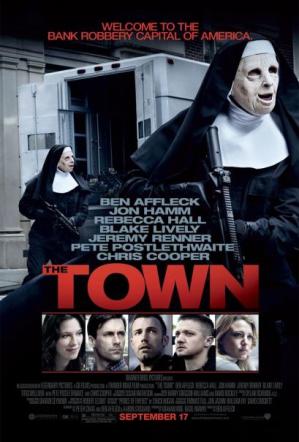
I will never let anybody speak badly of Ben Affleck to me again. The Town is one of the most entertaining films I’ve seen in years. It’s set in the Charlestown neighborhood of Boston, a place that I remember with some fondness. (My old friend, Tony V., has a supporting role.) The film is directed by Affleck and is based on Chuck Hogan’s novel, Prince of Thieves. It tells the story of a Charlestown criminal, Doug MacRay (Affleck). When MacRay and his friends rob a bank, they take a bank manager, Claire Keesey (Rebecca Hall), as a hostage, but they later release her. Later, Doug meets Claire in a laundromat. She is unaware that he was one of the robbers. The two strike up an affair. Doug’s hot-headed associate, Jem (Jeremy Renner), is displeased when he learns of the relationship. Doug and his criminal gang all grew up together, and their feelings of loyalty towards one another are strained when Doug decides he wants to go away with Claire and start his life over again. An FBI agent, Adam Frawley (Jon Hamm), also learns of the affair and tries to use it to trap MacRay.

The Town is basically a cops and robbers film that is very well done. The characters are believable; they remind me of people I met when I was living in Boston. (I also like that they made the FBI agent a dick.) The robbery scenes are slickly done, and the acting is very good. There is one thing that bothered me about the film, however. At the beginning, it is claimed that Charlestown produces more bank robbers than any place else in the world. I have since learned that this hasn’t really been true since the 1990’s. I can only suppose that the film makes this claim for dramatic effect, though this seems a bit a silly to me. I would have liked it if the film had spent more time exploring Boston’s criminal underworld, rather than making dubious claims. Still, I highly recommend this movie.

Cropsey

October 27, 2010

Cropsey, which is dubiously advertised as a “horror-documentary”, is a film by Joshua Zeman and Barbara Brancaccio. It examines a series of disappearances of children on Staten Island in the 1970’s and 1980’s. The film begins with a discussion of urban legends, common throughout the Hudson River Valley, about a character named Cropsey, who murders children. Zeman recounts being told stories about Cropsey by counselors at a Boy Scout camp on Staten Island. In these stories, Cropsey lived in the abandoned buildings of the Willowbrook State School. This was an institution for the mentally retarded that was closed down in the 1980’s, after Geraldo Rivera did an exposé on the inhuman conditions there. (Yes, Rivera was once a serious journalist, believe it or not.)

From urban legends the film proceeds to reality. In 1987, a little girl with Down’s Syndrome disappeared on Staten Island. After an intensive search, her body was found in a shallow grave. The police eventually arrested Andre Rand, a homeless man who camped near the grounds of Willowbrook, where he once worked. Rand was eventually found guilty of kidnapping, but the jury could not agree on a verdict for murder. Since then, some people have questioned whether Rand was guilty. No physical evidence was found to connect him to the murder. The case against him relied entirely on eyewitness testimony. (The filmmakers correctly point out that eyewitness testimony can be unreliable, a point that is often ignored in our criminal justice system.) The filmmakers interview police officers and others who were involved with the case, as well as Rand’s defense attorneys.

From there the film proceeds to a discussion of the community’s reaction to Rand’s arrest and conviction. Shortly after Rand’s arrest, stories began to go around that Rand was the leader of a Satanic cult that would have meetings in the abandoned Willowbrook buildings. To this day, rumors abound that Satanists meet at night in the buildings. In a questionable act of bravado, Zeman and Brancaccio go to Willowbrook at night to see if there is any truth to these stories. There, not surprisingly, they fumble around and manage to spook themselves. They begin to seem like an inept version of Scully and Mulder from The X-Files. They don’t find any Satanists, but they do come across a group of teenagers, doing the silly things that teenagers do in a place like that. These kids solemnly tell the filmmakers that the stories about Satanists are true, even though they’ve never seen any themselves.

During the filming of this documentary, Zeman and Brancaccio corresponded with Rand and spoke with people who knew him. From these letters and interviews, a portrait of Rand gradually emerges, and it turns out to be more disturbing than any urban legend. It prompts the filmmakers to suggest the disappearances of the children were in a way connected with the inhumanity of what went on at Willowbrook.

Cropsey is a rich, multi-layered documentary that touches upon issues such as what urban legends say about us, the reliability of our criminal justice system, the sensationalism of the media, the way our society treats the mentally handicapped, and the question of whether we can really know the truth about past events.

Highly recommended.

Never Let Me Go

October 25, 2010

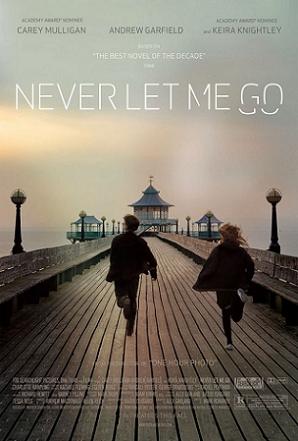
Since I wrote a post about Never Let Me Go, I felt obligated to go see it. In my post, I wrote that the trailer made it look like “one of those self-consciously arty, but decidedly middlebrow, British films”. Well, it turns out that is pretty much what it is, though the word “middlebrow” is perhaps too kind.

The film is set in an alternate universe, in which clones are created and then killed as adults and their organs harvested. (The word “clone” is never actually used in the film. Instead the people are referred to as “donors”.) The donors are required to keep themselves in good health, so they are forbidden to drink or smoke or do drugs; and they live in special residences. What little story this movie has is concerned with a romantic triangle among donors who grow up together: Kathy (Carey Mulligan), Tommy (Andrew Garfield) and Ruth (Keira Knightley). As adults they hear a rumor that two donors can get a referral if they can prove they are in love with each other. In the film’s climactic scene, Kathy and Tommy tell the former headmistress of the school they went to, Miss Emily (Charlotte Rampling), that they are in love with each other. However, she tells them the story of deferrals is a myth, and there is nothing they can do to change their fate. The film ends with Kathy looking over a field and musing that the lives of people aren’t much different from the lives of donors. Yeah, right.

The problem with this movie is that the behavior of the characters is completely unbelievable. It never occurs to anyone to try to run away or to rebel or even to protest. They don’t even rebel in a passive manner by drinking or doing drugs or smoking. (If you’re only going to live a few years, you might as well smoke.) If the women got pregnant, this would cause problems for the program, yet this never seems to occur to anyone. Because the characters are so unreal, it’s impossible to care about them. The morose background music doesn’t help.

While workers and students are protesting against neoliberalism in France, art house movie theaters in the U.S. are showing a film about people who meekly accept their exploitation and murder. This is one of the things that are wrong with this country.

Soul Kitchen

October 24, 2010

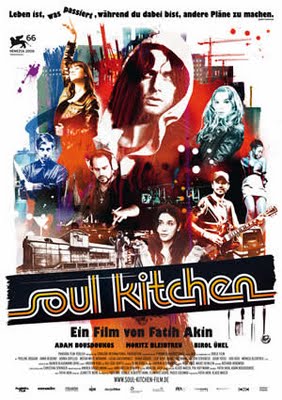
Soul Kitchen is the latest film from the German director, Fatih Akin. I’ve seen two previous films by Akin: Im Juli and The Edge of Heaven. The first is a mildly amusing romantic comedy, and the second is a “serious” film that I found shallow and dishonest. (The Edge of Heaven won the Cannes Film Festival award for best screenplay. I guess that tells us how reliable film festivals are.) His latest film is a return to comedy, a move that seems to me to be well-advised.

Soul Kitchen tells the story of Zinos Kazantsakis (Adam Bousdoukos), a restaurant owner in Hamburg. Zinos does all his own cooking, but when he injures his back, he hires a hot-tempered cook, Shayn (Birol Ünel) to take his place. Shayn’s innovative menu makes the place a hit with Hamburg’s trendy art crowd. However, a greedy businessman, Thomas Neumann (Wotan Wilke Möhring) covets the building that Zinos owns. When Zinos leaves for China to join his journalist girlfriend, Nadine (Pheline Roggan), he puts his criminally inclined brother, Illias (Moritz Bleibtreu), in charge of the restaurant, with disastrous results.

Soul Kitchen is a better film than the earlier works I mentioned. The characters are more well-rounded and believable, and there is none of the high-minded pretentiousness of The Edge of Heaven. I found the film mostly funny, though I thought some of the slapstick was overdone. (In one scene, we are supposed to laugh when a man is thrown against a cement floor.)

Akin is the son of Turkish immigrants, and his previous films have touched upon the problems confronting immigrants in Germany. There isn’t much of that in Soul Kitchen, although it is perhaps significant that the odious Thomas refers to Zinos as “the Greek”. In one scene, it is implied that Shayn has difficulty finding work because he is Roma. Aside from that, there aren’t any politics in the film, although, considering the dismal preaching in The Edge of Heaven, that is probably a good thing.

A Woman, a Gun and a Noodle Shop

October 21, 2010

Instead of seeing Never Let Her Go, I went to see Zhang Yimou’s A Woman, a Gun and a Noodle Shop. The title made me think it would be another goofily entertaining Asian Western knock-off, similar to Kim Ji-woon’s The Good, the Bad, the Weird. Instead, it turned out to be a remake of the Coen Brothers’ Blood Simple, albeit with the setting changed to the Gobi desert some time in the past. I must admit that I’ve never gotten around to seeing Blood Simple, so I can’t compare this film with the original.

The story tells of a noodle shop owner, Wang, who learns that his wife is having an affair with his assistant. He offers to pay a local policeman to kill them. However, instead of killing the couple, he steals a gun belonging to the wife. (She bought it off a Persian trader who speaks English and wears a pirate costume.) He then goes to Wang and makes him believe he killed the couple. Wang gets the money from his safe and then pays the policeman. The policeman kills Wang and goes to rob his safe, but he finds it is locked. (Question: why didn’t he kill Wang while he had the safe open? There was nothing to prevent him from doing this.) This sets off a series of events that lead to the movie’s bloody climax.

The problem I had with this film is that the characters are so broadly drawn that it’s hard to care about them. (One of them has two enormous front teeth, like a beaver’s. I guess this is supposed to be funny.) The basic idea of the film is that none of the characters knows what is actually going on. It’s a clever idea, but the film never becomes anything more than just clever.

Not Really a Review of Never Let Me Go

October 18, 2010

I am debating in my mind whether or not to see the new British film, Never Let Me Go, which is directed by Mark Romanek and based on a novel by Kazuo Ishiguro. I looked up Ishiguro’s novel on Wikipedia, and when I read the synopsis, I was startled to learn that it has the same basic idea as The Clonus Horror, a Grade B science fiction movie that was made in 1979, and which starred Peter Graves, Dick Sargent and Keenan Wynn. (You may recall that it was shown on Mystery Science Theatre 3000.) It tells the story of a group of people who discover that they’re really clones, and they’re going to eventually be killed so their organs can be harvested. Since Ishiguro wrote the novel in 2005, I think it likely that he got the idea from The Clonus Horror. (He may have watched it on MST3K.) The novel was shortlisted for the 2005 Booker Prize. It did pretty well for a book inspired by a bad movie.

At first it struck me as cheesy that Ishiguro would take an idea from a movie that appeared on MST3K. On further reflection, however, I can’t really fault him for this. Having done some writing myself, I know that coming up with ideas is hard. Shakespeare had to get his stories from wherever he could find them. My problem is that I don’t know if I’ll be able to take this film seriously, knowing its origins. What’s more, the trailer makes it look like one of those self-consciously arty, but decidedly middlebrow, British films. I’ve had bad experiences with those things in the past. On the other hand, it does have Carey Mulligan, whom I liked very much in An Education. Then again, the wikipedia article says that the novel ends with the main character resigned to being killed and her organs being harvested. Yuck. The hero of The Clonus Horror at least fights back. That’s the kind of story I like to see.

The Tillman Story

October 12, 2010

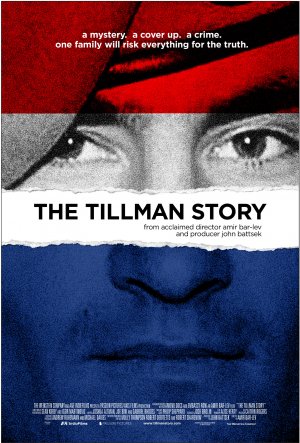
The Tillman Story tells the story of Pat Tillman, who left a career as an NFL player to serve in the U.S. Army and who was killed by “friendly fire” in Afghanistan. It also tells the story of Tillman’s family, who struggled against a government cover-up to find out the truth about his death. Although the film contains no new revelations, it does give an interesting and moving portrait of Tillman and his family. Tillman comes across as a complex character: a jock who liked to read books, an atheist who studied the world’s religions, a risk-taker and thrill-seeker who was also thoughtful and considerate of others. The most striking thing about Tillman, however, was his belief in keeping obligations. We learn that after his tour in Iraq, the Army offered Tillman the opportunity to return to civilian life, but he insisted on serving the full term for which he enlisted. This same sense of obligation seems to motivate the entire Tillman family in their quest to find out the truth about his death and its cover-up by the military, in the face of an uncooperative government.

The Tillman Story is not really an anti-war film, although it does mention that Tillman thought the Iraq War was illegal, and that he read Chomsky. The film does, however, paint an unflattering picture of the military. Immediately after Tillman died, the Army began covering up what happened. They lied to the media and to Tillman’s family. They invented a story about Tillman engaging in a firefight with the Taliban. They used Tillman’s death as propaganda for the war. They even posthumously awarded Tillman a Silver Star medal that he didn’t earn. Interestingly, the film tells how Tillman expressed disgust at the staged “rescue” of Jessica Lynch. Ironically he himself was later used in a similar campaign of media deception.

The Army grudgingly admitted after some time that his death was actually a “fratricide”. They became increasingly uncooperative as the Tillmans asked more questions. The film contains a radio interview with an Army colonel who mocks the Tillmans’ desire to know the truth about their son’s death. The Tillmans’ efforts culminate in a Congressional hearing. We see a group of generals, along with Donald Rumsfeld, dissembling in front of the committee, repeatedly answering “I can’t recall” to questions about the cover-up. The Congressmen listen and then thank these people for their cooperation. The Tillmans are left without answers to their questions.

The Tillman Story will serve to dispel any illusions that people may have about the military being an honorable institution or about our government caring about its citizens.

A digression: The film mentions that Tillman, who was 5’11” (the same height I am, as it so happens), was considered short for the NFL. This made me realize why I prefer college football to the NFL: the players look more like regular people.

Metropolis

October 5, 2010

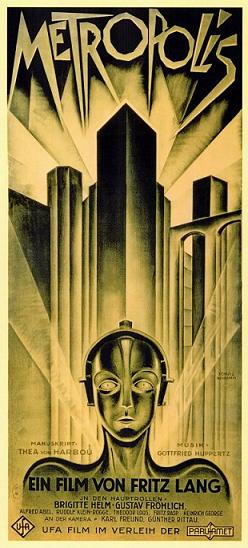
Fritz Lang’s Metropolis (1927) is famous for its depiction of a futuristic city, but what is not so well appreciated is its depiction of the dehumanizing effects of capitalism. It is one of the few cinematic works I know of that have tried to represent this.

I’ve seen several versions of this film over the years. Each successive version contained additional footage that had previously been lost, with the result that each time the details of the story became clearer. This year a new version has been released, containing thirty minutes of newly restored footage. It also has the original film score that was composed by Gottfried Huppertz. I must admit that I found the score disappointing. The nineteenth century romanticism of Huppert’s music seems at odds with the film’s modernism. Also, it was recorded in front of an audience, with the result that there are sounds of people coughing on the soundtrack.

Despite its criticism of captitalism, Metropolis is politically problematic. Among other things, it takes a deeply pessimistic view of workers’ struggle. When the workers in the film finally rise up against their exploiters, they destroy vital machinery, which results in water flooding into the underground tenements where their children are. The idea seems to be that in the frenzy of revolt, the workers are incapable of thinking rationally. (The problem of mob violence was a recurring theme in Lang’s work. He would return to it later in M and, most notably, in the anti-lynching film, Fury.)

Also problematic is the film’s ending, in which the worker, Grot (“the hand”), is united with the capitalist, Frederson (“the brain”), by Frederson’s son (“the heart”). The meaning here is explicitly spelled out in the film: “The mediator between the hand and the brain must be the heart”. This really doesn’t mean anything; it’s not even a platitude. The political problems with this film perhaps were foreshadowing of things to come. Lang wrote the film with his wife, Thea von Harbou. When Hitler came to power in Germany, Lang fled to the United States, but Harbou remained and became a supporter of the Nazis. In later years, Lang expressed distaste for Metropolis, calling it “silly and stupid”.

There are also problems with the film’s narrative. Towards the end, for example, there’s a sequence in which the deranged inventor, Rotwang, abducts the heroine, and, Quasimodo-like, carries her onto the roof of a cathedral, where he does battle with the film’s hero. I found this just silly, and it merely detracts from the film’s main story.

Although Metropolis is Lang’s most famous film, it is not one of his best. I would argue that M, The Testament of Dr. Mabuse and Fury are all better films. Still, Metropolis was a visually innovative film for its time, and it remains important for that reason.