Archive for the ‘Imperialism’ Category

Angela Davis

January 24, 2011

The scholar and activist, Angela Davis, spoke at the University of Oregon, as part of its “Women of Color” conference. She began by talking about the civil rights movement. She said she thinks we should rather speak of a “freedom movement”. We “restrain our vision” by speaking of civil rights rather than freedom. She then spoke about the Montgomery Bus Boycott. She pointed out that it was Black women, most of whom worked as domestics in white people’s homes, who made the boycott succeed. She said we shouldn’t measure the progress of women by how many become CEO’s, but by the progress of poor women in our society. Feminism, she argued, involves a consciousness of how capitalism and imperialism affect our world. She criticized congress for failing to pass the DREAM act. She said we have to defend the rights of undocumented immigrants.

She talked about what she called the “21st Century Abolitionist Movement”. Its first aim is to abolish the death penalty, but its ultimate aim is to abolish prisons. Discussing violence against women – which is “pandemic in the world” – she pointed out that our government has passed stricter and harsher laws against domestic violence and rape, yet the rate of such violence remains unchanged. Simply locking up violent individuals doesn’t end violence. We think of violence as perpetrated by individuals, not by institutions. “Incarceration does not challenge the social attitudes that encourage rape.”

She also talked about a trip she recently took to Colombia, where the government has embarked on a program of building huge new prisons. She talked about how farmers there are being pushed off their land, so trans-national corporations can grow sugar cane for biofuels. (The people there refer to these cane fields as “green deserts”.) She said many of these people who have been driven off their land will end up in these new prisons the government is building. It was good to hear somebody say this in Eugene, where many people have embraced biofuels as the “solution” to our energy problems.

Davis’s argument that prisons are not the solution to violence is a direct challenge to the dominant mode of thinking in our society. It is an important argument that needs to be heard.

Pentagon Official Spits on Martin Luther King, Jr.’s Grave

January 15, 2011

Department of Defense General Counsel Jeh Johnson has said that if Martin Luther King, Jr. were alive today, he would support the wars in Afghanistan and Iraq. You can read about it here. What a disgusting thing to say about a man who was a courageous opponent of U.S. imperialism. This was a man who once called the U.S. “the greatest purveyor of violence in the world today”. That statement is even more true today than it was in King’s time. The shamelessness of these people in the Obama Administration is just vile.

Is Hawaii Really a Part of the United States?

December 22, 2010


Queen Liliuokalani

Paul D’Amato directed my attention to this article in Truthout.org. The article is about David Keanu Sai, a historian who argues that Hawaii is not now, and never has been, a part of the U.S. The article is worth reading in its entirety, but his argument boils down to this: during the nineteenth century, many countries, including the U.S., recognized Hawaii as a sovereign nation. In 1893, President Grover Cleveland signed an agreement with Queen Liliuokalani in which the U.S. recognized her government as the legitimate government of Hawaii. However, in 1898 Congress passed a joint resolution declaring the annexation of Hawaii. Sai points out that a joint resolution is confined to the boundaries of the United States. Since the U.S. had recognized the independence of Hawaii, the resolution could not apply to it. Therefore, Hawaii is a sovereign nation and not a part of the U.S.

One of the many ironies here is that the Birthers are right in claiming that Obama was not born in the U.S., but not for the reasons they claim. However, since the Birthers will never admit that Hawaii is not part of the U.S., they can only base their arguments on nonsense.

I think it worth noting that Obama’s opponent in the 2008 election, John McCain, was born in the Panama Canal Zone, so he was not really born in the U.S. either. I’ve always thought that the rule that president has to have been born in the U.S. is silly. It’s absurd to argue that the result of an election should be overturned simply because the winner was born outside the country. If lawmakers had any sense, they would pass an amendment to overturn this part of the Constitution. However, I don’t expect this to happen, especially since they still haven’t gotten rid of the Electoral College.

Julian Assange

December 6, 2010

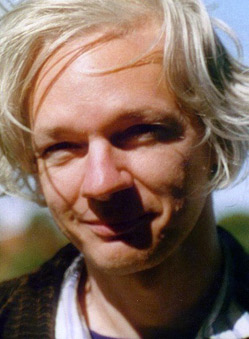
The U.S. government has stepped up its campaign against Julian Assange, pressuring the Swedish government to issue a warrant for Assange’s arrest for an alleged sex crime.The international community has gotten into the act, with Interpol issuing a warrant for Assange’s arrest. No doubt this is because the release of diplomatic cables undermines the time-honored practice of secret diplomacy. Leftists are opposed to secret diplomacy as a matter of principle. People who live under “moderate” Arab governments have a right to know that their leaders have been urging the U.S. to attack Iran. The American people have a right to know that Hillary Clinton has ordered U.S. diplomats to act as spies. After the October Revolution, one of the first things the Bolsheviks did was publish the secret treaties. They believed that the people of Europe had a right to know how their governments’ planned to carve up the continent.

Assange is hated by the mainstream media, who believe in the government’s right to keep secrets from the people. The world has changed since the days when the New York Times published the Pentagon Papers. The Times and other media outlets have become willing participants in the government’s current imperial project. They helped the Bush Administration with its “weapons of mass destruction” deception during the build-up to the invasion of Iraq.

We should support Assange in his struggle to bring truth to the people.

The Tillman Story

October 12, 2010

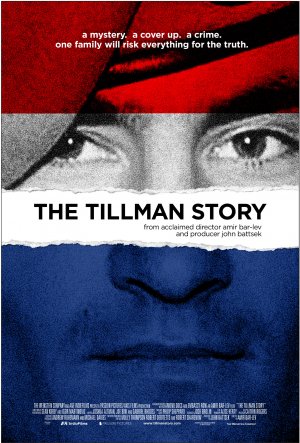
The Tillman Story tells the story of Pat Tillman, who left a career as an NFL player to serve in the U.S. Army and who was killed by “friendly fire” in Afghanistan. It also tells the story of Tillman’s family, who struggled against a government cover-up to find out the truth about his death. Although the film contains no new revelations, it does give an interesting and moving portrait of Tillman and his family. Tillman comes across as a complex character: a jock who liked to read books, an atheist who studied the world’s religions, a risk-taker and thrill-seeker who was also thoughtful and considerate of others. The most striking thing about Tillman, however, was his belief in keeping obligations. We learn that after his tour in Iraq, the Army offered Tillman the opportunity to return to civilian life, but he insisted on serving the full term for which he enlisted. This same sense of obligation seems to motivate the entire Tillman family in their quest to find out the truth about his death and its cover-up by the military, in the face of an uncooperative government.

The Tillman Story is not really an anti-war film, although it does mention that Tillman thought the Iraq War was illegal, and that he read Chomsky. The film does, however, paint an unflattering picture of the military. Immediately after Tillman died, the Army began covering up what happened. They lied to the media and to Tillman’s family. They invented a story about Tillman engaging in a firefight with the Taliban. They used Tillman’s death as propaganda for the war. They even posthumously awarded Tillman a Silver Star medal that he didn’t earn. Interestingly, the film tells how Tillman expressed disgust at the staged “rescue” of Jessica Lynch. Ironically he himself was later used in a similar campaign of media deception.

The Army grudgingly admitted after some time that his death was actually a “fratricide”. They became increasingly uncooperative as the Tillmans asked more questions. The film contains a radio interview with an Army colonel who mocks the Tillmans’ desire to know the truth about their son’s death. The Tillmans’ efforts culminate in a Congressional hearing. We see a group of generals, along with Donald Rumsfeld, dissembling in front of the committee, repeatedly answering “I can’t recall” to questions about the cover-up. The Congressmen listen and then thank these people for their cooperation. The Tillmans are left without answers to their questions.

The Tillman Story will serve to dispel any illusions that people may have about the military being an honorable institution or about our government caring about its citizens.

A digression: The film mentions that Tillman, who was 5’11” (the same height I am, as it so happens), was considered short for the NFL. This made me realize why I prefer college football to the NFL: the players look more like regular people.

Endless War

October 6, 2010

Woodward’s new book, Obama’s Wars, quotes Gen. Petraeus as saying of the Afghan war:

“You have to recognize also that I don’t think you win this war. I think you keep fighting…. This is the kind of fight we’re in for the rest of our lives and probably our kids’ lives.”

So, here we have the U.S. commander in Afghanistan practically admitting that the war is unwinnable. Yet there are no howls of outrage from Congress, no demands that he be fired, no calls for him to resign. I think we can assume that what he said is perfectly fine with the Democrats and Republicans.

Endless war seems to be the U.S.’s destiny in the twenty-first century. And the generals are the ones who are pushing for it. It wasn’t always like this. During the Second World War, the U.S. generals worried that the war was going on too long. They were worried that the war would become unpopular. There seems to be no such concern today. Polls show that the majority of Americans want out of Afghanistan. Yet this doesn’t mean diddley-squat to either the politicians or the generals. I think this indicates two things: first, that neoconservative ideology has permeated our government, and second, that the anti-war movement is too weak.

Ka’iulani

June 19, 2010

I went to see the British film Princess Kaiulani, which tells the story of Ka’iulani, a member of the Hawaiian royal family, who tried unsuccessfully to prevent the U.S. annexation of Hawaii. Ka’iulani was a remarkable woman whose life story could make for an interesting film. Unfortunately, writer and director Marc Forby apparently had no idea what to do with it. Most of the film is concerned with the time that Ka’iulani spent living in England. Her life there is depicted as a combination of Dickensian morality tale and Harlequin Romance. She is sent to a private school, where she is tormented by an evil headmistress who could have stepped out of a Disney cartoon. She falls in love with an Englishman who is obsessed with bicycles. In the film’s climactic scene, she has to make a choice between marrying Bicycle Boy or dedicating her life to her people. It doesn’t get any cornier than that.

This film has a made-for-TV look and feel to it. To let us know that a scene takes place in New York, the Statue of Liberty is ostentatiously shown in the background. The film becomes downright surreal when we’re shown the White House in the middle of a forest. (I swear, I’m not making this up.)

There are so many things this film could have dealt with that would have been interesting. For example, Ka’iulani was an accomplished painter. Here is an example of her work:

There is no mention of her artwork in the film. She knew Robert Louis Stevenson, who wrote a poem about her. Again, there is no mention of this in the film. Though the film does acknowledge that the annexation of Hawaii was a great crime, it doesn’t show what this meant for ordinary Hawaiians. Instead of giving us a thought-provoking and entertaining film, Forby opted to serve up a bunch of Hollywood clichés

Israel Declares War on the World

June 2, 2010

Well, the Israelis might as well at this point. I don’t think it was an accident that they attacked the Free Gaza Flotilla while it was still in international waters. The Israelis wanted to spit on international law, and by extension, on the whole international community. As if that didn’t drive the point home, soon afterwards an Israeli soldier shot a tear gas canister into the face of an American woman at a demonstration on the West Bank, causing her to lose her left eye. Do you think the U.S. government will protest this? Probably not, since they didn’t protest the murder of Rachel Corrie. I expect that Congress will pass another resolution supporting Israel’s war crimes. Meanwhile, the Turkish government is protesting the killing of Turkish civilians. So which government do you think is more democratic, ours or Turkey’s? A government that doesn’t care about the lives of its own citizens is not democratic.

It apparently doesn’t matter to the Israelis that Turkey is a long-time ally of theirs. I guess they figure that as long as they have the support of the U.S. government and the U.S. media, they can treat everyone else with impunity. However, with the U.S. military bogged down in Iraq and Afghanistan, and with the U.S. economy struggling, American influence in the world has begun to wane. The Israelis are playing what will ultimately prove to be a losing game.

Wrapping Up the Naughts

December 30, 2009

Well, not only have we come to the end of the year, but we have also come to the end of the decade. All the reviews of the 2000’s that I’ve read have been pretty much the same. There seems to be universal agreement that this decade sucked big time. W.H. Auden once called the 1930’s a “low, dishonest decade.” The 2000’s certainly had more than their share of dishonesty. Just think of the mind-numbing barrage of lies during the months leading up to the invasion of Iraq. And that was just the tip of the iceberg.

This is all the more dismaying considering that the decade started out promisingly. The Anti-WTO demonstration in Seattle in November 1999 had reinvigorated the left. People wanted to do things, to get out in the streets and make a statement. During the Democratic National Convention in 2000, 40,000 people marched through the streets of Los Angeles, in the face of intimidation by the police. When George W. Bush stole the 2000 election, that didn’t put any damper on things. To many people, it just confirmed their suspicion that the system is totally corrupt. The police repression at the Genoa demonstration in the summer of 2001 did disturb some people, but still they felt that they could accomplish something.

I remember that summer I was living in Los Angeles, and I was involved in a solidarity campaign with the Immokalee farm workers. They had called for a boycott of Taco Bell, to get them to pressure the growers into raising their wages. Once a week we would have a demonstration in front of a Taco Bell in East Los Angeles. Each week the protest got bigger and louder. People from the neighborhood would join in, as well as students from nearby East Los Angeles College. They wanted to make a difference in the world. Teenagers would go up to cars in the drive-thru and explain to people why they shouldn’t buy from Taco Bell.

Then September 11th happened.

Suddenly people were all driving around with American flags on their cars and bumper stickers saying, “United We Stand.” This was an understandable visceral response to the attacks, but I could see that it would only lead to trouble. The media suddenly stopped treating Bush as a joke and began touting him as a national hero (even though he hid out at two air force bases during the day of the attacks.) In the economic slump that followed the attacks, Bush urged people to go out and shop. The media treated this as serious advice.

The left never really recovered from what happened. I think it fair to say that most of the people who marched through the streets of Seattle probably voted for John Kerry in the 2004 election. This is really sad, especially when you consider that Kerry is an enthusiastic supporter of everything those people were protesting against. (And Kerry was promising to send 40,000 more troops to Iraq.) “Anybody but Bush” became the mantra. Anyone who questioned this immediately found himself a pariah, if not threatened with physical violence. Kerry’s campaign slogan was “Help is on the way.” I guess people didn’t think they needed help, since Kerry lost the election.

Four years later, we had Obama promising us “hope”, which sounded a little catchier. Then there was the financial meltdown, and Obama became a shoo-in. The irony here was that Obama is a firm supporter of the economic policies that led to the meltdown. Sometimes hope is just that.

The year started off with Israel’s savage attack on Gaza. Not a murmur of criticism from Obama or any of the other Democrats. Once in office he impressed everyone with his ability to form complete sentences, such a refreshing change from his predecessor. He put forward an economic stimulus plan (mostly tax cuts) that was too timid to have much effect. The Republicans immediately started screaming “socialism”, and they’ve been like a stuck record ever since. In October it was announced that, for no clear reason, Obama was to receive the Nobel Peace Prize. (It seems that the prize was actually for not being George W. Bush. The legacy of W.’s presidency is that the bar has been lowered on just about everything.) Shortly afterward, Obama announced he was going to send 30,000 more troops to Afghanistan.

Now, the Democrats in Congress are on the verge of passing a Health Care “Reform” bill that has nothing progressive about it and is in some ways actually reactionary. One hopes that the way this bill made its way through the Senate will make people question the way our government is set up. The Senate (originally modeled after the British House of Lords) is an inherently undemocratic institution. Every state gets two senators, regardless of its size. Thus, California, which has a population of 36 million, has the same number of senators as Wyoming, which has 544,270 people. (More people live in the city of San Francisco than in the whole state of Wyoming.) This problem is compounded by the filibuster rule. It takes 60 votes to overcome a filibuster. (The idea here seems to be that having a simple majority just isn’t good enough.) So, we had the disgusting spectacle of Senate Democrats groveling at the feet of Joe Lieberman of Connecticut (pop. 3 million) and Ben Nelson of Nebraska (pop. 2 million). The most hilarious moment of the year came when Lieberman announced that he had suddenly changed his mind about the Medicare buy-in (which he had supported for years). He was now opposed to it, just because he had heard a liberal congressman say that he liked the idea. (This is the conservative mentality in its purest form: if the liberals are for it, I’m agin’ it!) So the Medicare buy-in was immediately jettisoned, without a murmur of protest. As for the cynical promises that were made to Nelson to get his one lousy vote, you can expect the Republicans to be making hay out of them in next year’s congressional elections.

Everything is not bleak, however. There have been a few glimmerings of a fightback, such as this summer’s G20 protests and the demonstrations at the Copenhagen climate conference. And there were the Viva Palestina convoys to Gaza. Interestingly, there has been an upsurge in struggle in Iran. It seems I was right in guessing that last summer’s demonstrations were about more that just a stolen election. So, I guess Obama wasn’t completely wrong about there being “hope”. It’s all a matter of what one does with it.

(By the way, the Immokalee workers eventually won concessions from Taco Bell. This was one of the few labor victories of this miserable decade.)

Obamastan

December 2, 2009

Obama never served in the military, yet I don’t hear any liberals calling him a “chicken hawk”. This is not a minor point. If Bush and Cheney deserved this epithet, then Obama and Hillary Clinton deserve it just as much. Obama has just announced in his speech at West Point that he is sending 30,000 more troops to Afghanistan. Many of these troops will be killed, and many of them will kill Afghans who may or may not be aligned with the Taliban. What Obama is doing is no better morally than what Bush did in Iraq. True, Obama has not invented any phony-baloney stories about “weapons of mass destruction”. His argument, however, is more subtly dishonest. He says it’s necessary to send troops to Afghanistan to keep Al Qaida from re-establishing itself there. In fact, it’s because of US policies in the Mideast that groups like Al Qaida exist. Since Obama has made no change in these policies we can expect there to be more such groups. Obama can send all the troops he wants to Afghanistan, and it won’t change this fact.

Obama says in his speech: “We do not seek to occupy other nations.” This is a lie. The US is currently building permanent military bases in Iraq. We have military bases all over the world. The US is currently negotiating with the Columbian government to build seven military bases in Columbia. I doubt that they’re going to find Al Qaida there. Perhaps these military bases have something to do with the fact that much of the US’s oil supply comes from South America. Obama says in his speech: “We will not claim another nation’s resources..” No, instead we will prop up corrupt governments that give us whatever we want. That is the more principled thing to do.