Archive for the ‘Media’ Category

Mad Russians and the American Left

August 31, 2012


Soon to be a contributor to CounterPunch and Dissident Voice.

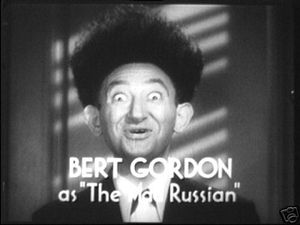
Back in the 1930’s, there was a radio comedian named Bert Gordon, who was billed as the Mad Russian. His tagline was “How do you dooo!”, which you can hear in some Warner Brothers cartoons from that period. Gordon was enormously popular in his time, but, alas, he is largely forgotten today. Yet, the spirit of the Mad Russian lives on at some left-wing websites. At CounterPunch, Israel Shamir has become their resident authority on Russia, the Dreyfus Affair, and conspiracy theories.

Not to be outdone, CP’s rival, Dissident Voice, have their own mad Russian, Andre Fomine. His latest article is entitled Pussy Riot, the CIA, and Cultural Terrorism. In this article, we learn the shocking truth about Pussy Riot:

    No doubt it was not a single spontaneous act by a group of dissolute individuals but an episode of a much wider global campaign to shake and eventually ruin traditional societies and institutions. It is being carried out by the same powerful circles which inspired — e.g. offensive caricatures of Prophet Muhammad in a Danish newspaper in 2005.

Oh, my. From Pussy Riot to Danish cartoons. Who could possibly be behind this fiendish global conspiracy? Need you ask?

    It is an open secret that avant-gardism became popular in the West in 1950-1960s thanks to unprecedented support from the CIA and was used by the United States as a powerful ideological weapon.

The CIA. Why, of course! Aren’t they behind everything?

Fomine ends his article with a dire warning: “The puppeteers of Modern Art and Cultural Terrorism keep carrying out their mission.” [Emphasis in the original.]

Modern Art! Run! Flee! Hide!

In another article, entitled The Last Victory of Muammar Gaddafi, Fomine exposes the sordid truth behind the “Arab Spring”:

    First, there was nothing spontaneous in the wave of 2011 North Africa and Middle East revolutions. The popular unrests in Tunisia, Egypt, Libya, Bahrain, etc were carefully prepared, organized, financed and supported through international media. Quite surprisingly, Al-Jazeera played a critically important role in fueling the conflicts within Arabic societies spreading disinformation and blocking truthful and sober voices.

The media did it! And, as we all know, media = CIA. Fomine, however, ends his article on a cheerful note:

    Thus we are entering very interesting, perhaps decisive times. Muammar Gaddafi has won his last battle despite eluding vigor and insolent pressure from everywhere. Will there be any new Gaddafis born by Muslim mothers to resist the new world order? We hope and pray for that.

More Gaddafis! That’s exactly what we need! The comments on the thread for this article were adulatory. (“Excellent article. I am glad that the author had the courage to write it.” I’m not sure that “courage” is the right word.) When one commenter was churlish enough to point out that Fomine offers no evidence to support his claim about the Arab revolutions, he was promptly smacked down by another commenter who wrote:

    How do you expect the writer can supply you with what you call proof?!
    Do you expect him to hack computers or bulglarise certain offices and displays the documents here for you to see??!! Is that make sense?!
    There is something called commonsense combined with knowledge of history, precedents and good analytical ability!

Yeah, who needs evidence?

As you can imagine, I wanted to learn more about this truly original thinker, Andre Fomine. I found out that he edits a web journal called Oriental Review. There, you can find excerpts from a book by Nikolay Starikov entitled Who Made Hitler Attack Stalin. The latest installment is titled Leon Trotsky, Father of German Nazism. Lest you think that this title is meant as a joke, here is how the article begins:

    Who organized the February and October revolutions in Russia and the November revolution in Germany? The Russian and German revolutions were organized by British intelligence, with the possible support of the United States and France.

That’s right, British intelligence must have engineered the Russian Revolution, since it was a strategic defeat for the British empire. This is common sense. Displaying his extraordinary narrative skill, Starikov tells us:

    Dropped into Russia by British intelligence, thanks to a secret agreement with German secret services aboard the “closed wagon,” the Bolsheviks refused to leave the political scene.

That’s right, the Bolsheviks (all of them) were parachuted into Russia inside a sealed train car. (It must have been awfully uncomfortable, but they were willing to endure anything for the revolution.) Later, we learn:

    The main funding supplied to the Russian Revolution from American bankers was transferred through accounts in neutral Sweden and briefcases of inconspicuous figures stealthily entering the country.

Because there’s nothing bankers love more than a government that’s dedicated to abolishing capitalism.

Just by clinking on certain links on the Dissident Voice website, you can find this treasure trove of occult knowledge.

How do you dooo!
Gore Vidal (1925-2012)

August 2, 2012

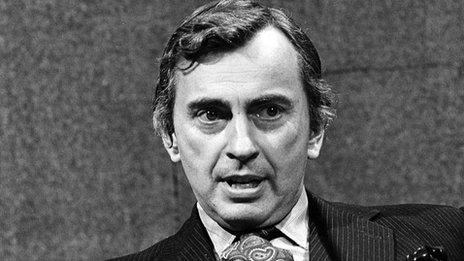
Gore Vidal has died. I enjoyed reading his essays in the New York Review of Books, but I was never keen on his novels. (Although I did enjoy Julian.) Vidal’s acerbic criticisms of U.S. foreign policy and of this country’s plutocracy earned him an enthusiastic following among the left. However, Doug Henwood, who is generally an admirer of Vidal’s, reminds us that he had a “creepy nativist streak”. He recalls hearing Vidal express sympathy for the racist Dutch politician, Pim Fortuyn. In the 1980’s, Vidal published an article titled The Empire Lovers Strike Back, in which he wrote:

    My conclusion: for America to survive economically in the coming Sino-Japanese world, an alliance with the Soviet Union is a necessity. After all, the white race is the minority race with many well-deserved enemies, and if the two great powers of the Northern Hemisphere don’t band together, we are going to end up as farmers—or, worse, mere entertainment—for more than one billion grimly efficient Asiatics.

The kindest thing one can say about this is that it shows that Vidal was completely ignorant about Asia. Vidal surely must have been aware of the “Yellow Peril” rhetoric that was common in the early twentieth century. And bear in mind that he was making this argument in a country with a history of discrimination against Asians, including the internment of 110,000 Japanese-Americans during World War II.

In the same article, Vidal says that Norman Podhoretz is not an “assimilated American”. This comment provoked accusations of anti-Semitism. Vidal once said of Hilton Kramer that his name “sounds like a hotel in Tel-Aviv”.

Also problematic for the left are the disturbing implications of Vidal’s ham-fisted writings on population control. He once said:

    If the human race is to survive, population will have to be reduced drastically, if not by atomic war then by law, an unhappy prospect for civil liberties but better than starving… it may already be too late to save this ark of fools.

Vidal would perhaps have been pleased to know that the birth-rate in Japan has been falling.

Despite all his faults, I am saddened by Vidal’s passing. He was a public intellectual, a type of person that is becoming increasingly rare in the United States. Unfortunately, the media often saw him as a figure of entertainment rather than enlightenment. They could never get enough of his silly fight with Norman Mailer or his tiresome feud with Truman Capote. It seems the media must trivialize everything, including writers.

Alexander Cockburn (1941-2012)

July 21, 2012

Although I soured on Cockburn in recent years, I must say he strongly influenced my political thinking when I was young. I first discovered him in the pages of Harper’s and then in The Nation. He wrote in a bold, brash, uninhibited manner that stood out against the wishy-washy liberalism of most of The Nations‘s writers. Even then he sometimes sounded like a bit of a crank, but more often his observations were spot on. He could also be quite funny at times, an all too rare quality among left-wing journalists. The columns by him and by Christopher Hitchens were often the only things worth reading. The two of them shaped my ideas about the world, though ironically they both led me in directions that I think they would have disapproved of.

I was a devoted reader of CounterPunch in the early 2000’s, mainly because of its uncompromising opposition to the wars in Iraq and in Afghanistan, but also because it took a strong stand against the 9/11 conspiracy nonsense that was then threatening to swamp the U.S. left. Imagine my dismay then, when Cockburn, using logic similar to that used by the 9/11 Truthers, announced that global warming was a conspiracy, a vast global plot that apparently went all the way back to Fourier. I never met Cockburn, but I know a woman who grew up in Petrolia who used to dog-sit for him. She told me she was convinced that his climate change denial had something to do with his collection of vintage automobiles.

I grew tired of CounterPunch after a few years. Too many of the articles were either crankery or simply badly written. I must say that Cockburn’s death doesn’t surprise me, because the quality of his writing declined sharply during the last year of his life. (He reached a low point when he wrote a teary-eyed eulogy for Moammar Khadafy.) It was clear to me that something wasn’t right. His best writings, though, will be remembered.

Joe Paterno and the Cult of Personality

July 15, 2012


A little bit of North Korea comes to State College, Pennsylvania.

The shocking revelations of the Freeh report continue to reverberate. Rick Reilly has written a powerful article, in which he expresses remorse over his own role in building the cult of Joe Paterno. Back in 1986, he wrote an article about Paterno for Sports Illustrated. While he was staying in State College, he received a phone call one night from a Penn State professor whom he does not identify:

    “Are you here to take part in hagiography?” he said.

    “What’s hagiography?” I asked.

    “The study of saints,” he said. “You’re going to be just like the rest, aren’t you? You’re going to make Paterno out to be a saint. You don’t know him. He’ll do anything to win. What you media are doing is dangerous.”

    Jealous egghead, I figured.

It seems that Reilly owes that “jealous egghead” an apology. This makes you wonder how many other people ignored warnings that Paterno wasn’t what he appeared to be. Or how many people were ignored, who argued that maybe it wasn’t a good idea to shower so much adulation on a man who was merely coaching a football team. “What you media are doing is dangerous.” It was dangerous, and it eventually blew up in people’s faces. When the Penn State Board of Trustees rightly fired Paterno, students rioted on campus. Look at the comment threads on sports blogs, and you will find that some people are still in a state of denial about what Paterno did. All this is simply madness.

If there is one thing that life teaches us, it is that if something seems too good to be true, it probably is. Joe Paterno, we were told, built a winning college football team while managing to remain completely principled. Yeah, right. In recent years, it became obvious that Paterno was coach in name only, yet people played along with the pretense, because the myth of Paterno had to be maintained at all costs.

And now we know just how much it cost.

LeRoy Neiman, Hugh Hefner, and the Struggle Against Perversion

June 25, 2012


This man says you’re not gay.

LeRoy Neiman has died. I was not going to say anything about this until I came across this article in the Los Angeles Times by Christopher Knight. It reveals the secret behind the peculiar appeal of Neiman’s paintings:

    Usually mischaracterized as simply a sports artist, he was actually much more than that. Neiman was the painter of the “Playboy Philosophy.”

    To be more specific, he was the artist for Playboy readers afraid that liking art was gay.

There you have it. Some men need to look at Neiman’s paintings to reassure themselves that they’re not sexually attracted to other men. Ah, but there’s more to it than that. It seems that Neiman’s paintings were actually part of a campaign to keep America butch. The article explains:

    Hefner targeted the magazine [Playboy] at young urban men. Its philosophy centered on a suave but stereotypic view of red-blooded male heterosexuality. The sexual revolution it championed was framed as an antidote to perversion.

    “If we desire a healthy, heterosexual society,” Hefner said in defense of Playboy, “we must begin stressing heterosexual sex; otherwise, our society will remain sick and perverted.”

These are high-minded sentiments. And all these years you thought Hugh Hefner was just a bullshit artist who’s too lazy to change out of his pajamas. It turns out that Hef (those in his inner circle call him “Ner”) has been waging a lonely struggle to protect you and me from “perversion”. Now, don’t you just feel small and ungrateful? Don’t you?

How People Find Me

May 14, 2012

I’m always curious about the ways people find my website. Here are some of the search engine terms people have used during the past few days to find my website:

    the pope strippers
    spanish movie wife sex addict
    mechanic woman movie scary
    boys prisoner costume
    well, i found the anarchists
    canvas couple painting
    indian women with armpit hair
    monica taylor fox 29
    an
    vaginal liberation front
    pink german movie 2009

I’m not an expert on how search engines work, so I don’t know how these terms led to my blog. What’s even more troubling to me, though, is that I will never know for sure whether or not these people found what they were looking for on my site.

The Resistible Rise of Rupert Murdoch

May 1, 2012

A parliamentary commission in Britain has just released a report saying that Rupert Murdoch is “not a fit person” to run a media empire.

Gosh, really?

Back in 1984, when Murdoch purchased the Chicago Sun-Times, the paper’s star columnist, Mike Royko, quit, saying that he would never work for Murdoch. “No self-respecting fish would want to be wrapped in a Murdoch paper,” he wrote. He also said, “His goal is not quality journalism. His goal is vast power for Rupert Murdoch, political power.”

The British government has finally figured out what Royko knew 28 years ago.

Here is a man with an obvious political agenda and with a reputation for shoddy journalistic standards, who was nonetheless allowed to buy up one major media outlet after another in the English-speaking world. In the US, he has created the Fox News network, which spews far right propaganda to millions of Americans.

The world would be a happier place if more people had listened to Royko.

ESPN Goes to Pot

April 21, 2012


A typical backyard in Eugene. Just kidding.

The good people at ESPN are shocked – shocked, I tell you! – to discover that some college athletes are smoking marijuana. The intrepid reporter, Mark Schlabach, reveals that:

    NCAA statistics show a bump in the number of stoned athletes. In the NCAA’s latest drug-use survey, conducted in 2009 and released in January, 22.6 percent of athletes admitted to using marijuana in the previous 12 months, a 1.4 percentage point increase over a similar 2005 study.

Only 22.6 percent? It seems to me that we have a crisis of honesty among student athletes, although the situation has improved by 1.4 percent since 2005. Schlabach continues:

    Some 26.7 percent of football players surveyed fessed up, a higher percentage than in any other major sport.

If I knew that 300-lb guys were about to repeatedly run into me, I think I would want some medication beforehand myself.

What really annoys me about all this, however, is that they’ve singled out my alma mater, the University of Oregon for abuse. Sam Alipour has written an article, in which he claims to rip the lid off the modern-day Sodom & Gomorrah that is Eugene:

    Nowhere is Oregon’s laissez-faire approach to marijuana more apparent than Eugene, the state’s counterculture and cannabis capital. “Business here is almost overwhelming,” says a student-dealer who lives on — no joke — High Street. “Here, everybody smokes.” Not surprisingly, The Princeton Review and High Times both have ranked the University of Oregon among the most pot-friendly schools. Another telltale, anecdotal sign: Into the 1990s, the Grateful Dead made Autzen Stadium a regular tour stop. “It’s the weed capital of the world,” says former Duck Reuben Droughns. “Long dreads. Girls with hairy armpits. Where there’s hippies, there’s weed.”

This offends not only my sense of civic pride, but my sense of chivalry as well. None of the women I know have hairy armpits. None. (I would demand satisfaction from this person, Droughns, were it not for the fact that he’s probably a lot bigger than I am.) And I have met maybe three people with dreadlocks since I moved here. Also, I met a lot more pot smokers when I lived in Boston, “the Hub of the Universe”. (There’s a drug joke in there somewhere, I just haven’t figured out what it is yet.)

Alipour also quotes a unnamed member of the UO football team, who says he and a bunch of other players got stoned just before the Rose Bowl game. Well, they won, didn’t they? Maybe they should get stoned before every game. Then maybe we won’t have any more embarrassing losses, such as the ones to LSU and USC.

Just a suggestion.

The Hunger Games

March 30, 2012

The Hunger Games is set in a dystopian future in which a group of teenagers are forced to fight to the death on live television. One of the interesting things about this film is its implied criticism of so-called “reality” TV shows. Suzanne Collins, who wrote the novel on which this film is based, has said that she got the idea for it when she switched from a reality TV show to coverage of the U.S. invasion of Iraq. She said the two “began to blur in this very unsettling way”. Indeed, the Iraq invasion was covered somewhat like a reality show. The military and the media colluded, for example, in concocting a fake “dramatic” story about a female army private being held prisoner by the Iraqis. This took place in a context in which innocent civilians were killed. The Hunger Games presents a future in which state-sanctioned murder has become a form of entertainment.

This is a well-made film that is superior to your usual Hollywood blockbuster. It features complex characters and strong performances. I must say, though, that I found some of the fight scenes hard to follow. Also, I would have liked to learn more about the politics of this future world. How does the regime justify itself ideologically? There are extremes of wealth and poverty. Clearly there is exploitation here, but how is it carried out? Perhaps we will learn more about this is the promised sequels.

Early on in The Hunger Games, we see a government propaganda film that starts out by decrying the horrors of war, which then leads into a justification of the blood-letting in the games. This is an interesting portrayal of how, in politics, idealistic language is often used to justify monstrous behavior.

Intellectuals

December 19, 2011

In my earlier post about Paul Goodman, I pointed out that the only contemporary intellectual who has comparable influence in the U.S. is Noam Chomsky. This led me to a disturbing thought. Chomsky is in his eighties. When he is gone, who will be left? I mean, will there be any really influential intellectuals in this country? Will the deepest thinker that people have heard of be Anderson Cooper? It’s a depressing thought. However, I don’t know of anyone who can take Chomsky’s place. Slavoj Žižek is too European, and, besides, some of his ideas are, well, weird. There is Jared Diamond, of course, but a recent court case could do him irreparable damage. I know people who think that John Bellamy Foster should be as well known as Chomsky. He is certainly one of the more original Marxist thinkers around nowadays. Unfortunately, Foster is not a good public speaker. He tends to be long-winded, and he also tends to use a lot of academic jargon. One of the reasons Chomsky became famous is because he can discuss complex ideas in a clear and succinct manner, using (mostly) everyday English.

I suspect that one of the reasons for the current paucity of famous eggheads is that simply becoming an intellectual in our society is not easy. It requires being able to blot out a lot of noise. Let me give you an example. In one of the few amusing scenes in the otherwise dreary New Age film, I Am, someone asks Chomsky if he has ever seen Ace Ventura, Pet Detective. “Ace who?” says Chomsky, looking completely mystified. Lesson: you can’t be an intellectual if you watch movies like Ace Ventura, Pet Detective. I know it sounds elitist of me to say that, but it happens to be true. (Mind you, this bit of wisdom comes from a man who just watched a movie titled Santa Claus Conquers the Martians. I’m not making this up.)

Footnote One: Let give you an idea of how well-known Chomsky is. One night I went to my local Papa John’s to order a pizza. From where I was standing at the counter, I could hear a radio in the kitchen. The voice on the radio sounded strangely familiar. It took me a moment to realize that it was Chomsky’s voice. About what other intellectual could you possibly tell a story like this?

Footnote Two: I meant to write a scathing review of I Am. The problem is that every time I think about that film, my eyelids start feeling heavy. I’m afraid of slumping forward and damaging my computer monitor.