Archive for the ‘Popular Culture’ Category

LeRoy Neiman, Hugh Hefner, and the Struggle Against Perversion

June 25, 2012


This man says you’re not gay.

LeRoy Neiman has died. I was not going to say anything about this until I came across this article in the Los Angeles Times by Christopher Knight. It reveals the secret behind the peculiar appeal of Neiman’s paintings:

    Usually mischaracterized as simply a sports artist, he was actually much more than that. Neiman was the painter of the “Playboy Philosophy.”

    To be more specific, he was the artist for Playboy readers afraid that liking art was gay.

There you have it. Some men need to look at Neiman’s paintings to reassure themselves that they’re not sexually attracted to other men. Ah, but there’s more to it than that. It seems that Neiman’s paintings were actually part of a campaign to keep America butch. The article explains:

    Hefner targeted the magazine [Playboy] at young urban men. Its philosophy centered on a suave but stereotypic view of red-blooded male heterosexuality. The sexual revolution it championed was framed as an antidote to perversion.

    “If we desire a healthy, heterosexual society,” Hefner said in defense of Playboy, “we must begin stressing heterosexual sex; otherwise, our society will remain sick and perverted.”

These are high-minded sentiments. And all these years you thought Hugh Hefner was just a bullshit artist who’s too lazy to change out of his pajamas. It turns out that Hef (those in his inner circle call him “Ner”) has been waging a lonely struggle to protect you and me from “perversion”. Now, don’t you just feel small and ungrateful? Don’t you?

Music from the Big House

June 23, 2012


Rita Chiarelli and Ray Jones in Music from the Big House.

During the 1880’s, a former Confederate army officer named Samuel James persuaded the Louisiana state government to let him lease convicts (most of them black) to work his plantation, known as “Angola”, because it was believed that the slaves who once worked there were from that country. After James died, the Louisiana State Penitentiary was built on the site. It was commonly known as Angola Prion. It is said that conditions there were horrendous. It is also believed that the prison played a role in the development of blues music. Leadbelly and other musicians spent time there as prisoners.

The Canadian musician, Rita Chiarelli, visited Angola while she was doing research on the history of blues music. She discovered that some of the prisoners there play blues or country music. She decided to organize a concert in which she would perform with these men. This took a certain amount of courage, considering that these men were convicted of violent crimes. Most of them are serving life sentences.

Of the various people we meet in this film, perhaps the most interesting is Ray Jones, who has been a prisoner at Angola for thirty years. He killed a man during a drunken fight. Jones was convicted of second-degree murder and sentenced to life in prison. He tells us, “In Louisiana, life means life”, meaning that the parole board rarely shortens convicts’ sentences. Jones expects to spend the rest of his life at Angola. Chiarelli tells us that most of the people we see in this film will probably die in prison. (In one scene, we are shown the prison cemetery.) Not surprisingly, many of them are deeply religious. (Marx: “Religion is the sigh of the oppressed creature, the heart of a heartless world, and the soul of soulless conditions. It is the opium of the people.”) Jones is an ordained minister, and he acts as a spiritual adviser to the other prisoners, as well as being the prison librarian. (I know a man who was wrongly convicted of murder and spent time in prison. He too became a minister.)

Although conditions at Angola have improved since the early twentieth century, it is, like all prisons, a grim place. In one scene we are shown the area in which Jones lives. There are about fifty bunk beds lined up in rows. The prisoners keep their belongings in wooden boxes at the foot of their beds. They have no privacy. We are told that this is actually one of the better parts of the penitentiary. Prisoners are moved here as a reward for good behavior.

The concert scenes are wonderful to watch. Chiarelli is an appealing person, and she develops a real rapport with the prisoners. At a time when there are incessant calls for increasingly harsh punishments for crimes, it is refreshing to see a film that argues for the possibility of human redemption.

Donna Summer (1948-2012)

May 18, 2012

I never cared much for disco, but nonetheless I always liked Donna Summer. One reason for that was that she had a very good singing voice. I remember that back in the 1970’s, the classical music critic for the Boston Globe – a man whose musical tastes were usually limited to Beethoven and Stravinsky – was a huge fan of Donna Summer. He once interviewed her for the paper. I don’t why, but I somehow find that fact amusing.

The Avengers

May 16, 2012

I must confess to being a sucker for superhero movies. I even enjoyed The Green Lantern, which is considered silly even by the standards of this genre. Maybe it’s because they make me feel like a kid again. Or maybe it’s because they are just fun to watch.

Nick Fury (Samuel L. Jackson) is the head of a super secret and well-funded intelligence agency, SHIELD (Strategic Homeland Intervention, Enforcement and Logistics Division). The agency has a physicist, Erik Selvig (Stellan Skarsgård), who is carrying out experiments on a an object called a tesseract, which is a source of unlimited power. Things are going along swimmingly until Loki (Tim Huddleston), a Norse god with defective social skills, shows up. He steals the tesseract while turning Selvig and Hawkeye (Jeremy Renner) into his mental slaves. Loki has made a deal with a group of beings called the Chitauri (they appear to be robots, although the film is not clear about this). In return for giving them the tesseract, they will make him ruler of the world.

Fury decides to activate “Avengers Initiative”, a gathering of superheroes dedicated to saving Earth from extraterrestrial threats. They are: Iron Man (Robert Downey Jr.), Captain America (Chris Evans), Thor (Chris Hemsworth), and Black Widow (Scarlett Johansson). They also include Bruce Banner (Mark Ruffalo), who, when he gets angry, turns into an enormous green monster called the Hulk. Not surprisingly, he has deeply mixed feelings about this.

There is an element of moral ambiguity in the film. The Avengers see themselves as being on the side of good, but they discover that Fury isn’t what he appears to be, and the people he works for are downright sinister.

Joss Whedon has written and directed a stylish and entertaining movie. My one criticism is that I thought the characters spent too much time arguing with one another. I guess this is meant to make them seem more complex, but it just got confusing and annoying.

Whedon has been a very busy man lately. He also co-wrote and produced the horror film, The Cabin in the Woods, which I also enjoyed a great deal. Whedon seems determined to become some kind of pop culture colossus.

In his curiously sour review of The Avengers, Roger Ebert – who thinks Horrible Bosses is a good movie – makes some snippy comments about the film’s lone superheroine:

    Then there’s Natasha (Scarlett Johansson), aka the Black Widow. After seeing the film, I discussed her with movie critics from Brazil and India, and we were unable to come up with a satisfactory explanation for her superpowers; it seems she is merely a martial artist with good aim with weapons. We decided maybe she and Hawkeye aren’t technically superheroes, but just hang out in the same crowd.

In an early scene in the movie, Black Widow beats up three beefy guys while being tied up in a chair. No mere martial artist can do that. Later, she fights off robotic monsters from Outer Space without even breaking a sweat. I’d like to see Ebert try to do that.

Ebert ends his review with this:

    “Comic-Con nerds will have multiple orgasms,” predicts critic David Edelstein in New York magazine, confirming something I had vaguely suspected about them. If he is correct, it’s time for desperately needed movies to re-educate nerds in the joys of sex. “The Avengers” is done well by Joss Whedon, with style and energy. It provides its fans with exactly what they desire. Whether it is exactly what they deserve is arguable.

Jeez, what a grouch. He can’t even see that Edelstein’s comment was meant jokingly. If anyone needs to be re-educated, it’s Ebert.


Titanic in 3D

April 13, 2012

James Cameron’s Titanic has been re-released in 3D. I was going to use this as an opportunity to write a snarcky review of the film, but Lindy West at Jezebel.com has beaten me to the punch. So, instead I will make a few observations about this movie and what it tells us about Hollywood.

I well remember the year that Titanic first came out. At the risk of sounding melodramatic, I must say that this was a dark period of my life. Everywhere I turned, it seemed, people were talking about how Titanic was the greatest movie ever made. Those of us who found this film vapid and pretentious began to feel like a beleaguered minority. I will never forget the vitriol that was heaped upon Kenneth Turan, the film critic for Los Angeles Times, when he admitted that he hated Titanic. (Turan’s comments provoked a public tantrum from Cameron.) I felt a bit like that character in Ionesco’s Rhinoceros, who watches while other people turn into irrational beasts. Fortunately, this time the response to the film has been more muted. Perhaps this is because America is a different place from what it was in the 1990’s. Titanic 3D has been overshadowed by The Hunger Games, a darker and more disturbing film. After the wars in Iraq and Afghanistan, it seems, people are less inclined to go all to pieces over a sappy romance.

Titanic won the 1997 Academy Award of Best Picture. It beat out L.A. Confidential, which was a better film. The Academy tends to give the Best Picture Award to movies that are considered “uplifting”. This year they gave the award to The Artist, which is a saccharine fairy tale depiction of Hollywood. Last year, they gave it to The King’s Speech, which romanticizes the British royal family. Titanic fits into this pattern. True, 1,500 people freeze to death in the North Atlantic, but Kate Winslet is saved from an unhappy marriage, so everything turns out all right after all. One can see why the Academy preferred this film to L.A. Confidential, which is about corrupt, racist cops – clearly not a movie that makes you feel good about the world. (Besides, as we all know from watching police dramas on TV, cops are never corrupt and racist, are they?)

I know that some will say that I’m being a grump, that Titanic is just meant to be fun. Titanic, however, is not supposed to be escapist fantasy like John Carter. It purports to be an accurate depiction of a real and tragic historical event. (Cameron reportedly went out of his way to make sure the correct star field was in the night sky.) For that reason, it has to be held to a higher standard. The story of the Titanic deserves better than corny dialogue and melodrama.

John Carter

April 9, 2012

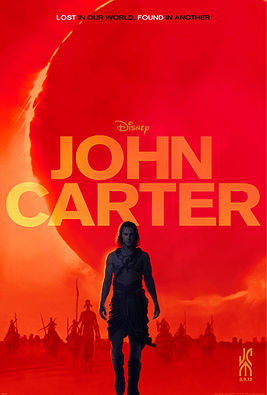
When I was a kid, I read Edgar Rice Burroughs’s Barsoom (Mars) novels. The first few, anyway. I don’t remember much about them, except that the characters struck me as a bit slow. It would take them a long time to figure out things that were immediately obvious to me. So I stopped reading them. However, I’m told that some people have fond memories of these books. One of these is the director, Andrew Stanton, who in John Carter, based on the first novel of the series, A Princess of Mars, has recreated in loving detail Burroughs’s fantasy vision of Mars. I’m starting to think that perhaps I was too hard on the books, for I found this film entertaining, a pleasant way to pass two hours. No one does anything really dumb, except for John Carter, who throws away a medallion that enables him to travel between Earth and Mars. (This turns out to be a big mistake.) One thing that did bother me is that there are a lot of sword fights in this film. I’ve never understood why they have sword fights in science fantasy movies. Why would people who have the technology to make guns use swords? (This is one of the problems I’ve always had with the Star Wars films.)

John Carter cost an enormous amount of money to make, and it is widely believed that it will end up losing money. I think that is a shame, for – dare I say it? – this is actually a better film than Martin Scorceses’s Hugo or Stephen Speilberg’s The Adventures of Tintin. The action scenes all advance the story, and the characters are believable (within the logic of their fantasy world, that is). And there are none of those annoying slow-motion shots that mar Sherlock Holmes: Game of Shadows.

John Carter is played by an actor with the perhaps unfortunate name of Taylor Kitsch. I must say he acquits himself reasonably well in the role. His love interest, Princess Dejah Thoris, is played by Lynn Collins, who is extremely good (think of a sort of an American version of Noomi Rapace).

In perhaps the ultimate nerd touch, we are told that this film is dedicated to Steve Jobs, who, we are told, “inspired us all”. Really? By making overpriced gadgets and exploiting cheap labor in China? Would John Carter have approved of that?

The Hunger Games

March 30, 2012

The Hunger Games is set in a dystopian future in which a group of teenagers are forced to fight to the death on live television. One of the interesting things about this film is its implied criticism of so-called “reality” TV shows. Suzanne Collins, who wrote the novel on which this film is based, has said that she got the idea for it when she switched from a reality TV show to coverage of the U.S. invasion of Iraq. She said the two “began to blur in this very unsettling way”. Indeed, the Iraq invasion was covered somewhat like a reality show. The military and the media colluded, for example, in concocting a fake “dramatic” story about a female army private being held prisoner by the Iraqis. This took place in a context in which innocent civilians were killed. The Hunger Games presents a future in which state-sanctioned murder has become a form of entertainment.

This is a well-made film that is superior to your usual Hollywood blockbuster. It features complex characters and strong performances. I must say, though, that I found some of the fight scenes hard to follow. Also, I would have liked to learn more about the politics of this future world. How does the regime justify itself ideologically? There are extremes of wealth and poverty. Clearly there is exploitation here, but how is it carried out? Perhaps we will learn more about this is the promised sequels.

Early on in The Hunger Games, we see a government propaganda film that starts out by decrying the horrors of war, which then leads into a justification of the blood-letting in the games. This is an interesting portrayal of how, in politics, idealistic language is often used to justify monstrous behavior.

Peter Bergman (1939-2012)

March 19, 2012

I know this is a bit late, but I feel obligated to write about the recent death of Peter Bergman. He was one of the four members of the Firesign Theatre. (The others were Philip Proctor, Phil Austin, and David Ossman.) I listened to their records when I was in high school. They had a strong influence on my sense of humor and, in a way I find hard to explain, on my world-view as well. Their records employed a multi-layered, non-linear style of storytelling that was unlike anything I had ever heard before, or since for that matter. It was sometimes said of them that they made the long-playing album into a narrative art from. (They advertised themselves as “the rock band that doesn’t need instruments”.) They also peppered their work with all sorts of allusions to literature, philosophy and popular culture. I honestly believe that the Firesign Theatre made The Simpsons possible.

The Firesign Theatre’s humor was strongly rooted in the 1960’s. They didn’t seem quite as funny in later years. I saw them perform in Boston once, and I found the show a bit disappointing. They mostly did old material, and they didn’t use the stage very well. (Their medium was radio, after all.) I did get to shake hands with David Ossman, however, which was cool.

Still, they made a unique and lasting contribution to comedy. Bergman will be remembered as an innovator.

Intellectuals

December 19, 2011

In my earlier post about Paul Goodman, I pointed out that the only contemporary intellectual who has comparable influence in the U.S. is Noam Chomsky. This led me to a disturbing thought. Chomsky is in his eighties. When he is gone, who will be left? I mean, will there be any really influential intellectuals in this country? Will the deepest thinker that people have heard of be Anderson Cooper? It’s a depressing thought. However, I don’t know of anyone who can take Chomsky’s place. Slavoj Žižek is too European, and, besides, some of his ideas are, well, weird. There is Jared Diamond, of course, but a recent court case could do him irreparable damage. I know people who think that John Bellamy Foster should be as well known as Chomsky. He is certainly one of the more original Marxist thinkers around nowadays. Unfortunately, Foster is not a good public speaker. He tends to be long-winded, and he also tends to use a lot of academic jargon. One of the reasons Chomsky became famous is because he can discuss complex ideas in a clear and succinct manner, using (mostly) everyday English.

I suspect that one of the reasons for the current paucity of famous eggheads is that simply becoming an intellectual in our society is not easy. It requires being able to blot out a lot of noise. Let me give you an example. In one of the few amusing scenes in the otherwise dreary New Age film, I Am, someone asks Chomsky if he has ever seen Ace Ventura, Pet Detective. “Ace who?” says Chomsky, looking completely mystified. Lesson: you can’t be an intellectual if you watch movies like Ace Ventura, Pet Detective. I know it sounds elitist of me to say that, but it happens to be true. (Mind you, this bit of wisdom comes from a man who just watched a movie titled Santa Claus Conquers the Martians. I’m not making this up.)

Footnote One: Let give you an idea of how well-known Chomsky is. One night I went to my local Papa John’s to order a pizza. From where I was standing at the counter, I could hear a radio in the kitchen. The voice on the radio sounded strangely familiar. It took me a moment to realize that it was Chomsky’s voice. About what other intellectual could you possibly tell a story like this?

Footnote Two: I meant to write a scathing review of I Am. The problem is that every time I think about that film, my eyelids start feeling heavy. I’m afraid of slumping forward and damaging my computer monitor.

The Return of Navajo Boy

October 11, 2011

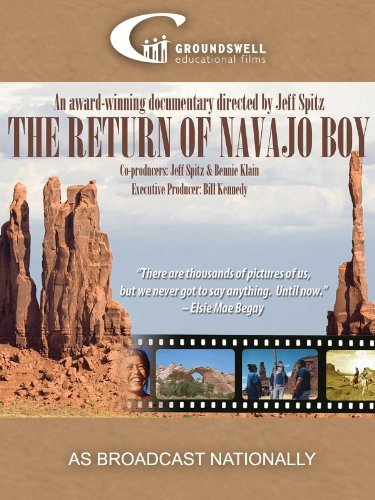
The Multicultural Center at the University of Oregon recently held a screening of the documentary, The Return of Navajo Boy. The director, Jeff Spitz, spoke beforehand. He told about how in the late 1990’s a man named Bill Kennedy approached him with a film that his recently deceased father had made in the 1950’s. It was a half-hour documentary about the Navajos (Diné) called Navajo Boy. Kennedy asked Spitz to help him preserve his father’s work. Spitz could make no sense out of the film, which had no sound. He took the film to a library in Chicago that had an extensive collection of literature and films related to Native Americans. The people at the library told him that the film showed a ceremony that, according to Navajo religious belief, should never be filmed. They advised him to destroy the movie. Spitz couldn’t bring himself to do this. Instead, he and Kennedy decided to locate the people in the film and ask them what should be done with it.

The documentary begins with Kennedy talking with Lorenzo Begay, a descendent of the family in the film. (We’re not told how Kennedy managed to locate him.) He lives with his family on a reservation in the austerely beautiful Monument Valley in Utah. He takes Kennedy to meet his uncle and his mother, Elsie Mae Cly Begay, both of whom appear as children in the film.


Elsie Mae Cly Begay in the 1950’s.

He shows the movie to the Begay family. They seem pleased to see themselves in it. We are then told about the family’s history. During the 1950’s, they supported themselves by raising sheep, which they still do today. They were also paid by a local merchant to pose for photographs that would be used for postcards. (They also appeared as extras in John Ford’s The Searchers). Elsie Mae’s mother, Happy Cly, was believed to be the most photographed woman in America at that time.


Happy Cly

Some members of the family also worked in the uranium mines. The Navajo workers were not warned about the health hazards of radiation exposure. One of Elsie Mae’s brothers worked in the mines, and he later developed cancer. The film discusses his efforts to get compensation from the government. Also, radioactive tailings from these minds contaminated the ground water. Elsie Mae’s hogan was built using rocks from the mines. Later it was found to contain 80 times the acceptable level of radiation, so it was destroyed. Two of Elsie Mae’s sons died of cancer, and a third has recently developed it. Happy Cly died from cancer. It turns out that the ceremony shown in the documentary by Bill Kennedy’s father is that of a medicine man trying to cure her.

Elsie Mae had a baby brother, John Wayne Cly, who also appears in Kennedy’s movie. When Happy Cly died, the family was unable to take care of him, so they gave him to white missionaries who promised to bring him back when he was older. They never did. When Kennedy’s documentary is shown at a Navajo museum, John Cly, who was then living in New Mexico, reads about it in a newspaper. The film ends with an emotional reunion between him and his family. There is also a postscript that relates how Elsie Mae now travels the country and to other countries to tell people about what uranium mining did to the Navajo nation.

This is an interesting and important film. Incredibly, the government wants to reopen some of these mines to provide fuel for a new generation of nuclear reactors. This is more evidence that nuclear energy is a bad idea.

You can learn more about this film at NavajoBoy.com.