Archive for the ‘Racism’ Category

Libertarianism: A Trojan Horse

December 11, 2012

Timothy P. Carney recetnly wrote in the Washington Examiner regarding the retiring senator, Jim DeMint:

    For libertarians, Christian conservative pro-lifer Jim DeMint was the best thing to come through the Senate in decades. DeMint, quitting early to run the conservative Heritage Foundation, embodied an underappreciated fact of life in Washington: The politicians who most consistently defend economic liberty are the cultural conservatives.

This is further proof of what I’ve always argued: that libertarianism is a Trojan Horse for the far right. Naive young people are attracted to libertarianism because of its position on decriminalizing drugs as well as its opposition to foreign wars. Yet when election time rolls around, libertarians start arguing to support socially conservative, pro-war Republicans. DeMint supported the invasion of Iraq and the overthrow of the democratically elected president of Honduras. He wants mandatory prayer in public schools, and he wants to outlaw abortion, including in cases of rape and incest. Yet Carney admires him for his support for “economic liberty”, meaning the right of corporations to screw us over.

Some on the left have been lulled by Ron Paul because of his criticism of U.S. foreign policy, ignoring his history of making racist statements. In his farewell speech to Congress, Paul denounced “pure democracy”, saying that it results in people demanding things from the government. An argument that echoes the racist comments made by Bill O’Reilly after Obama’s re-election.

The pupose of libertarianism is to steer people into the Republican Party. We should have no illusions about this.

Lincoln

November 30, 2012

Last night I went to Spielberg’s and Kushner’s Lincoln, after having been apprised of the historical and political limitations of the film. I must say that I thoroughly enjoyed. The writing, acting, and direction were all splendidly done. Some moments were a bit schmaltzy, but not too much so. It was very restrained for a Steven Spielberg film. This film instilled in me a greater respect for Lincoln and for Thaddeus Stevens.

There has bee a lot of sniping at the film from some left-wing websites. It seems to me that what has provoked them is not so much the film itself, but the liberal politics of Kushner and Spielberg. In interviews, Kushner has compared Obama to Lincoln. Eve worse, he has taken a reactionary view of Reconstruction, claiming that

    The inability to forgive and to reconcile with the South in a really decent and humane way, without any question, was one of the causes of the kind of resentment and perpetuation of alienation and bitterness that led to the quote-unquote ‘noble cause,’ and the rise of the Klan and Southern self-protection societies.

What’s interesting to me is that Kushner’s own screenplay contradicts his arguments. In it, Lincoln is not a cautious compromiser like Obama. In fact, he never really compromises at all. Instead, he uses various methods, some of them quite ruthless, to pass the 13th Amendment, which abolishes slavery. The closest he ever comes to compromise is when he agrees to meet with a Confederate “peace” delegation, in order to get conservative Republicans to back the Amendment. Yet he delays meeting with the delegates, fearing that if the war ends, Congress won’t pass the Amendment. When he finally does meet with them, after the Amendment has been ratified, he finds that they are unrepentant slave-owners who want to preserve slavery. “Slavery is done,” he tells them, ending the negotiations.

I don’t know how Kushner came to his views on Reconstruction, but his idea that Obama is somehow like Lincoln is common among liberals. Obama has done nothing to earn this comparison, just as he did nothing to earn the Nobel Peace Prize. The only thing he has in common with Lincoln is that both men are hated by Southern racists. When I lived in Eugene, Oregon; there was a restaurant there that had on one of its wall a drawing of Obama with a stovepipe hat and a Lincolnesque beard. The image was so large that it was almost impossible to ignore it. There is something about this sort of thing that is almost akin to the worship of the Kim family in North Korea. All right, that may be going a little far, but you have to admit that there is the same desire for a hero in each.

One of the things I liked about this film is its sympathetic portrayal of Thaddeus Stevens (brilliantly played by Tommy Lee Jones). Perhaps this film will reawaken an interest in Stevens. In addition to his opposition to slavery, this was a man who championed the rights of women, of Native Americans, of Chinese immigrants, and of Jews. He was a seminal figure in the forgotten history of American radicalism.

Barack Obama and the Persistence of the Old Regime

October 26, 2012

The Atlantic Monthly has dared to suggest what none have so far dared to say: that President Barack Obama should be impeached for the murder of Abdulrahman al-Awlaki. There is, of course, zero possibility of this actually happening, but the idea is worth raising if only to show what a sham our democracy is. The Republicans are not going to make an issue out of this, no doubt because they don’t see anything wrong with what the President did. For all their huffing and puffing, the Republicans are not really an opposition party. (It would be more accurate to call them an obstruction party.) Certainly Romney would have done the same thing Obama did.

The historical trend has always been to give more and more power to the executive branch. There was a brief push back against this during the Watergate scandal, but that is ancient history now. The idea that the president is not above the law is now regarded as one of those quaint fads of the 1970’s, along with leisure suits and bell-bottom pants.

Consider, for example, how often the president is referred to as the “commander-in-chief”. This is misleading. The president is the commander-in-chief of the armed forces. He is not the commander-in-chief of anything else. Reporters and pundits must surely be aware of this, but they use the term anyway, even though they must know that many people are not kwowledgeable about the Constitution. (And why aren’t they? That’s a question that will have to be addressed at another time.) One must seriously question their motives for doing this.

For the Left, there is nothing to recommend Obama. He has better positions on women’s reproductive rights than Romney does, but that is about it. Yet it can be argued that a defeat for Obama would be a triumph for the forces of reaction in this country. Every president gets criticized, but both the quality and the quantity of the criticism aimed at Obama are different from that aimed at previous presidents. Bill Clinton was the subject of paroxysms of paranoia on the right, but the attacks on him mostly had to do with real matters: Clinton’s marital infidelities, the accusations of sexual harassment (which were plausible), his involvement with the Whitewater scandal, and the slightly suspicious death of Vince Foster. Yet the accusations against Obama have nothing to do with reality. We’re told that Obama ia a Muslim, that he associates with terrorists, that he wants to create death panels and put people in re-education camps. There are accusations of a “missing” birth certificate that isn’t missing. This summer a movie was shown in theaters all across the country that argues that Obama is a “Kenyan nationalist” who wants to undermine the U.S. power in the world. (In fact, Obama has gone out of his way to try to shore up the U.S.’s empire.) It’s not hard to see that this is all tied to Obama’s race. Some people are incensed that a black man – the Other – now occupies the White House. Donald Trump, for angrily demands that Obama release his college transcripts. It is inconceivable to Trump that a black man could be more successful and better educated than he is. (I think it fair to say that most black people are better educated than Donald Trump.)

It has often been noted that the so-called blue state/red state divide bears a striking resemblance to the North/South divide of the Civil War. Race is at the center of both these divides, although people were more honest about this in 1861. The Republican Party has absorbed, and in turn been taken over by, the Old Democratic Party of Jim Crow. It is perhaps significant that in recent years, the idea of secession, once confined to a handful of crackpots, has crept its way into mainstream discourse. (The nitwits at CounterPunch bear some responsibility for this.) Romney is too smart to believe the Tea Party’s nonsense, but he pandered to them during the primaries, and a Romney victory will be seen as a win for them.

This raises a critical issue for the Left. Should the racism of Obama’s opponents be considered the most critical issue in this election? I haven’t made up my own mind about this, but I think it is a question that the Left should consider.

Barack Obama Wants to Compromise with You Whether You Like It or Not

October 14, 2012


Obama thinks to himself, “Why doesn’t he like me? I try so hard to be nice to him. Doesn’t he like my bipartisanship?”

Many liberals expressed disappointment – and in some cases even shock – at Obama’s weak performance in the first debate. Over at Gawker, Mobutu Sese Seko (not his real name, in case you’re wondering) has pointed out that Obama’s performance was precisely what we should have expected:

    After spending five years watching a diffident political compromiser campaign for and occupy the White House, Democrats were still shocked that Wednesday’s debate didn’t reveal Barack Obama: Political Nut-Cutter.

Liberals still haven’t realized that the secret behind Obama’s extraordinarily rapid political rise is that he is a non-threatening black man. (True, Tea Partiers find him threatening, but these same people would be terrified at the sight of Trayvon Martin coming towards them with a bag of Skittles.) Remember Jesse Jackson? He wasn’t’ really all that radical. (He liked capitalism.) Yet white Americans reacted towards him almost as if he were a Mau Mau threatening to send them to the gas chambers. For all his reasonableness and articulateness, Jackson was too much of a rough diamond for whites to feel comfortable with him. They applauded when Bill Clinton criticized Jackson for merely being on a panel with Sister Souljah (whose views weren’t any more radical than Jeremiah Wright’s.)

Obama, on the other hand, was polished to an unblemished smoothness by the time he spent at places such as Harvard Law School. He is bland, but without being boring (no easy feat, you must admit). The worst thing I can recall him saying about anyone is his “she’s likable enough” comment about Hillary Clinton. (An extremely mild comment, especially considering that he was talking about Hillary Clinton.)

A corollary of Obama’s smoothness is his eagerness to please people who will do absolutely nothing for him. When Obama was at Harvard Law School, a group of liberal and left-wing students, some of them black, expended considerable effort to get him appointed as the first black editor of the Harvard Law Review. Obama then returned the favor by appointing right-wingers to the editorial board, to the bafflement and even anger of his supporters.

This is the man that liberals expect to be the scourge of the Right.

Jean Bricmont and Gilad Atzmon

October 3, 2012


Gilad Atzmon

Jean Bricmont has written an article defending Gilad Atzmon from his numerous critics on the Left, who accuse him of, among other things, being an anti-Semite. (Personal disclosure: I am one of them.) You can read the complete article here. (This links to Atzmon’s website. If you are unfamiliar with his work, you will be amazed at some of the things you will find there.) The first thing one notices about this piece is that it is extremely long-winded. You could cut out at least half the verbiage in it, and it would say the same exact thing. I consider that to be bad writing (although I realize some may not agree with me about this). I find this disheartening. I have always liked to think that theoretical physicists must also be good writers. Einstein wrote well. Carl Sagan could express himself clearly and succinctly. Yet another one of my illusions in life has been shattered.

After nine mostly long paragraphs, Bricmont finally gets to his main argument:

    This movement often gives the impression that its “solidarity” with Palestine takes place above all over there and requires more and more missions, trips, dialogues, reports, and even sometimes “peace processes.” But the plain facts of the matter are that the Israelis do not want to make the concessions that would be needed to live in peace and that a main reason for that attitude is that they think they can enjoy Western support ad vitam aeternam. Therefore, it is precisely this support that the solidarity movement should attack as its priority. Another frequent error is to think that this support is due to economic or strategic considerations. But, at least today, Israel is of no use to Western interests. [This is plainly false.] It turns the Muslim world against us [this is only partly true], doesn’t bring in a single drop of oil [man does not live by oil alone, Prof. Bricmont], and pushes the United States into a war with Iran that the Americans clearly don’t want [some, such as Norman Finkelstein, have argued that Israel is bluffing about this]. The reasons for this support are obvious enough: constant pressure from Zionist organizations on intellectuals, journalists and politicians by endlessly manipulating the accusation of anti-Semitism and the climate of guilt and repentance (for the Holocaust) kept on artificial life support, in large part by those same organizations. As a result, the main task of the Palestine solidarity movement should be to allow free speech about Palestine, but also to denounce the pressure and intimidation by various lobbies. Which is what Atzmon does. Far from rejecting him, the solidarity movement should make it a priority to defend the possibility of reading and listening to him, even if one is not in total agreement with what he says.

Look, so far as I and other leftists are concerned, Atzmon can write whatever bullshit that happens to float his boat. All we’re asking is that we at least acknowledge that what Atzmon writes is bullshit. Bricmont’s unwillingness to admit this raises serious questions about his intellectual honesty. Moreover, Bricmont makes so many dubious assertions here, that one must wonder whether he actually has any idea what he’s talking about. I think I should also point out that the “Israel is useless to the West” argument is often made by right-wing critics of Israel, at least some of whom are almost certainly anti-Semites. That fact should give Bricmont pause.

    By his all-out attack on Jewish “tribalism,” Atzmon’s essential contribution to solidarity with Palestine is to help non-Jews realize that they are not always in the wrong when conflicts with Jewish organizations arise. The day when non-Jews free themselves from the mixture of fear and internalization of guilt that currently paralyses them, unconditional support for Israel will collapse.

If I may speak for my fellow non-Jews, I don’t feel one shred of guilt about what happened during the years 1933-45. Again, one has to wonder whether Bricmont has any idea what he is talking about. What’s more, the second sentence is obviously nonsense. Bricmont apparently considers it a matter of principle to ignore the political and economic forces that drive the West’s support for Israel.

In all fairness to Bricmont, I should point out that he seems to be partly motivated by concerns about laws recently passed in France that prohibit certain types of speech. Although I don’t pretend to be an expert on French politics, it seems to me that the problem there is that France has no equivalent of the First Amendment to the United States Constitution, which guarantees freedom of speech. (This is a problem in many other countries as well.) I realize that this argument may be too idealist, but I think there is at least some truth to it.

With all due respect, perhaps Bricmont should stick to particle physics. There is no shame in that.

Random Thoughts on the Current Troubles

September 15, 2012

The growing inter-connectedness of the world does not always redound to our advantage. Case in point: a cheesy movie made in a strip mall in Monrovia, California, causes riots and the deaths of four people on the other side of the world. We are living in the Global Village, and just as Marshall McLuhan warned, it is filled with “panic terrors, exactly befitting a small world of tribal drums, total interdependence, and superimposed co-existence.” Fear increasingly becomes people’s normal state of existence, because they are increasingly bombarded with ideas and facts that they don’t understand or only partially understand.

Reading the comments on threads on other sites, I am struck by how many people have no desire to try to understand what is happening. We have an amazing informational tool in the form of the Internet, yet some people would prefer to use it for spewing hate and parading their ignorance. Sad.

Nakoula Basseley Nakoula, alias “Sam Bacile” is the auteur responsible for that blood and sand epic, Desert Warrior Innocence of Muslims. Nakoula is a Coptic Christian from Egypt, yet he told the Wall Street Journal that he is an Israeli and that the film was funded by Jewish donors. The kindest thing one cam assume here is that Nakoula wanted to prevent any blame for the film being placed on Egypt’s Coptic community, yet there is something sinister about the fact that Nakoula invented a story about non-existent Jewish donors. One has to question what game Nakoula is really trying to play.

The cast and crew of the film say they were duped, and I believe them. The 14-minuste clip on Youtube is heavily (and badly) dubbed. These people will be haunted by this for the rest of their lives. They were used by Nakoula, Steve Klein, Terry Jones and other right-wing Christians to advance their twisted political agenda.

Driving a Stake Through Ron Paul’s Heart

August 29, 2012


“Gee, you mean those articles are racist? Gosh, I guess I should read my own newsletter.”

There is one thing I will say for Mitt Romney: any man who disrespects Ron Paul can’t be all bad. Paul is the right-wing libertarian who is mistakenly believed to be “anti-imperialist” by some of the more gullible sections of the left. Romney’s supporters prevented some Maine delegates for Paul from being seated at the Republican National Convention. If you ask me, the fewer Paul supporters there are, the better off we all are. Earlier today, Paul supporters chanted “USA! USA!” while a Puerto Rican woman was trying to speak. Republicans are so classy.

Seventeen delegates from Nevada illegally voted for Paul. I honestly can’t see how anyone from Nevada can be a libertarian. The state’s whole economy is based on government infrastructure. I guess these Nevada libertarians want to shut down Hoover Dam and turn Las Vegas into a ghost town. (Hmm, Las Vegas as a ghost town would be a pretty good roadside attraction. My inner capitalist is intrigued.) Or maybe they want the casinos to each have their own coal-fired power plant.

A number of people have observed that the states that receive the most government largesse are the one where you hear the most violent anti-government rhetoric. I don’t what the psychological reason for this is, but I wish to hell people would cut it out.

Israel Shamir and CounterPunch

August 25, 2012

Why does CounterPunch, which is ostensibly a left-wing website, continue to post articles by the neo-fascist nutjob, Israel Shamir? You only have to read Shamir’s website to see that the guy is crazy. Yet he is apparently not too crazy to be published by CounterPunch.

CounterPunch has just posted an article by Shamir entitled The Secret History of Pussy Riot. In it, he repeatedly refers to the members of the band by the misogynist term, “viragos”. This fact alone should have been sufficient reason to reject the article. Alas, it’s actually even worse than that. Shamir argues that the Putin government was right to send these women to prison for merely expressing their opinions. He writes:

    Two years’ sentence is quite in line with prevailing European practice. For much milder anti-Jewish hate talk, European countries customarily sentence offenders to two-to-five years of prison for the first offence. The Russians applied hate crime laws to offenders against Christian faith, and this is probably a Russian novelty. The Russians proved that they care for Christ as much as the French care for Auschwitz, and this shocked the Europeans who apparently thought ‘hate laws’ may be applied only to protect Jews and gays. The Western governments call for more freedom for the anti-Christian Russians, while denying it for holocaust revisionists in their midst.

Why does CounterPunch insult its readers by posting this garbage? The kindest thing one can assume here is that they didn’t bother to read this article.

Shamir has ties to the Lukaschenko dictatorship in Belarus. When David Irving was sentenced to prison for Holocaust deanial, Shamir wrote:

    Thus we should say: David Irving was sentenced for denial of Jewish superiority. His doom seals the reign of (albeit limited) freedom that began with the fall of Bastille. European history went full circle: from rejecting the rule of Church and embracing free thought, to the new Jewish mind-control on a world scale. Not only is Western Christian civilisation dead, but even its successor, secular European civilisation, has met its demise only a few days after its proud and last celebration by the Danish scribes. It was short-lived: about two hundred years from beginning to the end, the Europeans may once have had the illusion that they can live without an ideological supremacy. Now this illusion is over; and the Jews came in the stead of the old and tired See of St Peter to rule over the minds and souls of Europeans.

This is anti-Semitism, plain and simple. The Breivik shootings in Norway have shown that fascism is still a force to be reckoned with. Yet the editors of CounterPunch apparently think it is all a joke.

John Carlos

November 3, 2011


l. to r., Peter Norman, Tommie Smith, John Carlos.

We live to make history!
– John Carlos

John Carlos came to speak at the University of Oregon. He was one of two athletes – the other being Tommie Smith – who protested against racism in the U.S. at the 1968 Olympics by raising their fists during the playing of the national anthem. Carlos has recently published his autobiography, The John Carlos Story, co-written with Dave Zirin, who also spoke at this event.

Carlos started out by talking about his childhood. He grew up in Harlem. His mother worked as a nurse, his father owned a shoe shop. Carlos was offered a track and field scholarship to East Texas State University. It was there that he first encountered Jim Crow, finding segregated restrooms. “In Texas, my name suddenly became ‘Boy'”, he recalled. He eventually transferred to San Jose State University. The Olympics were coming up. Some people were organizing an Olympic boycott, to protest how the U.S. used the Olympics to create the false impression that Blacks are treated as equal citizens. Carlos was invited to meet with Martin Luther King, Jr., who told him that the boycott would be a great move. When Carlos expressed doubts, King used the metaphor of a lake: if you drop one rock in it, it creates ripples. During their conversation, King mentioned that he was going to Memphis to support a garbageman’s strike there. When Carlos asked him why he was doing that, King replied: “I have to stand for those who can’t stand for themselves.” Carlos recalled that when he looked in King’s eyes, he could see “no fear” in them. Ten days later, King was dead from an assassin’s bullet.

Carlos said that the lesson he learned from this is that one has to “make a total commitment.” At the Olympics, people began backing out of the boycott. It ended up with just him and Tommie Smith raising their fists during their medal ceremony. Peter Norman, the silver medal winner from Australia, wore an OPHR (Olympic Project for Human Righs) button as a sign of solidarity. Carlos said of Norman: “He is my blood brother, because he did the right thing.” Smith and Carlos were told to leave the Olympics early. They were both harshly criticized in the media, and they received death threats. Carlos also said that the Olympic committee put out the false story that their medals were taken away. He said they invented this story to intimidate any future athletes who might get out of line.


John Carlos today.

During the question and answer session, someone asked Carlos how he managed to have so much courage. He said, “I found me. Most people don’t know who they are.” In response to another question, he reminded the audience that 2,000 people were massacred by the Mexican government just before the Olympics. A student brought up the university’s recent plans to defund ethnic studies. “We need to know each other’s histories,” said Carlos. He also talked about the Occupy movement. He said that the movement is giving people courage to stand up for themselves. Another observation he made: “We’re going to have struggles for eternity.”

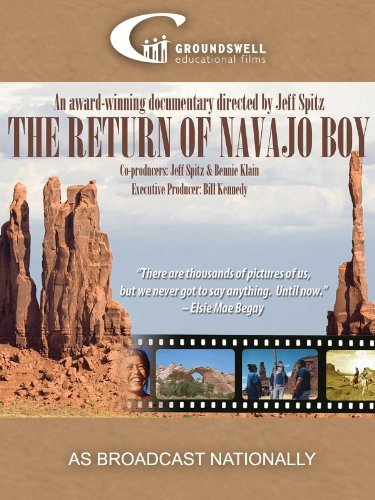
The Return of Navajo Boy

October 11, 2011

The Multicultural Center at the University of Oregon recently held a screening of the documentary, The Return of Navajo Boy. The director, Jeff Spitz, spoke beforehand. He told about how in the late 1990’s a man named Bill Kennedy approached him with a film that his recently deceased father had made in the 1950’s. It was a half-hour documentary about the Navajos (Diné) called Navajo Boy. Kennedy asked Spitz to help him preserve his father’s work. Spitz could make no sense out of the film, which had no sound. He took the film to a library in Chicago that had an extensive collection of literature and films related to Native Americans. The people at the library told him that the film showed a ceremony that, according to Navajo religious belief, should never be filmed. They advised him to destroy the movie. Spitz couldn’t bring himself to do this. Instead, he and Kennedy decided to locate the people in the film and ask them what should be done with it.

The documentary begins with Kennedy talking with Lorenzo Begay, a descendent of the family in the film. (We’re not told how Kennedy managed to locate him.) He lives with his family on a reservation in the austerely beautiful Monument Valley in Utah. He takes Kennedy to meet his uncle and his mother, Elsie Mae Cly Begay, both of whom appear as children in the film.


Elsie Mae Cly Begay in the 1950’s.

He shows the movie to the Begay family. They seem pleased to see themselves in it. We are then told about the family’s history. During the 1950’s, they supported themselves by raising sheep, which they still do today. They were also paid by a local merchant to pose for photographs that would be used for postcards. (They also appeared as extras in John Ford’s The Searchers). Elsie Mae’s mother, Happy Cly, was believed to be the most photographed woman in America at that time.


Happy Cly

Some members of the family also worked in the uranium mines. The Navajo workers were not warned about the health hazards of radiation exposure. One of Elsie Mae’s brothers worked in the mines, and he later developed cancer. The film discusses his efforts to get compensation from the government. Also, radioactive tailings from these minds contaminated the ground water. Elsie Mae’s hogan was built using rocks from the mines. Later it was found to contain 80 times the acceptable level of radiation, so it was destroyed. Two of Elsie Mae’s sons died of cancer, and a third has recently developed it. Happy Cly died from cancer. It turns out that the ceremony shown in the documentary by Bill Kennedy’s father is that of a medicine man trying to cure her.

Elsie Mae had a baby brother, John Wayne Cly, who also appears in Kennedy’s movie. When Happy Cly died, the family was unable to take care of him, so they gave him to white missionaries who promised to bring him back when he was older. They never did. When Kennedy’s documentary is shown at a Navajo museum, John Cly, who was then living in New Mexico, reads about it in a newspaper. The film ends with an emotional reunion between him and his family. There is also a postscript that relates how Elsie Mae now travels the country and to other countries to tell people about what uranium mining did to the Navajo nation.

This is an interesting and important film. Incredibly, the government wants to reopen some of these mines to provide fuel for a new generation of nuclear reactors. This is more evidence that nuclear energy is a bad idea.

You can learn more about this film at NavajoBoy.com.