Conspiracy-mongering and the Syrian Revolt

September 6, 2013

img3-7471-20071109-3
Ellen Brown

Experience has taught me to be wary of conspiracy theories, but many of my comrades on the Left can’t get enough of the damn things. Even when it’s quite plain what is going on, they must look for a hidden agenda, or a grand, over-arching scheme outlined in a Goldmann Sachs memo.

CounterPunch and AlterNet have both posted an article by Ellen Brown, in which she writes:

    In his August 22nd article, Greg Palast posted a screenshot of a 1997 memo from Timothy Geithner, then Assistant Secretary of International Affairs under Robert Rubin, to Larry Summers, then Deputy Secretary of the Treasury. Geithner referred in the memo to the “end-game of WTO financial services negotiations” and urged Summers to touch base with the CEOs of Goldman Sachs, Merrill Lynch, Bank of America, Citibank, and Chase Manhattan Bank, for whom private phone numbers were provided.

    The game then in play was the deregulation of banks so that they could gamble in the lucrative new field of derivatives. To pull this off required, first, the repeal of Glass-Steagall, the 1933 Act that imposed a firewall between investment banking and depository banking in order to protect depositors’ funds from bank gambling. But the plan required more than just deregulating US banks. Banking controls had to be eliminated globally so that money would not flee to nations with safer banking laws.

Brown then goes on to tell how the U.S. pressured countries around the world to loosen their banking regulations. Most eventually gave in, but there were some hold-outs, one of which happened to be Syria. Brown’s article implies that this is what is behind Obama’s recent call for an intervention in Syria. I don’t buy it. I’m expected to believe that Obama waited two and a half years for Assad to gas his own people* so he could finally carry out Timothy Geither’s master plan? If Syria were that important to Obama, he would have found (or invented) some excuse for intervention before now. The fact that Geithner wrote something in a memo sixteen years ago doesn’t mean that must be the reason why the government is doing something right now. (*I know there are some who claim that a rebel group did the gassing, but in these situations the burden of proof is always on the conspiracy theorists. Unless I see some hard evidence indicating otherwise, I’m going to assume it was Assad who did it.)

Brown also writes:

    These seven countries were named by U.S. General Wesley Clark (Ret.) in a 2007 “Democracy Now” interview as the new “rogue states” being targeted for take down after September 11, 2001. He said that about 10 days after 9-11, he was told by a general that the decision had been made to go to war with Iraq. Later, the same general said they planned to take out seven countries in five years: Iraq, Syria, Lebanon, Libya, Somalia, Sudan, and Iran.

Again, this doesn’t prove anything. Just because somebody said something to Wesley Clark in 2001, it doesn’t necessarily follow that that is the reason why Obama is doing something today.

There are valid arguments that can be made against what Obama is proposing to do. We don’t need to confuse matters by putting forth dubious conspiracy theories.
Syria and the Art of Moral Imperialism

August 28, 2013

425.obama.barack.lc.111408

The conflict in Syria has been going on for over two years now, and President Obama has been doing everything he can to stay out of it, but now there is talk in the media of an attack, possibly this week. Confronted by growing evidence that the Assad government has used poison gas against civilians, President Obama now has to make good on all his talk about red lines. (Barry Crimmins recently said, “If we’re prepared to use force on people who commit chemical warfare, when do we attack Monsanto?”) He is reportedly studying different options that have been presented to him by the military. However, a White House spokesman, Jay Carney, has said, “The options that we are considering are not about regime change.” So what are Obama’s aims then? My guess is that he is going to carry out a one-off attack, similar to Clinton’s missile strike in Khartoum or Reagan’s bombing of Libya. Obama can then say that the U.S. has shown zero tolerance towards the use of chemical weapons, to the applause of his supporters. The attack will increase tensions with Russia and with Iran, but it will be a small price to pay so that the U.S. can maintain its facade of moral high-mindedness.

We have come a long way since the giddy days following the invasion of Iraq, when there was delirious talk about the prospect of U.S. troops marching through the streets of Damascus and Teheran. I argued in an earlier post that the U.S. empire is not in decline, and I still hold that view. What has happened is that the Iraq War and its aftermath has taught the U.S. ruling class to take a more realistic view of what it can and cannot do, as well as to take a more realistic view of the internal politics of other countries. (Contrast Gen. Dempsey’s sober assessment of the Syrian opposition with the neoconservatives’ love affair with the convicted embezzler, Ahmad Chalabi.) In that respect, it can be argued that the U.S. empire is actually in better shape today than it was under George W. Bush.

Anti-Vaccination Hysteria and the Rich

August 20, 2013

anti-vaccine-body-count
Source: http://eideard.com/2013/07/16/anti-vaccine-body-count/.

A recent article in Salon suggests that rich people are more likely to buy into anti-vaccine ideas. The author, Alex Seitz-Wald writes:

    California law mandates that all students get vaccinated, but it also makes it easy to get exemptions for personal beliefs. And parents in tony places like Marin County are taking advantage of it in seemingly growing numbers. One public elementary school in Malibu, an affluent beach town just north of Los Angeles, reported that only 58 percent of their students are immunized — well below the recommended 90-plus percent level — according to Shapiro.

    And it’s even worse in some of L.A.’s private schools, where as few as 20 percent of kids are vaccinated in some schools.

We also learn:

    But it’s not just California. Public health officials see large clusters of unvaccinated children in latte-drinking enclaves everywhere, like Ashland, Ore., and Boulder, Colo., where close to 30 percent of children are exempted from one vaccine or another. In some schools in Ashland two-thirds of the students have exemptions, according to Mark Largent, a James Madison College professor who wrote a book about the vaccine debate last year.

This goes against many people’s assumptions about the world. The rich are supposed to be better educated (although George W. Bush put a huge dent in that belief), therefore they should be more immune to anti-scientific beliefs. Yet the Republican Party’s wealthy donors don’t seem bothered by its support for anti-scientific ideas such as creationism and climate change denial. So, could it be possible that the tendency to have anti-scientific beliefs increases with income? I would be interested to know if anyone has done a study on this.

This is a serious matter. Whooping cough (pertussis), which was nearly eradicated has been making a comeback. Infants who are too young to vaccinate are vulnerable to this disease, which is why maintaining a high rate of vaccination is important. Yet vaccination rates have been dropping.

So why do people who should know better refuse to get their children vaccinated? Seitz-Wald quotes a pediatrician, Paul Offit, who says that these people are “used to being in control of their lives and at their jobs and want to control this aspect of their lives as well.” This is probably true, but I suspect there is probably more to it than that. The idea of vaccinations implies a belief in a common good. (Jonas Salk famously refused to accept money for his polio vaccine.) And these elites of our society have increasingly come to hate the idea of a common good.

Pham Binh and the Egyptian Revolution

August 14, 2013

I first became aware of Pham Binh during the late 2000’s. Don’t ask me why, but I had developed a fascination with British political blogs at the time. Binh would often comment on their threads. He would give the impression of being an ISO member (he had actually just left the ISO), while making snarky comments about Alex Callinicos and the British SWP. This struck me as an odd thing for someone to do.

In recent years Binh has taken to writing articles for The North Star website, which is definitely a step up from making weird sectarian comments on British political blogs. His latest article is titled Egypt’s Revolution: Democratic, Not Socialist. It begins:

    In Marxist lexicon, there are two types of revolution: democratic and socialist, or more scientifically, bourgeois-democratic and proletarian-socialist. These two types of revolution involve different class alignments, have different tasks, and lead to different outcomes, although a two-stage uninterrupted revolution that is initially democratic and becomes socialist is possible. The socialist revolution is a battle between the whole of the bourgeoisie and the proletariat for political supremacy and ends with the victory of either the capitalist or socialist social systems. The democratic revolution is a battle against autocratic rule that removes fetters on capitalist development between a great variety of classes – peasants, workers, students, landlords, capitalists, small business owners. In democratic revolutions, bourgeois forces can be found on both sides of the barricades (unlike in socialist revolutions) and their concrete outcomes can vary tremendously because of their class heterogeneity. Making accurate generalizations about democratic revolutions is difficult since they have occurred on every inhabited continent in one form or another beginning at least 300 years ago.

This sounds ponderous, but it is actually simplistic. Some revolutions don’t quite fit the neat categories that Binh posits. The American Revolution, for example, involved a number of different class forces, and it was led by an alliance between Northern merchants and Southern plantation-owners who wanted to preserve slavery. Binh’s comment at the end about the “difficulty” of “making generalizations about democratic revolutions” is perhaps meant to acknowledge this. However, Binh then proceeds as if he never made this qualification.

Binh tells us that the Egyptian revolution is a bourgeois-democratic revolution, even though the Egyptian military is defending the interests of the Egyptian bourgeoisie. And Mohamed Morsi is a bourgeois democrat, even though he tried to assume dictatorial powers. Binh therefore argues that it was a strategic blunder for the Revolutionary Socialists and other Egyptian left groups to join the millions of Egyptians calling for Morsi’s ouster. So what should these leftists do about this? Binh tells us:

    Championing the democratic revolution in Egypt now means not only condemning the coup and the SCAF-controlled interim government in words but actively organizing to reverse the coup in deeds by literally breaking Morsi out of jail and returning him to his rightful office. The weapon of criticism cannot replace the criticism of weapons, condemnation without action is phrasemongering.

    Marxists are not supporters of Morsi, but letting him rot in a Republican Guard cell and allowing the coup to proceed as planned is a death-blow to a democratic revolution barely begun and without the freedoms its victory will bring, no powerful proletarian movement can develop. Our loyalty is not to Morsi (who we will not hesitate to overthrow and defeat) but to the working class specifically and the democratic revolution generally. Breaking him out of a military jail today does not preclude arresting, overthrowing, or un-electing him tomorrow, nor does it imply an ounce of political support for the bourgeois-obscurantist Muslim Brotherhood or Morsi’s reformist ineptitude any more than the Bolsheviks’ active defense of the Kerensky government from Kornilov’s coup make them supporters of Kerensky’s strike-breaking and repression of peasant committees.

So, Binh is saying that having called for Morsi’s overthrow, the Egyptian leftists should now call for reinstating him, so that at some unspecified future moment (“tomorrow”), they can again call for his overthrow. Is he serious? Let me me point out here that calling for returning Morsi to the presidency is supporting Morsi, so it is nothing at all like the Bolsheviks’ position on Kerensky during the Kornilov coup. One of the reasons the Bolsheviks were successful in 1917 was that they maintained more-or-less consistent positions. They did not make sharp reversals, such as what Bingh is urging Egyptian leftists to do.

The Egyptian Left is facing a difficult situation, and, unlike Binh, I don’t pretend to be able to tell them what course of action they should take. One thing, however, is clear to me: the worst thing they could do is adopt a hare-brained scheme that is based on over-simplified Marxist theory and a faulty historical analogy.

The Devil’s Whore

August 11, 2013

imgres

It’s official now. I am embarrassed to have graduated from the University of Oregon.

The New York Times has an article by Greg Butler entitled Oregon Embraces ‘University of Nike’ Image. Nike, in case you don’t know, is a company that pays people pennies to make sneakers that they then sell for $75 a pair. Who wouldn’t want to embrace being associated with a company like that?

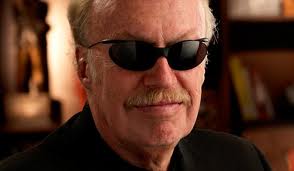
The owner of Nike, Phil Knight, recently paid for the building of something called the Football Performance Center. (I assume this is a fancy term for a training facility.) Bishop tells us:

    The Football Performance Center, which was unveiled publicly this week, is as much country club as football facility, potentially mistaken for a day spa, or an art gallery, or a sports history museum, or a spaceship — and is luxurious enough to make N.F.L. teams jealous. It is, more than anything, a testament to college football’s arms race, to the billions of dollars at stake and to the lengths that universities will go to field elite football programs.

    The performance center was paid for through a donation from Phil Knight, a founder of Nike, an Oregon alumnus and a longtime benefactor of the university. During a tour of the complex Wednesday, university officials declined to give a dollar figure, even a ballpark one, insisting they did not know the total cost of a football center where even the garbage cans were picked with great care to match the overall design. (Early design estimates placed the center’s cost at $68 million, which, based on the tour, seemed conservative.)

This is a scandal already. The University of Oregon is a public university, and as such it must maintain transparency about everything it does. Yet it now has a “Football Performance Center” that sounds like Fritz Lang’s Metropolis, and no one (except Phil Knight, apparently) knows how much it cost to build or about the details of its construction.

Butler describes the overall layout of the place:

    The center is divided into three buildings, all black and shiny rectangular blocks, connected by a sky bridge. Those buildings — and everything around them — are black and boxy by design. Made of black granite, corrugated metal and fritted glass, the elements are arranged like pieces of a Jenga game to show cohesion between units (they also look like the shell of an impenetrable force). A local newspaper quoted an architect who described it as a “Darth Vaderish Death Star.” The designers took that as a compliment.

So, these people feel flattered by being compared to a genocidal murderer. Interesting.

Butler and some other reporters went on a three-hour tour of this facility. This apparently left Butler feeling giddy, because he wrote this:

    For Oregon football, black is the new black, down to the black toilets in the locker room that were described, perhaps in jest, as stealth. The athletes wanted it to look cool, and architects balanced their needs — down to the custom green PlayStation consoles and pool tables made by the same Portland company that designed two for Michael Jackson — with those of the coaches, who are older and spend most of their waking hours in the center and wanted, more than anything, a diverse selection of after-shave.

    Throughout the tour, Eugene Sandoval, design partner at ZGF Architects, and Randy Stegmeier, principal interior designer at Firm 151, returned often to their favorite buzzwords, which they said guided the design: sleek, bombastic, cutting-edge. They said things like, “the material palate is elevated to a very sophisticated level” and “you will see sequencing of form and function of space.”

Aside from the more opaque rantings of Nietzsche, this is the most amazing thing I’ve ever read. I am going to break it down, in the hopes of being able to tease out the various layers of meaning here.

    For Oregon football, black is the new black, down to the black toilets in the locker room that were described, perhaps in jest, as stealth.

So they likened black toilet bowls to stealth bombers. This may or may not have been a joke.

    The athletes wanted it to look cool…

The word “it” apparently refers to the Football Performance Center, although that doesn’t follow from the previous sentence. And how does he know what the athletes wanted?

    …and architects balanced their needs — down to the custom green PlayStation consoles and pool tables made by the same Portland company that designed two for Michael Jackson…

Huh, what? They use PlayStation consoles and pool tables to train football players?

    …with those of the coaches, who are older…

The coaches are older than the players? No kidding?

    …and spend most of their waking hours in the center and wanted, more than anything, a diverse selection of after-shave.

That’s right! Those youngsters can keep their PlayStation consoles and pool tables. We mature men prefer to spend our time perusing a diverse selection of after-shave. No real man – especially an older real man – simply slaps on some Aqua Velva. And I’m sure these coaches want to smell nice if they’re going to spend their days surrounded by younger men.

    Throughout the tour, Eugene Sandoval, design partner at ZGF Architects, and Randy Stegmeier, principal interior designer at Firm 151, returned often to their favorite buzzwords, which they said guided the design: sleek, bombastic, cutting-edge.

Sleek is the opposite of bombastic.

    They said things like, “the material palate is elevated to a very sophisticated level” and “you will see sequencing of form and function of space.”

Now I know why it was that I hated the architecture students when I was in college.

Later on, Butler tells us:

    The coaches have their own locker room, complete with a hydrotherapy pool and steam shower, made from blue stone slate, and, of course, dozens of kinds of after-shave in front of the bathroom mirrors, which feature built-in televisions.

It seems to me that a built-in television defeats the whole purpose of a mirror.

All this is being done to attract top football talent. What happened at Penn State University should be a warning sign of what can happen when a university becomes all about football. (It’s worth noting here that Phil Knight defended Joe Paterno.) The people currently running the University of Oregon are like blind men stumbling towards a cliff.

A Reply to Noam Chomsky: America’s Imperial Power Is Not in Decline

August 4, 2013

97177982_9196f4b4f6

Aletnet has posted an article by Noam Chomsky entitled America’s Imperial Power Is Showing Real Signs of Decline. Chomsky cites as proof of his claim the fact that the Organization of American States (O.A.S.) has passed a resolution condemning the countries that refused to allow Evo Morales’s plane to enter their airspace last month. However, I doubt that this resolution will have any concrete results. What is of greater significance is the incident that led to this resolution in the first place. The U.S. apparently pressured four countries – France, Italy, Portugal and Spain – into denying passage through their airspace to the President of Bolivia, in the belief that Edward Snowden might be on his plane. In doing so, these countries not only violated international law, they insulted the leader of a resource-rich nation. So, the U.S. got four governments to act against their own best interests. That’s a pretty impressive display of political power, if you ask me.

Chomsky argues that the U.S. no longer wields as much influence over Latin America as it once did. This is true, but a major reason for this is that since the 9/11 attacks, U.S. foreign policy has shifted its focus to the Middle East and southern Asia. The U.S. now wields greater power in that region of the world than ever before. The U.S. carries out drone attacks in countries such as Afghanistan, Pakistan, and Yemen with impunity. The U.S. now has military bases set up throughout the region. The Arab Spring was a setback, but the U.S. has since been able to reassert its influence in the countries involved.

Empires don’t always get what they want. When the British empire was at its height, the British suffered a military defeat in Afghanistan. A resolution passed by Latin American countries is no proof that the U.S. empire is in decline. Neither is Putin’s refusal to extradite Snowden.

Chomsky wants to believe the U.S. is in decline when it really isn’t.

It’s Alive!

July 26, 2013

its_alive_4

I recently received an e-mail on Pinterest that said this:

    Trending on Pinterest…
    Is anything related to the newborn British royal baby. Pinners are continuing the baby-fever with party ideas fit for a prince, souvenirs and – our favorites – boards featuring historic baby pictures from years past.

CNN is still covering the birth of the royal baby. MSNBC has devoted enormous coverage to it. (I guess it saves them from having to discuss Snowden and the NSA.) It seems tactless to point out that the US fought a war to separate itself form the British monarchy.

Despite (or perhaps because of?) our theoretically egalitarian society, Americans tend to be suckers for aristocrats, both real and pretend. You may recall that Mark Twain made this point in Huckleberry Finn. When Erich Stroheim, the son of a Viennese hatmaker, arrived at Ellis Island, he gave his name as Count Erich Oswald Hans Carl Maria von Stroheim und Nordenwall, which was as shrewd a career move as any man ever made. He had a lucrative film career playing aristocrats (although in an often unflattering manner).

Americans mourned the death of Princess Diana, and they swooned over The King’s Speech, which told us that Britain was saved from the Nazis by Geroge VI and his speech therapist.

We might as well just surrender.

Israel Shamir, Again

July 21, 2013

images

On July 17, CounterPunch posted an article by Israel Shamir entitled Snowden in Moscow. In it, Shamir writes:

    Snowden was not seeking limelight, quite the opposite! He wished to stop the crimes being committed by No Such Agency in the name of American people, no more, no less. He hoped to become a new Deep Throat, whose identity would never be revealed. His first profound revelations were made by correspondence; he flew to Hong Kong as he was familiar with the place, spoke fluent Chinese, and planned to return home to Hawaii. It appears that the Guardian Newspaper pushed him into revealing his identity.

Shamir cites no sources for this. It should be clear that his claim implicates Glenn Greenwald, since Greenwald was the Guardian‘s contact with Snowden.

Shamir’s article has caused something of a row, as reported in an article in Popular Resistance. The article includes an exchange of e-mails between Kit Flynn, Greenwald, and Shamir, in which Greenwald flatly denies Shamir’s claim. (He also calls Shamir “an idiot”.) In one of the e-mails, Shamir makes the following revealing comment: “As probably you are aware, I am not a friend of the Guardian, a newspaper that smeared me in many possible ways.”

In its July 19-21 issue, CounterPunch posted Shamir’s reply to the Popular Resistance aricle, entitled Snowden in London: A Postscript. In it, Shamir writes:

    Naturally Greenwald (whom I never even mentioned) did not make decisions for Snowden, as far as I know. As for responsibility – yes, I do think that the Guardian was responsible for providing Snowden with a safe route. Remember, Hong Kong was a preferred (by Brits) jurisdiction to arrange for rendition, as Counterpunch reported.

    Journalism is a rough game, but it is still a human occupation. You can’t take a guy, goad him into spilling the beans, and drop him at the gate of police station. Even if he was ready to tell all he knew: still one is responsible for his safety.

    Apparently we have different ideas of responsibility. My idea: “one should protect the source; help the man to reach safety, and only then to release info.” Their idea: “publish and let the guy fry. It is his choice. We are just publishing.”

    I am being guided by compassion to the defector (for Snowden is a defector from the Power to the People side), PopRes and GG are guided by cold-nosed wish to get the stuff and dump the guy.

Isn’t this cute? Shamir starts out by denying that he ever accused Greenwald of pushing Snowden, and he then proceeds to imply that that is just what Greenwald did. (Note that Shamir doesn’t acknowledge that Greenwald has put himself at risk by reporting Snowden’s revelations.)

Shamir then gives us this high-minded sentiment:

    This is the bottom line, and we could reach it without so much of abuse and vehemence. We have different ideas of responsibility. Let us remain – each one – with these ideas. I have no wish to argue these points again.

Don’t you just hate this guy?

The Year of Living Dangerously

July 18, 2013

Year_of_living_dangerously

The 1965 Indonesian military coup was one of the most horrific events of the second half of the twentieth century. It killed over a million Indonesians, and it ushered in the Suharto dictatorship that ruled Indonesia for 31 years. It was an event that has not gotten as much attention in the West as it should.

Peter Weir’s 1982 film, The Year of Living Dangerously is set in Indonesia in the months before the coup. Guy Hamilton (Mel Gibson) is an ambitious young journalist from Australia, who has just been given his first foreign correspondent assignment in Indonesia. He meets a mysterious photographer named Billy Kwan (Helen Hunt). Billy arranges for Guy to interview the head of the PKI, the Indonesian communists, a major scoop that helps Guy’s career. Billy introduces Guy to Jill (Sigourney Weaver), who is an assistant to the military attaché at the British embassy. Guy and Jill have an affair, much to the disapproval of Jill’s boss. One day, Guy learns from that there is a shipment of arms coming from China for the PKI. Over Billy’s objections, Guy decides to write a story about this, even though everyone will know that he learned about this from Jill, which will hurt her standing at the embassy.

The Year of Living Dangerously is an oddly disappointing film, one that seems to promise far more than it actually delivers. There is a sense of foreboding during much of the film, because we know about the disaster that the characters can’t see coming. And some of the scenes seem to hint that more is going on than meets the eye. Yet the Indonesian coup ends up merely serving as the backdrop to a romance between Mel Gibson and Sigourney Weaver. There are depictions of poverty in Jakarta, and there is a scene of communists being executed by the military, but the the film is mainly about a group of wealthy Westerners. It would be interesting to see a film about the coup told from an Indonesian point-of-view.

A Few More Thoughts on the Trayvon Martin Case

July 16, 2013

george-zimmerman-mugshot
The other night a woman told me she thought the controversy over the George Zimmerman trial was overblown. Mind you, she wasn’t defending what Zimmerman did. Rather, her argument was that with so many injustices in the world, it simply wasn’t right to devote so much attention to a single case.

This is a fair point. It seems to me, however, that this episode has struck a raw nerve with many people, not all of whom are black. Many of us have had that experience – on at least occasion – of being confronted by a hostile stranger. (The enduring popularity of the film, Deliverance, is due to the fact that it touches upon this common experience.) Many of us have had that sudden and unpleasant realization that one has angered, or perhaps simply attracted the suspicions of, someone for reasons that are not at all clear.

Such experiences are now even more disturbing because of the insane “stand your ground” laws that have been passed in many states. Thirty-one states have such laws. A stranger can shoot you for whatever reasons of his own and then tell the police that you “threatened” him. And chances are that he may get away with it. (Florida’s “stand your ground” law was a factor in Zimmerman’s acquittal.)

I love this country, but it’s increasingly becoming an uncomfortable place in which to live.