The Fall of General Petraeus

November 13, 2012


Gen. David Petraeus and Paula Broadwell

It’s been a long time since we’ve had a really good sex scandal in Washington, so the one involving Gen. Petraeus comes as a welcome relief after a truly dreary presidential election. Petraeus is accused of having had an affair with his “biographer”, Paula Broadwell. She is the reputed author of an admiring book about Petraeus with the perhaps unfortunate title of All In. (It has also come out that this book was at least partly ghost-written.)

There is more than a little moral hypocrisy in all this. Congresswoman Debbie Wasserman Schultz, who is chair of the Democratic National Committee, has said: “Disturbing is the word that has come to my mind since all of this has come to light. Really, I think it goes without saying if you’re the director of the CIA, if you are a four-star general in the United States army, that you have to hold yourself to a higher standard. And you can’t put yourself in a compromising position.” Yes, a man who authorizes torture and drone strikes can’t sully himself with extra-marital sex. Schultz, by the way, helped organize last summer’s Democratic convention, at which one of the featured speakers was former president Bill Clinton, who coaxed a White House intern into giving him blow jobs.

It all started when Jill Kelley, a friend of Petraeus’s family, told an FBI agent, with whom she was apparently involved in some way, that she had been receiving harassing e-mails from Broadwell. Even though the FBI normally doesn’t investigate this sort of thing, those intrepid G-Men went to work, eventually examining 20,000 pages of e-mails. (I’m not making this up.) Not only did they discover Broadwell’s affair with Petraeus, but they also discovered that Kelly was having an affair with Gen. David Allen, Petraeus’s successor in the Afghanistan command.

Kelley is an interesting person in her own right. According to the Los Angles Times: “…she has angered some senior officers for what were described as persistent efforts by her to forge close personal ties to successive Central Command four-star officers by deluging them with emails, a former Central Command aide said.” Could there be such a thing as a military groupie? There must be something about a man who bombs villages in Afghanistan.

Some will cite this affair as evidence that the American empire is in decline. This is nonsense. There is, for example, good reason to believe that Eisenhower had an affair with his female chauffeur during World War II. And at one point in his career, MacArthur was demoted when it was discovered that he had a mistress.

The FBI agent who started the investigation – who has so far only been identified as Agent Shirtless – is said to have a “worldview” that is “hostile” to Obama. I think we can guess what that probably means.

Those who live by the media, die by it. When the Iraq war wasn’t going well, the government and the media decided that they needed a hero to distract people. Petraeus, who wears more medals than a Soviet-era bureaucrat, seemed a logical choice. He was given credit for a non-existent victory in Iraq, to hide the fact that Bush had actually cut a deal with Sunni militia groups. Now Petraeus has been undone by one of those who worked hardest create his myth. Shakespeare would have relished this.

Dr. Mabuse

November 11, 2012

Fritz Lang made three films about the super villain, Dr. Mabuse. This character was clearly inspired by Conan Doyle’s Dr. Moriarty, as well as by Allain and Souvestre’s Fantômas. Like these two, Mabuse heads a criminal gang that carries out daring and elaborately planned crimes. (And, like Moriarty, Mabuse is a scientist.) Like Dr. Caligari, he is an expert hypnotist. Mabuse, however, has the added twist that he has the ability to perform telepathic hypnosis, making people do things against their will, sometimes simply by looking at them, even when they have their back turned on him. The character of Mabuse was created by the novelist, Nobert Jaques, but he is best remembered for the Fritz Lang films in which he appears.

The four-hour Dr. Mabuse the Gambler was released in 1922 in two parts. Mabuse (Rudolf Klein-Rogge) uses his hypnotic abilities to swindle wealthy men at card games. With the riches he makes, Mabuse plans to make himself the most powerful man in the world. His activities arouse the suspicions of the courageous, but not overly bright, State Prosecutor Wenk (Bernhard Goetzke). The wheels of justice grind slowly, but they eventually catch up with Mabuse. At the end of the film he goes mad, and the police take him away to an asylum.

In The Testament of Dr. Mabuse (1933), the good doctor has been treated at the asylum by Prof. Baum (Oscar Beregi, Sr.). Through a special form of hypnosis, Mabuse begins to control Baum’s mind. Baum then forms his own criminal gang. He identifies himself to his henchmen, who are not allowed to see him, as “Dr. Mabuse”. After Mabuse dies, he seems to completely takeover Baum. Whereas, in the first film, Mabuse’s aims were pecuniary, Baum/Mabuse shows no interest in making money. His crimes are committed merely for their own sake. This time he is opposed by Inspector Lohmann (Otto Wernicke), who is a little sharper than State Prosecutor Wenk. Lohmann foils Baum/Mabuse’s plan to release a cloud of poison gas over Berlin. At the end of the film, Baum/Mabuse voluntarily commits himself to his own asylum.

The 1000 Eyes of Dr. Mabuse (1960) was the last film that Lang made, before he retired due to failing eyesight. At the beginning, we are told that Mabuse died in 1932, yet a criminal named Mabuse is now operating in Berlin with a new gang. It seems that the spirit of Mabuse lives on and has occupied another body. (I won’t say the name of the actor who plays him, since part of the suspense of the film is that it is unclear which character is actually Mabuse, although the cover of the DVD that I have effectively gives it away.) Mabuse controls the Luxor Hotel in Berlin. There are cameras installed in every room, which he uses to acquire information he can use for crimes. He has set an elaborate trap for Henry Travers (Peter van Eyck), an American industrialist. His aim is to take over Travers’s company so he can build a stockpile of nuclear weapons with which to take over the world. (Yes, that’s right, the hero of this film, Travers, is a nuclear arms manufacturer. That was the Cold War for you.)

It has often been argued that Dr.Mabuse the Gambler anticipates Hitler. At times, Mabuse does express a megalomania that is strikingly similar to Hitler’s. It seems to me that a more plausible explanation is that Mabuse represents a type of cynicism that was common in Europe (and particularly in Germany) following the horrors of the First World War. Hitler’s Weltanschauung happened to be an extreme form of this cynicism.

Mabuse can also be viewed as a Nietzschean, particularly in his attitude towards women. At one point he cruelly tells his lover that there is no such thing as love, only desire. Lang’s biographer, Patrick McGilligan, claims that this was Lang’s own view, even though the screenplay was actually written by Lang’s wife, Thea von Harbou. This raises serious questions in my mind about the reliability of McGilligan’s biography.

In The Testament of Dr. Mabuse, Baum/Mabuse speaks of creating an “empire of crime”. This reportedly prompted Goebbels to ban the film, because he feared that people would see it as a criticism of the Nazis. (It didn’t have its German premiere until 1961.) This makes me wonder: did Hitler, Goebbels, and other Nazis see themselves as creating an “empire of crime”? If so, what does this tell us about the historical conditions that created the Nazis?

In hindsight, there is something eerie about the fact that Mabuse tries to use poison gas as a weapon of mass murder. This is no doubt a coincidence, but one can’t help noting it.

In The 1000 Eyes of Mabuse, made after the Second World War, Lang makes an explicit connection between Mabuse and the Nazis. We are told that the Luxor Hotel was used by the Gestapo, and Mabuse employs secret rooms and cameras that they used. No doubt this idea came to Lang in response to the enormity of what had happened. It makes this film an unsettling diminuendo to what is perhaps the greatest film trilogy ever made.

Prep School Bully Gets a Wedgie

November 7, 2012

I’m glad that Mitt Romney lost, partly for reasons I discussed in a previous post, and partly because I won’t have to spend the next four years looking at his smug, arrogant face. I also like the fact that this is a thumb in the eye to Rupert Murdoch, whose propaganda machine did everything in its power to prevent Obama’s re-election. Since Obama has been good to Murdoch’s Wall Street friends, one can only suppose that race is the reason for Murdoch’s antipathy. The same goes for the Koch brothers and their Tea Party zombies.

Romney was arguably the most feckless presidential nominee since Barry Goldwater. Try as he might, he could hide that fact that his worldview is essentially that of a prep school bully. One striking giveaway was his comments about the London Olympics. The man just brims over with sneering condescension towards other people, particularly foreigners. Mind you, the reason Romney was nominated was because the other candidates were considered to be even more inept. At this point, one must whether the Republican Party has any future. It seems to be kept on life support by Fox News.

This election indicates that the U.S. is becoming more socially liberal. Marijuana was legalized in Washington and Colorado. Same-sex marriage was legalized in Washington, Maine, and Maryland. Unfortunately, the U.S. doesn’t seem to be becoming more progressive on economic and foreign policy issues. We still a lot of work to do.

Gilad Atzmon, Peter Jenkins, and the “Just War”

November 3, 2012


Gilad Atzmon

Dissident Voice, which posts articles by Israel Shamir and Andre Fomine, continues to lower its bar by posting an article by Gilad Atzmon. Entitled Ex-British Envoy Told the Truth (for a change), the article begins:

    Peter Jenkins, Britain’s former representative on the International Atomic Energy Agency, has told the debating union at Warwick University that a “just war” is not a Jewish notion. Jenkins was obviously telling the truth but the Zionist Jewish Chronicle is not happy.

    The retired Foreign Office diplomat, speaking in a debate on nuclear proliferation in Iran, said: “Israelis don’t practise an eye for an eye and a tooth for a tooth, they practise ten eyes for an eye and ten teeth for a tooth.” He also added that “the idea that a just war requires the use of force to be proportionate seems to be a Christian notion and not a Jewish notion.”

So, does Jenkins believe that the Crusades, in which many Jews and Muslims were killed, were a “proportionate use of force” in response to the peaceful Muslim occupation of the Holy Land? Or how about the invasion and conquest of Mexico, done in the name of spreading Christianity? Was it a “proportionate use of force” in response to the mere existence of the Mexican people?

Jenkins’s argument is obviously nonsense – so, of course, Atzmon fully approves of it. Responding to criticism of Jenkins, he writes:

    Yet, I am slightly perplexed, why is telling the truth about Jewish culture anti-Semitic? Is not the Old Testament far more violent than any Quentin Tarantino film?

I can think of many things that are far more violent than a Quentin Tarantino film. Here are just a few: the Mahabharata, the Iliad, the Odyssey, the Mabinogion, and Grimm’s Fairy Tales. (I’m not kidding about the last. You should read them in the original German, or in a faithful translation.) The authors of the Old Testament certainly weren’t the only people who like to write about violence.

A little later, Atzmon comments:

    I would obviously argue that it is our intellectual duty to call a spade a spade and to criticise Jewish politics and Jewish culture for what they are.

What exactly does Atzmon mean by “Jewish politics”? Noam Chomsky? Norman Finkelstein? Alan Dershowitz? Joseph Lieberman? Binyamin Netanyahu? Amy Goodman? Your guess is as good as mine. Atzmon doesn’t seem aware that the term “Jewish politics” embraces quite a large spectrum of personalities, ranging from Karl Marx to Ayn Rand.

In response to one critic of Jenkins, Atzmon writes:

    Mr Sacerdoti is obviously a Hasbara spin master. He mentions that “this particular view, that Jews do not adhere to the concept of ‘just war’ implies that Jews are by nature bloodthirsty and unjust. I believe any such generalisation about the nature of Jews is racist.” But here is a slight problem, Mr Jenkins didn’t speak about Jews, the people, the ethnicity or the race, he was clearly referring to “Israel”, i.e., The Jewish State and to Jewish culture.

You see, Jenkins wasn’t referring to the Jews; he was actually referring to Jews. (“The Jewish State and Jewish culture” pretty much includes all Jews, does it not?)

Atzmon ends:

    The truth better be said. Mr Jenkins told the truth and actually used a moderate and careful language. I wish the BBC and The Guardian were as courageous as Mr Jenkins. I also do not think Zionist organisations should be the ones who moderate the critical discourse of the Jewish State and Jewish culture.

And, clearly, Atzmon shouldn’t be moderating that discourse either.

Two Early Films by Werner Herzog: Heart of Glass and The Engima of Kaspar Hauser

October 28, 2012

Werner Herzog’s 1976 film, Heart of Glass, can charitably be described as a failed experiment. This film is most notorious for the fact that Herzog had the actors hypnotized before each scene. He claimed this enabled them to express themselves more freely, although you would never guess that from watching this film. The actors seem stiff and wooden. They look past each other, and at times they seem to be about to fall asleep.

Another problem is that this film doesn’t have much of a story. It is set in a Bavarian village during the 18th century. The town has gotten wealthy by manufacturing ruby-colored glass. The factory foreman, Muehlbeck, is the only person who knows how to make the special glass. He dies without revealing the secret to anyone. (This is far-fetched, to say the least. The story is reportedly based on a German legend.) Realizing that their livelihood is now threatened, the townspeople become increasingly prone to violent or extreme behavior. The factory owner, Huttenbesitzer (Stefan Güttler) goes mad. He convinces himself that the secret ingredient in the ruby-colored glass is human blood, so he kills his servant, Ludmilla (Sonja Skiba). Immediately after that, he sets fire to his factory. Oh, and there is a seer named Hias (Josef Bierbichler, who was fortunate enough to be the only actor who wasn’t hypnotized), who makes apocalyptic prophecies. That’s pretty much all that happens. Herzog fills out the film to feature length by including long, brooding shots of the Bavarian countryside. There is also an interesting scene of glassblowers working in the factory that will teach you some things about making glass objects.

Strong performances might have compensated for the weakness of the story, but Herzog made sure that wouldn’t happen with his hypnotism. One can only conclude that the hypnosis was a gimmick. Herzog has always been a bit of a huckster (which is actually part of his aesthetic), but in Heart of Glass his carny impulses went a bit too far.

The Enigma of Kaspar Hauser, made two years earlier, is a superior film in many ways, not least because there was no hypnosis. The German title for this is Jeder für sich und Gott gegen alle (Every Man for Himself and God against Everyone). Herzog has said that he “loved” this title, but nobody else seemed to like it. (I side with the nobody else.) As the American title indicates, this film is based on the life of Kaspar Hauser, the foundling who was reportedly raised without any human contact. This film presents Hauser’s account of his life as true, although many historians have come to believe that he was a clever impostor. The abrupt and mysterious nature of Hauser’s death does not lend itself to tragedy, so Herzog tries to play it for irony. At the end, we see doctors performing an autopsy on Hauser’s body. They find that his cerebellum and part of his liver are enlarged, and that the left side of his cerebrum is smaller than the right side. (Strangely, the doctors don’t seem to notice that his brain looks as though it is made out of moldy cheese.) A government official writes all this down and then gleefully scurries off, satisfied that the mystery of Kaspar Hauser has finally been “solved”. As a satire of bureaucracy, this seems merely contrived and tacked on.

Herzog cast Bruno Schleinstein (also known as Bruno S.) as Kaspar Hauser. (Even though Scheinstein was 41, and Hauser was only 17 when he was “found”.) Schleinstein was a Berlin street performer who was said to suffer from severe psychological problems. Herzog once claimed that he found Schleinstein when the latter broke into his car and fell asleep in it. Later, it turned out that Herzog had actually learned about Schleinstein from a documentary about Berlin artists. This just goes to show that Herzog has a bit of Kaspar Hauser in him. Anyway, Schleinstein, who allegedly had no previous acting experience, gives a very strong performance in this film; he is the main reason to watch it. He had what Hollywood types call “presence”. Perhaps this is something he acquired from his experience as a street performer. It’s hard to take your eyes off him. He makes his character’s odd behavior completely convincing. Unfortunately, Schleinstein only appeared in a few films (one was Herzog’s Stroszeck), reportedly because he was difficult to work with. A shame.

Barack Obama and the Persistence of the Old Regime

October 26, 2012

The Atlantic Monthly has dared to suggest what none have so far dared to say: that President Barack Obama should be impeached for the murder of Abdulrahman al-Awlaki. There is, of course, zero possibility of this actually happening, but the idea is worth raising if only to show what a sham our democracy is. The Republicans are not going to make an issue out of this, no doubt because they don’t see anything wrong with what the President did. For all their huffing and puffing, the Republicans are not really an opposition party. (It would be more accurate to call them an obstruction party.) Certainly Romney would have done the same thing Obama did.

The historical trend has always been to give more and more power to the executive branch. There was a brief push back against this during the Watergate scandal, but that is ancient history now. The idea that the president is not above the law is now regarded as one of those quaint fads of the 1970’s, along with leisure suits and bell-bottom pants.

Consider, for example, how often the president is referred to as the “commander-in-chief”. This is misleading. The president is the commander-in-chief of the armed forces. He is not the commander-in-chief of anything else. Reporters and pundits must surely be aware of this, but they use the term anyway, even though they must know that many people are not kwowledgeable about the Constitution. (And why aren’t they? That’s a question that will have to be addressed at another time.) One must seriously question their motives for doing this.

For the Left, there is nothing to recommend Obama. He has better positions on women’s reproductive rights than Romney does, but that is about it. Yet it can be argued that a defeat for Obama would be a triumph for the forces of reaction in this country. Every president gets criticized, but both the quality and the quantity of the criticism aimed at Obama are different from that aimed at previous presidents. Bill Clinton was the subject of paroxysms of paranoia on the right, but the attacks on him mostly had to do with real matters: Clinton’s marital infidelities, the accusations of sexual harassment (which were plausible), his involvement with the Whitewater scandal, and the slightly suspicious death of Vince Foster. Yet the accusations against Obama have nothing to do with reality. We’re told that Obama ia a Muslim, that he associates with terrorists, that he wants to create death panels and put people in re-education camps. There are accusations of a “missing” birth certificate that isn’t missing. This summer a movie was shown in theaters all across the country that argues that Obama is a “Kenyan nationalist” who wants to undermine the U.S. power in the world. (In fact, Obama has gone out of his way to try to shore up the U.S.’s empire.) It’s not hard to see that this is all tied to Obama’s race. Some people are incensed that a black man – the Other – now occupies the White House. Donald Trump, for angrily demands that Obama release his college transcripts. It is inconceivable to Trump that a black man could be more successful and better educated than he is. (I think it fair to say that most black people are better educated than Donald Trump.)

It has often been noted that the so-called blue state/red state divide bears a striking resemblance to the North/South divide of the Civil War. Race is at the center of both these divides, although people were more honest about this in 1861. The Republican Party has absorbed, and in turn been taken over by, the Old Democratic Party of Jim Crow. It is perhaps significant that in recent years, the idea of secession, once confined to a handful of crackpots, has crept its way into mainstream discourse. (The nitwits at CounterPunch bear some responsibility for this.) Romney is too smart to believe the Tea Party’s nonsense, but he pandered to them during the primaries, and a Romney victory will be seen as a win for them.

This raises a critical issue for the Left. Should the racism of Obama’s opponents be considered the most critical issue in this election? I haven’t made up my own mind about this, but I think it is a question that the Left should consider.

The Tiger of Eschnapur and The Indian Tomb

October 24, 2012


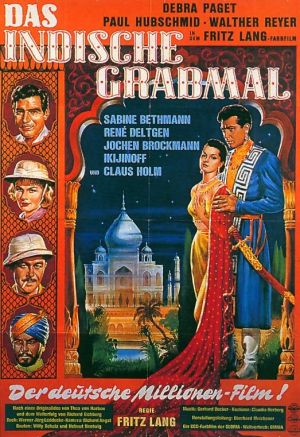
These can perhaps be regarded as typical of German movie poster art of the 1950’s.


It was left to the Italians to show them how to do it right.

By the late 1950’s, Fritz Lang’s Hollywood movie career had come to end. There were no more studio executives left for him to piss off. It was at this time that the German film producer, Artur Brauner, approached Lang and suggested he do a remake of his silent film The Indian Tomb, (which had been completed without Lang’s supervision). Lang agreed, and the resulting work was released as two films: The Tiger of Eschnapu and The Indian Tomb. They were two of the last three films that Lang made before he retired due to failing eyesight.

Lang regarded film as a visual art form rather than as a form of literature, so he had no reservations about using “genre” subject matter: science fiction, detective stories or, in the case of these two films, Orientalist fantasy. In this respect, he is similar to such contemporary directors as George Lucas, Steven Spielberg, and James Cameron. Unlike them, however, Lang’s films are never coy or campy. He always treats his subject matter seriously and with respect. For that reason, I consider Lang’s work to be artistically superior to that of these other directors.

From the moment one begins watching The Tiger of Eschnapur, one can see right away that this is an example of what the late Edward Said called “Orientalism”. More than once some character mentions that Europeans can never really understand India. (It doesn’t help that most of the Indian roles are played by Europeans in brown face.) This “Mysterious Orient” nonsense was, of course, used to justify Western imperialism. (The “clash of civilizations” is a more sophisticated, contemporary version of this argument.) This film is based on a 1918 novel written by Lang’s former wife, Thea von Harbou, who wrote the silly story for Metropolis and who later joined the Nazi party (although, interestingly, she secretly married an Indian man). One can, however, enjoy these films on their own terms without worrying about the politics of it. It is simply a remnant from a defunct way of looking at the world.

Harold Barger (Paul Hubschmid) is a German architect who has been hired by Chandra (Walter Reyer), the maharajah of Eschnapur, to design public buildings for his kingdom. On his way to Chandra’s palace, Harold meets Seetha (Debra Paget), a temple dancer with whom the maharajah has fallen in love. The carry out a secret affair, which Chandra eventually discovers. Chandra throws Harold into a pit with a man-eating tiger, but Harold manages to kill it. (The tiger is obviously fake. Don’t worry, no animals were harmed in the making of this film.) Chandra then tells Harold that he has until sunrise to leave Eschnapur. Harold, however, has an assignation with Seetha in a temple, and the two of them flee into the desert. There, they are overcome by the heat and dust. Harold deliriously shoots at the sun just before he collapses. A message then flashes across the screen promising that we can see the miraculous rescue of the lovers in the sequel, which will be “more grandiose” than the first film.

The Indian Tomb is, indeed, more grandiose. Seetha and Harold are rescued by a caravan. Shortly afterwards, however, they are captured by Chandra’s soldiers. True love eventually wins out, though not without a lot of people getting killed in the process.

These are not among Lang’s best films, but they are nonetheless entertaining movies to watch. Lang directed them in a beautiful manner, although he clearly had to deal with a limited budget. Some of the sets and costumes are not quite convincing. And some of the special effects are embarrassing, such as the fakest looking cobra you will ever see. On the other hand, Debra Paget gives not one, but two, erotic dances. Paget, an American, was, like Lang, a refugee from Hollywood. She had refused to abide by the rules of the studio system, so she was blacklisted. She had to go to Europe to find work. I’m told that in her later years Paget became a born-again Christian, and she had her own religiously themed TV show. I wonder if she ever discussed temple dancing on her show.

Welcome to L.A.

October 22, 2012

Los Angeles, give me some of you! Los Angeles come to me the way I came to you, my feet over your streets, you pretty town I loved you so much, you sad flower in the sand, you pretty town!
― John Fante

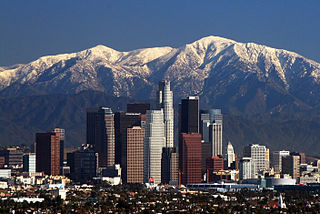
I have returned from the Land of White People to the Real World. It was not without some trepidation that I made the decision to return here. Los Angeles is an ugly city in some ways, and it is laid out in a way that is not environmentally sustainable. Yet I must admit to having fond memories of this place. Since I have arrived here, I have come to the realization that I am a big city person. I like being around people, and I like having many choices as to things to do. In Eugene, I was going to the same hippy hang-out every week, which got old pretty quickly. (I must say, though, that Eugene has a nice art house movie theatre called the Bijou.)

I have noticed that there seems to be more theatres and live music venues than when I left. And Hollywood looks more prosperous than I’ve ever seen it look before. And there are new buildings here and there. It seems that L.A. has weathered the recession fairly well. The only sour note is that the L.A. Weekly, which I used to enjoy reading, is now a shrunken homunculus of its former self. This once eminent newsweekly is now edited by the right-wing crank, Jill Stewart. She used to write for the now defunct New Times L.A., and the Weekly seems to have adopted that paper’s strategy of emphasizing scandals, both real and imaginary. The cover story of the latest issue is a long article about sex scandals in the city of San Fernando (pop. 23,645). We all want to read about that, don’t we? I must admit that I miss the old Weekly. Harold Meyerson may have been a brown-noser to the Democrats, but he hired good reporters and interesting writers. What has happened to the Weekly may be symptomatic of what has been happening to alternative newspapers across the country, but one would have wished that the Weekly would have gone down fighting, instead of becoming an embarrassment.

It’s always nice to be in a city where people speak languages besides English. Spanish is, of course, ubiquitous, but what is not so well known is that L.A. has a large Russian-speaking community. Years ago, I used to take the Hollywood subway early in the morning to a job I had at the time. I swear, it was almost as though I were riding on the Moscow subway. L.A. also has substantial Chinese, Korean, Thai, Iranian, and Armenian communities.

Fuck you, Mayberry!

Rampo (The Mystery of Rampo)

October 20, 2012

The Japanese novelist, Edogawa Rampo, is one of my favorite writers, so I was naturally curious when I heard about a 1994 Japanese film that features him as the hero of a fictional story.

The film is set in Japan in the 1920’s. When the film begins, Rampo (Naoto Takenaka) has had one of his novels banned by the government as being too disturbing for the public. In this work, a woman kills her husband by locking him in a trunk and suffocating him. Shortly afterwards, Rampo learns of a recent murder case that resembles the one in his novel. A shop owner has been found dead in a trunk. The police suspect that his wife, Shizuka (Michiko Hada), was the one who locked him in, but they are forced to release her due to lack of evidence. Out of curiosity, Rampo goes to visit her shop. She seems to take an immediate liking to him. She gives Rampo a music box, while refusing to take any payment for it. Rampo becomes obsessed with her, tentatively beginning a romantic relationship with her. When Rampo becomes convinced that Shizuka really did murder her husband, this only deepens his attraction to her.

Inspired by this, Rampo begins writing a new novel. Kogoro Akechi (Masahiro Motoki), Rampo’s detective hero and alter ego, is told to investigate Shizuko (Michiko Hada again), a wealthy widow who is rumored to have murdered her husband. She is now the mistress of the fabulously rich Duke Okawara (Mikijiro Hira), a sometime transvestite who likes to watch bondage films. (Yes, Rampo’s novels are like that.) Akechi manages to insinuate himself into Okagawa’s household, where he becomes romantically involved with Shizuko. At this point, as often happens in a Rampo story, the border between fantasy and reality starts to get blurred.

Rampo (also known as The Mystery of Rampo) is an erotic and strangely moving film. It does a very good job of capturing the dark, brooding flavor of Rampo’s writings. More than a little of the film’s power comes from Michiko Hada’s brilliant performance as Shizuko. She manages to convey an icy strength underneath her character’s seeming vulnerability.

Cottage Grove, Oregon

October 18, 2012


During the six and a half years that I lived in Oregon, I always saw this sign along the I-5 whenever I was driving from Eugene to Cottage Grove. I’ve wondered if anyone ever satisfied this man’s tremendous need for fill dirt.

Due to some unforeseen circumstances, I had to delay my move to Los Angeles for a few days, so I decided to drive to Umpqua National Forest, which I had never been to before. It is a gorgeous wilderness that extends from the Willamette Valley up into the Cascade Mountains. I walked along a hiking trail that went alongside a creek. The forest was extremely dense. There were thick clumps of moss growing all over the tree branches. It was all a bit gloomy, albeit in a beautiful way. I kept thinking this place would make a good setting for an H.P. Lovecraft story.

On my way back home, I decided to swing by the funky little town of Cottage Grove. This place is most famous for the fact that Buster Keaton’s The General was filmed here. (Animal House was also filmed here, although, not surprisingly, nobody feels proud about that.) The town has an annual Buster Keaton Day. It also has a mural of Keaton located on its Main Street.

Keaton is not the only person honored by a mural in Cottage Grove. Another is Opal Whiteley, who is the most famous person to ever come from this town. In the early twentieth century, Whiteley published what she claimed was a diary that she kept as a child growing up in a lumber camp near Cottage Grove. In it, she claims, among other things, that animals could talk to her, and that she sometimes met “little people” in the woods. She also wrote a nature book titled The Fairyland Around Us. The title of this work is meant to be taken literally. It is a curious mixture of scientific facts, poetry, and just plain fruitiness. I’m told that only five copies of the first edition still exist. One of them is at the University of Oregon (which Opal attended for a couple of years, though she didn’t graduate). It is kept in a locked vacuum chamber that is surrounded by armed guards. Although I would like to think that this indicates a firm commitment to preserving Oregon’s literary history, I have, however, a dreadful foreboding that the university will one day sell it in order to pay for more uniforms for the football team. (Okay, I’m kidding about the armed guards. However, I’m not kidding about the uniforms.)


Opal Whiteley prominently featured in a mural honoring Cottage Grove.

I find it a bit ironic that Cottage Grove has chosen to honor Whiteley in this way, considering that Whiteley disdained her Oregon background and upbringing. She devoted a large amount of time and energy to claiming that she was the daughter of a French aristocrat, Henri, Prince of Orléans, and that she had been sent away to be raised in a lumber camp in Oregon. (I guess that this sort of thing happens all the time to the daughters of the French aristocracy.) She spent the last fifty years of her life in a nursing home in London, where the staff referred to her as “the Princess”. She was buried under the name, Françoise Marie de Bourbon-Orléans. One of the reasons for the ongoing fascination with Opal’s life is that it is not clear whether or not she was a fraud. My guess is that she was probably suffering from a mild form of schizophrenia.


Mount David

Located near Main Street is a long narrow hill that Cottage Groveans (I don’t know what else to call them) call Mount David. This is the most striking physical feature of the area, and I assumed they would have made it into a public park. However, I was surprised to learn several years ago that there were plans to build houses on the hill. This struck me as a bad idea, because, among other things, the sides of Mount David are extremely steep and are almost like cliffs in some places. I once climbed this hill, and even though it’s not that tall, it was only with a great deal of effort that I managed to make it to the top. I was sweating profusely when I got there, even though the hill is not especially high. These plans have apparently been abandoned, which may have something to do with the fact that local residents formed a “Friends of Mt. David” society to preserve the hill. (I suspect that the recession may have been another factor.)

Mt.David is interesting in a number of ways. There is a pioneer cemetery at the foot of the hill. There were cougar sightings on the hill last year. And, according to this reputable website, the hill is haunted:

    Said to be a some kind [sic] of spirit that will chase you off of the hill at night time. Around the graveyards there are said to be many apperinces [sic] of the ghostly kind. Beware of the thing that will chase you off the mountain at night time.

When I climbed the hill, I did go back down at sunset, although I am not aware that I was being chased by anyone or anything. Besides, I think I would be more frightened to run into a mountain lion than into a ghost. One thing I did notice as I was walking along the ridge was an almost perfectly circular impression in the ground, about twenty feet across. I have since learned that there used to be an oil well on top of the hill, which perhaps explains that odd formation.


Another fine mural.


Another mural on a similar theme.


There used to be a gun store at this location. This is progress.


If I lived in Cottage Grove, I would definitely go to this place for all my automotive needs.


Public art, or a bench? You decide.


The Bohemia Mining Museum may be closed, but this would-be capitalist is determined to follow that fine old American tradition of trying to get rich quick and failing at it.


This sign is on a building which used to be Cottage Grove’s City Hall, but which now houses a ballet school and some small businesses. I used to see signs like this all over the place when I was growing up. Yes, this actually gave me a twinge of nostalgia for the Cold War. Does that make me a bad person?