ESPN Goes to Pot

April 21, 2012


A typical backyard in Eugene. Just kidding.

The good people at ESPN are shocked – shocked, I tell you! – to discover that some college athletes are smoking marijuana. The intrepid reporter, Mark Schlabach, reveals that:

    NCAA statistics show a bump in the number of stoned athletes. In the NCAA’s latest drug-use survey, conducted in 2009 and released in January, 22.6 percent of athletes admitted to using marijuana in the previous 12 months, a 1.4 percentage point increase over a similar 2005 study.

Only 22.6 percent? It seems to me that we have a crisis of honesty among student athletes, although the situation has improved by 1.4 percent since 2005. Schlabach continues:

    Some 26.7 percent of football players surveyed fessed up, a higher percentage than in any other major sport.

If I knew that 300-lb guys were about to repeatedly run into me, I think I would want some medication beforehand myself.

What really annoys me about all this, however, is that they’ve singled out my alma mater, the University of Oregon for abuse. Sam Alipour has written an article, in which he claims to rip the lid off the modern-day Sodom & Gomorrah that is Eugene:

    Nowhere is Oregon’s laissez-faire approach to marijuana more apparent than Eugene, the state’s counterculture and cannabis capital. “Business here is almost overwhelming,” says a student-dealer who lives on — no joke — High Street. “Here, everybody smokes.” Not surprisingly, The Princeton Review and High Times both have ranked the University of Oregon among the most pot-friendly schools. Another telltale, anecdotal sign: Into the 1990s, the Grateful Dead made Autzen Stadium a regular tour stop. “It’s the weed capital of the world,” says former Duck Reuben Droughns. “Long dreads. Girls with hairy armpits. Where there’s hippies, there’s weed.”

This offends not only my sense of civic pride, but my sense of chivalry as well. None of the women I know have hairy armpits. None. (I would demand satisfaction from this person, Droughns, were it not for the fact that he’s probably a lot bigger than I am.) And I have met maybe three people with dreadlocks since I moved here. Also, I met a lot more pot smokers when I lived in Boston, “the Hub of the Universe”. (There’s a drug joke in there somewhere, I just haven’t figured out what it is yet.)

Alipour also quotes a unnamed member of the UO football team, who says he and a bunch of other players got stoned just before the Rose Bowl game. Well, they won, didn’t they? Maybe they should get stoned before every game. Then maybe we won’t have any more embarrassing losses, such as the ones to LSU and USC.

Just a suggestion.

Two Films about Dance: Pina and Crazy Horse

April 19, 2012


A scene from Pina.

I recently saw two documentaries about two very different approaches to dance. I find it very hard to write about dance, since I don’t know very much about it, though I like to watch it. Last year, I saw a production by the Eugene Ballet of Prokofiev’s Romeo and Juliet. I found it deeply moving, but I don’t know how to explain in words why it affected me so much.

I’ve never been very good at dancing. Many years ago, I was, for a brief time, a theatre major in college. The department head told me that I was required to take a dance class, so I would “know how to use my body”. So I signed up for a ballet course. There were 25 people in the class, and I was the only male, besides the teacher and the piano player. I learned how to plié and stretch. I got to be pretty good at it, or so I thought. One day the teacher made us do this exercise, in which one by one each of us would run across the room and jump in the air. After I finished my turn, the woman behind me started to follow, but the teacher immediately stopped her, saying that she wasn’t moving in time to the music. She protested that she was following my moves.

“Oh, don’t pay any attention to Austin,” he said casually. “He follows his own beat.”

I dropped the class.

The people we meet in Pina clearly had happier experiences with their first dance classes than I did. This documentary by Wim Wenders is about Pina Bausch, who was the choreographer for the Tanztheater Wuppertal. Bausch died while this film was being made, so it is really a memorial to her. The film starts with an amazing performance of The Rite of Spring. Later, we see members of the troupe dancing in the streets of Wuppertal, as well as on the city’s elevated railway, the Schwebebahn. (Now, why can’t they build something like that in LA?) There are also interviews with the dancers, who come from all over the world. They all talk about how Bausch inspired them. They describe a woman who was patient and understanding with them. This is in striking contrast to the popular notion of dancing masters as barking autocrats. (An idea that is vulgarly portrayed in the critically acclaimed potboiler, Black Swan.)

I highly recommend seeing this film.

Crazy Horse, a documentary by the legendary filmmaker, Frederick Wiseman, is about the famous club in Paris that features nude dancing. This place is not like your ordinary strip club, however. The people who work here all take what they do very seriously. They regard their work as art, just like the dancers at the Tanztheater Wuppertal. (The artistic director says that the government should require everyone in France to visit the club.) As with his previous films, Wiseman has no narration. Instead, his camera follows people around as they carry out their business, leaving it to the audience to draw their own conclusions from what they see. Of the various people we meet in this film, the one I found the most affecting was the head costume designer. She agonizes over every detail of the skimpy outfits the dancers wear. Crazy Horse seems to take us into another world, where things like wigs and g-strings acquire enormous importance.

This is another film I highly recommend seeing.

Tomboy

April 14, 2012

In Tomboy, the French director, Céline Sciamma, has created a touching and sensitive film about children. Laure (Zoé Héran) and her family have just moved to a new town one summer. Laure decides to make the children she meets think she is a boy named Mikael. Her masquerade is highly successful at first. She becomes romantically involved with a girl, Lisa (Jeanne Disson), who thinks she is a boy. However, her imposture is inevitably revealed.

Tomboy is an examination of how ideas about gender shape children’s sense of identity, as well as their sense of self-importance. It also touches upon how children pick up homophobic ideas from society. After Laure’s real sex is revealed, a boy tells Lisa that it is “disgusting” for girls to kiss one another. Lisa feels compelled to agree, even though she kissed Laure in an earlier scene.

The story is told through a series of quiet vignettes involving either Laure playing with the other children or dealing with her family. The scene in which the other children confront Laure about her deception is emotionally wrenching, but Tomboy never veers into melodrama the way all too many films about childhood trauma do. I found all the child characters in this movie completely believable. Sciamma must be a highly skilled director to be able to get such unaffected performances from children. I highly recommend seeing this film.

Titanic in 3D

April 13, 2012

James Cameron’s Titanic has been re-released in 3D. I was going to use this as an opportunity to write a snarcky review of the film, but Lindy West at Jezebel.com has beaten me to the punch. So, instead I will make a few observations about this movie and what it tells us about Hollywood.

I well remember the year that Titanic first came out. At the risk of sounding melodramatic, I must say that this was a dark period of my life. Everywhere I turned, it seemed, people were talking about how Titanic was the greatest movie ever made. Those of us who found this film vapid and pretentious began to feel like a beleaguered minority. I will never forget the vitriol that was heaped upon Kenneth Turan, the film critic for Los Angeles Times, when he admitted that he hated Titanic. (Turan’s comments provoked a public tantrum from Cameron.) I felt a bit like that character in Ionesco’s Rhinoceros, who watches while other people turn into irrational beasts. Fortunately, this time the response to the film has been more muted. Perhaps this is because America is a different place from what it was in the 1990’s. Titanic 3D has been overshadowed by The Hunger Games, a darker and more disturbing film. After the wars in Iraq and Afghanistan, it seems, people are less inclined to go all to pieces over a sappy romance.

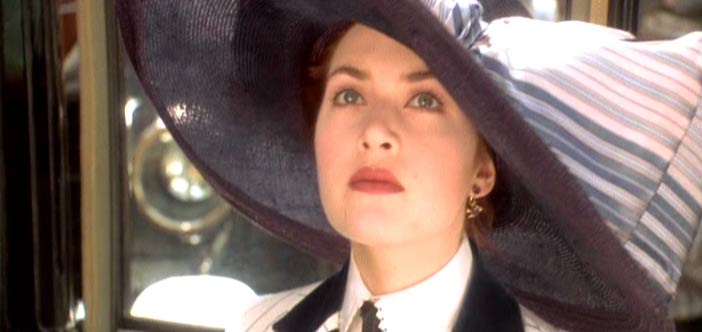
Titanic won the 1997 Academy Award of Best Picture. It beat out L.A. Confidential, which was a better film. The Academy tends to give the Best Picture Award to movies that are considered “uplifting”. This year they gave the award to The Artist, which is a saccharine fairy tale depiction of Hollywood. Last year, they gave it to The King’s Speech, which romanticizes the British royal family. Titanic fits into this pattern. True, 1,500 people freeze to death in the North Atlantic, but Kate Winslet is saved from an unhappy marriage, so everything turns out all right after all. One can see why the Academy preferred this film to L.A. Confidential, which is about corrupt, racist cops – clearly not a movie that makes you feel good about the world. (Besides, as we all know from watching police dramas on TV, cops are never corrupt and racist, are they?)

I know that some will say that I’m being a grump, that Titanic is just meant to be fun. Titanic, however, is not supposed to be escapist fantasy like John Carter. It purports to be an accurate depiction of a real and tragic historical event. (Cameron reportedly went out of his way to make sure the correct star field was in the night sky.) For that reason, it has to be held to a higher standard. The story of the Titanic deserves better than corny dialogue and melodrama.

John Carter

April 9, 2012

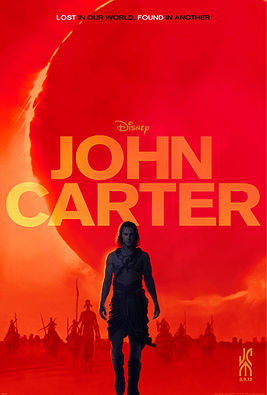
When I was a kid, I read Edgar Rice Burroughs’s Barsoom (Mars) novels. The first few, anyway. I don’t remember much about them, except that the characters struck me as a bit slow. It would take them a long time to figure out things that were immediately obvious to me. So I stopped reading them. However, I’m told that some people have fond memories of these books. One of these is the director, Andrew Stanton, who in John Carter, based on the first novel of the series, A Princess of Mars, has recreated in loving detail Burroughs’s fantasy vision of Mars. I’m starting to think that perhaps I was too hard on the books, for I found this film entertaining, a pleasant way to pass two hours. No one does anything really dumb, except for John Carter, who throws away a medallion that enables him to travel between Earth and Mars. (This turns out to be a big mistake.) One thing that did bother me is that there are a lot of sword fights in this film. I’ve never understood why they have sword fights in science fantasy movies. Why would people who have the technology to make guns use swords? (This is one of the problems I’ve always had with the Star Wars films.)

John Carter cost an enormous amount of money to make, and it is widely believed that it will end up losing money. I think that is a shame, for – dare I say it? – this is actually a better film than Martin Scorceses’s Hugo or Stephen Speilberg’s The Adventures of Tintin. The action scenes all advance the story, and the characters are believable (within the logic of their fantasy world, that is). And there are none of those annoying slow-motion shots that mar Sherlock Holmes: Game of Shadows.

John Carter is played by an actor with the perhaps unfortunate name of Taylor Kitsch. I must say he acquits himself reasonably well in the role. His love interest, Princess Dejah Thoris, is played by Lynn Collins, who is extremely good (think of a sort of an American version of Noomi Rapace).

In perhaps the ultimate nerd touch, we are told that this film is dedicated to Steve Jobs, who, we are told, “inspired us all”. Really? By making overpriced gadgets and exploiting cheap labor in China? Would John Carter have approved of that?

The Hunger Games

March 30, 2012

The Hunger Games is set in a dystopian future in which a group of teenagers are forced to fight to the death on live television. One of the interesting things about this film is its implied criticism of so-called “reality” TV shows. Suzanne Collins, who wrote the novel on which this film is based, has said that she got the idea for it when she switched from a reality TV show to coverage of the U.S. invasion of Iraq. She said the two “began to blur in this very unsettling way”. Indeed, the Iraq invasion was covered somewhat like a reality show. The military and the media colluded, for example, in concocting a fake “dramatic” story about a female army private being held prisoner by the Iraqis. This took place in a context in which innocent civilians were killed. The Hunger Games presents a future in which state-sanctioned murder has become a form of entertainment.

This is a well-made film that is superior to your usual Hollywood blockbuster. It features complex characters and strong performances. I must say, though, that I found some of the fight scenes hard to follow. Also, I would have liked to learn more about the politics of this future world. How does the regime justify itself ideologically? There are extremes of wealth and poverty. Clearly there is exploitation here, but how is it carried out? Perhaps we will learn more about this is the promised sequels.

Early on in The Hunger Games, we see a government propaganda film that starts out by decrying the horrors of war, which then leads into a justification of the blood-letting in the games. This is an interesting portrayal of how, in politics, idealistic language is often used to justify monstrous behavior.

Stand Your Ground

March 25, 2012


Trayvon Martin

The murder of Trayvon Martin has drawn people’s attention to a peculiar law that exists in Florida. Called the “Stand Your Ground” law, it states that one can use deadly force if “he or she reasonably believes that such force is necessary to prevent imminent death or great bodily harm to himself or herself or another or to prevent the imminent commission of a forcible felony”. What I find disturbing about this law is that it diminishes the importance of objective truth. From a legal standpoint, what actually happened is no longer important, only what one person perceived to be happening.

A recent court case in Miami illustrates the problem:

    As critics assail Florida’s “Stand Your Ground” law in the wake of the killing of an unarmed Miami Gardens teen in Sanford, a Miami-Dade judge on Wednesday cited the law in tossing out the case of a man who chased down a suspected burglar and stabbed him to death.

    Greyston Garcia was charged with second-degree murder in the slaying of Pedro Roteta, 26, whom he chased for more than a block before stabbing the man.

    The case illustrates the difficulty police and prosecutors statewide have experienced since the 2005 law eliminated a citizen’s duty to retreat in the face of danger, putting the burden on a judge, not a jury, to decide whether the accused is immune from prosecution.

    In Sanford, police have cited the Stand Your Ground law in their decision not to arrest a neighborhood watch volunteer in the shooting death of Trayvon Martin, 17. A Seminole County grand jury will decide on whether the man who shot Trayvon, George Zimmerman, 28, should face homicide charges.

You see, Garcia claimed that he thought Roteta was about to stab him.

A man chases another man down the street and stabs him to death, and a judge considers that to be “standing his ground”.

We are living in dark times.

Rick Santorum

March 21, 2012

I suspect that Rick Santorum may have made a fatal error in saying that he wants to outlaw pornography. This could be a mistake on the same level as Rick Perry saying that he wants to scrap Social Security. It could cost Santorum the college frat boy vote. The two main voting blocs of the Republican Party are old people and college frat boys. It’s one thing to deny contraception to college women, but God forbid you should deny porn to college frat boys.

Peter Bergman (1939-2012)

March 19, 2012

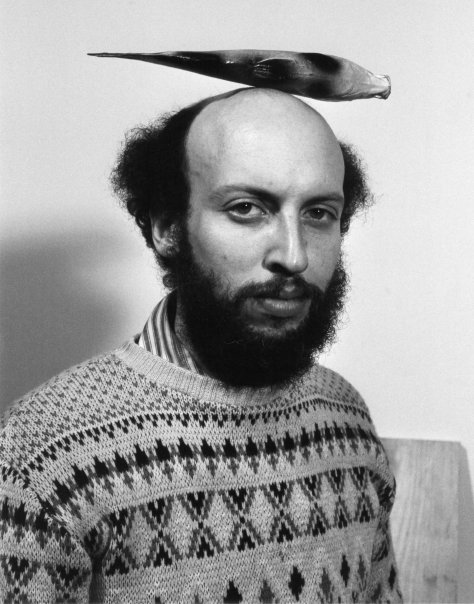
I know this is a bit late, but I feel obligated to write about the recent death of Peter Bergman. He was one of the four members of the Firesign Theatre. (The others were Philip Proctor, Phil Austin, and David Ossman.) I listened to their records when I was in high school. They had a strong influence on my sense of humor and, in a way I find hard to explain, on my world-view as well. Their records employed a multi-layered, non-linear style of storytelling that was unlike anything I had ever heard before, or since for that matter. It was sometimes said of them that they made the long-playing album into a narrative art from. (They advertised themselves as “the rock band that doesn’t need instruments”.) They also peppered their work with all sorts of allusions to literature, philosophy and popular culture. I honestly believe that the Firesign Theatre made The Simpsons possible.

The Firesign Theatre’s humor was strongly rooted in the 1960’s. They didn’t seem quite as funny in later years. I saw them perform in Boston once, and I found the show a bit disappointing. They mostly did old material, and they didn’t use the stage very well. (Their medium was radio, after all.) I did get to shake hands with David Ossman, however, which was cool.

Still, they made a unique and lasting contribution to comedy. Bergman will be remembered as an innovator.

Nixon in China

March 18, 2012

The Eugene Opera Company recently staged a production of John Adams’s Nixon in China. It was daring for a small company with limited resources to stage a work like this. It was nevertheless a handsome production with good performances. I must say, though, that the opera itself is a curious and unsatisfying piece. As the title indicates, it is about Richard Nixon’s 1972 trip to China. It is an opera about politics that largely avoids the topic of politics. In an interesting moment in the first act, for example, Mao tells Nixon that he prefers right-wingers to “doctrinaire Marxists”. One would like to hear him explain why he feels this way, but instead he quickly moves on to another, less interesting topic. (I can’t remember what it was.) To be fair, opera is not the most ideal medium for discussing complex political ideas. But in that case, why make an opera about Nixon’s trip to China? Peter Sellars, who originally conceived the idea for this work, said that he was interested in this event because it was both “a ridiculously cynical election ploy … and a historical breakthrough”. Nixon’s “breakthrough”, by the way, actually consisted of the fact that he simply ended the US’s irrational policy of not recognizing the Chinese government. In any event, the opera never really explores this seeming contradiction. Indeed, it’s not clear what this work is trying to say.

An interesting question is how did Mao and Chou rationalize meeting with a man who waged a savage war against a Communist country? And how did a rabid anti-Communist like Nixon bring himself to get all chummy with Chou-en-lai? Clearly there were geopolitical motives here, but the opera doesn’t even address these issues. Instead we get Nixon reminiscing about his days in the army during World War II (who cares?), and Mao and Chiang Ch’ing talking about how happy they were in the days before the revolution (again, who cares?). Adams and the librettist, Alice Goodman, have said that they wanted to make these people seem human. Yet what is important about these people is not that they were human, but that they made decisions that had dire consequences for other people.

The opera’s portrayal of the Nixons is not really believable. Pat Nixon, for example, is portrayed as fun-loving and free-spirited. That’s not the impression I got of Pat Nixon. I don’t see how a fun-loving free spirit could have remained married to such a relentlessly grim person as Richard Nixon. The latter comes across as amiable but a bit dumb. This certainly doesn’t fit with what we know about Nixon.

The best part of the opera is the ballet scene in the second act, if only because something interesting is actually happening on-stage. Aside from that, it is only because of Adams’s music that this opera keeps our attention. The term “minimalist” is often applied to Adams, but that term is misleading. One of the striking things about his music is his varied and imaginative use of tone color. He subtly uses different instruments to indicate the changing moods of the characters. It’s too bad that there isn’t a more compelling story to go along with this.