The Redgraves

May 23, 2011

When I heard that a book had come out about the Redgrave family, my curiosity was piqued. The Redgraves are interesting people, and an interesting book could certainly be written about them. However, judging from the extract that appears in the Daily Mail, Tim Adler’s House of Redgrave is shallow and mean-spirited. Here is a typical passage:

    Never a shrinking violet, Vanessa Redgrave knew exactly what to do when she found a listening device in an electrical socket at her home. She called a Press conference.

    It was common knowledge, she told the world in thrilling theatrical tones, that the internal security service MI5 had been bugging her conversations since she’d been a member of a Trotskyist organisation called the Workers Revolutionary Party.

    Well, she wasn’t going to stand for it. So she was making a formal complaint to the European Commission, claiming that MI5 had violated her human rights.

    Unfortunately, her grand gesture fell flat. Not only did the EU maintain that bugging radicals such as Vanessa Redgrave was ‘necessary in a democratic society’ — but it turned out that the bug had nothing to do with MI5 in the first place. It had been planted by a rival Left-wing faction.

    Anyone else might have been utterly humiliated at making a fool of themselves[sic], but not Vanessa. As her daughter Natasha once said, it never bothered her that she wasn’t liked — because being disliked gives her enormous freedom.

Now, in what sense did Vanessa Redgrave make a fool of herself? It was reasonable for her to assume that MI5 planted the bug. (MI5 does that sort of thing.) Of course, one could argue about whether this was worth holding a press conference, but there was nothing inherently foolish about that. Moreover, Adler seems strangely untroubled by the EU’s Orwellian argument that it’s necessary for a government to spy on its own citizens in a “democratic society”. As for the bug being placed by a rival left group, well, that’s just another example of the mindless sectarianism of the British Left. If Vanessa Redgrave is to be criticized for anything, it’s that she bought into that mindless sectarianism herself, though that’s not what concerns Adler here.

Elsewhere, Adler writes about Vanessa’s estrangement from her husband, Tony Richardson:

    Richardson’s betrayal, however, was hard to bear. Despite her best intentions, she felt as if she and her husband were separated by a wall of glass, each of them mouthing words the other was unable to understand.

Uh, and how does Adler know that she felt this way? He doesn’t say.

To me, an interesting question is why were Vanessa and Corin Redgrave, two intelligent people, attracted to such an obvious crank as Gerry Healy? Adler doesn’t even try to answer that.

An interesting book about the Redgraves remains to be written.
Biutiful

May 22, 2011

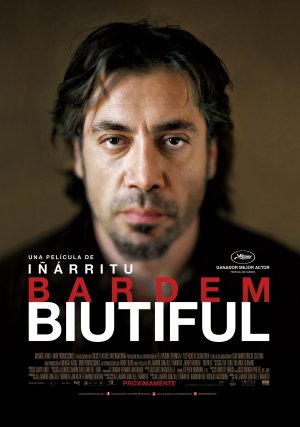
Biutiful is the latest film by Mexican director, Alejandro González Iñárritu. It tells the story of Uxbal (Javier Bardem), a petty criminal in Barcelona. He supplies goods from a sweatshop to undocumented African immigrants to sell on the street. He also bribes police officers to look the other way while this is going on. Uxbal leads an essentially parasitical existence, and he is clearly conflicted about it. He tries to make up for it by helping other people in various ways, but his efforts are not always successful, and in one instance the results are tragic. At the same time he tries to hold together his marriage with his wife, Marambra (Maricel Álvarez), who suffers from bipolar disorder. On top of all this, Uxbal has been diagnosed with cancer.

Biutiful is a well-crafted and convincing drama. My only criticism is of the supernatural elements in the film. It appears that Uxbal has the ability to communicate with dead people. (Such an ability would clearly be financially lucrative. So why does Uxbal have to lead a meagre existence as a not very successful criminal?) This idea is never incorporated into the story in a dramatically interesting manner. For the most part it merely means that at certain moments Uxbal looks up and sees the spirits of dead people stuck to the ceiling. For me, this whole business was merely a distraction from the main story. I would have preferred it if the film had consistently maintained its gritty realism throughout. Aside from this, I found this film deeply moving. Javier Bardem’s performance is powerful; he should have won the Oscar for Best Actor.

Meek’s Cutoff

May 15, 2011

Meek’s Cutoff, a film by Kelly Reichardt, from a screenplay by Jonathan Raymond, is inspired by a real incident. In 1845, a scout named Stephen Meek (Bruce Greenwood) leads a small group of settlers -three men, three women, and a boy – through the Oregon High Desert. The trip takes longer than expected, and the settlers begin to suspect that Meek is lost. The dialogue in this film is sparse. When the characters do speak, it is often in hushed voices, as if they are in awe of the vast, empty landscape around them. (Meek is the only character who ever really gets loud in this film.) As the days drag on, they start to run low on water. They come across a lone Indian (Rod Rondeaux), whom they take prisoner. Meek wants to kill him, but the settlers reason that he must know where water is located. They start to follow the Indian, who doesn’t speak English, but seems to know where he is going.

The film is centered around Emily (Michelle Williams). At first she is a submissive wife, (the decisions are all made by the men, without consulting the women) but as the film goes on, she begins to assert herself. She also develops a sympathetic attitude towards the Indian.

This film’s abrupt and ambiguous ending comes almost as a shock. Perhaps Reichardt is implicitly criticizing the Western genre’s tradition of having pat happy endings. In True Grit, for example, the bad guys are all killed, and the good guys survive. At the end of Meek’s Cutoff, it’s not clear whether anyone will survive. The film is more about how these people’s experiences are affecting them mentally and physically.

The film has a grittiness and simplicity that make it seem more realistic than most Westerns, certainly more so than the fake “authenticity” of True Grit. During the course of the film, the characters’ clothing becomes increasingly filthy, something that is usually not depicted in films about pioneers. The performances are good; Williams is quietly affecting as Emily.

Dennis Banks

May 14, 2011

Dennis Banks, who was one of the founders of the American Indian Movement, came to speak at the University of Oregon. His appearance was part of a day long series of events dealing with the problem of diabetes in our society. Banks has for years been working to draw attention to the epidemic of diabetes in Native American communities. However, he also used the occasion to talk about his political experiences.

Banks began by talking about his childhood. An Anishinaabe, he was born in the Leech Lake Indian Reservation in northern Minnesota in 1937. When he was four years old, he and his sister were taken away from their parents, and sent to a boarding school with other Indian children. They were not allowed to speak their languages and practice their customs. The children were only taught to do manual labor. This was part of a U.S. government program to “kill the Indian, save the man”. The aim was to destroy the cultures and identities of Native Americans. This was a form of genocide. Interestingly, the U.S. was doing this at the same time it was fighting the Nazis in Europe.

According to Banks, beatings were common at the boarding schools he was sent to. He ran away repeatedly. He escaped for the last time when he was fifteen. He felt bitter that his mother did not seem to write to him while he was in the schools. Three years ago, some people were doing a documentary about him. They went to an office in Kansas City where there are records of these schools. There, they found packets of letters that his mother had written him.

Banks founded one of the first AIM chapters in Minneapolis in 1968. He had observed the civil rights and anti-war movements, and he came to believe that a similar movement was needed to advocate for the rights of Native Americans. In 1973, AIM occupied Wounded Knee, South Dakota for seventy-one days to protest rampant corruption on the PIne Ridge Indian Reservation. (Banks prefers to say that they “secured” the town.) Afterwards Banks and Russell Means were charged with 16 felony counts and faced two hundred years in prison. Their trial lasted nine months. At one point an FBI agent testified, “My job was to bring down Dennis Banks.” As he was leaving, he said to Banks, “I’m sorry, Mr. Banks. It was my job.” The government prosecutors repeatedly introduced fabricated evidence. Eventually, the judge threw out all the charges.

The second half of Banks’s talk was devoted to the problem of diabetes. He blamed it on the diet of most Americans. He pointed to the example of the Pimas, whose lands are bisected by the U.S.-Mexican border. The rate of diabetes among Pimas north of the border was far higher than among those in Mexico, even though the two groups are genetically identical. Banks believes that this is because the Pimas in the U.S. have adopted the U.S. diet of the twentieth century, meaning more fat and less starch and fiber. Oddly, Banks made it sound as though he has been fighting the medical establishment on this issue, even though the recommendations he made (eat more vegetables, get more exercise) are often made by doctors.

Banks’s talk went a bit long. In his discussion of diabetes, he made many of the same points over and over again. I have to admit, I became a bit fidgety towards the end. Nevertheless, Banks is a powerful and affecting speaker who has interesting and important things to say.

Super

May 8, 2011

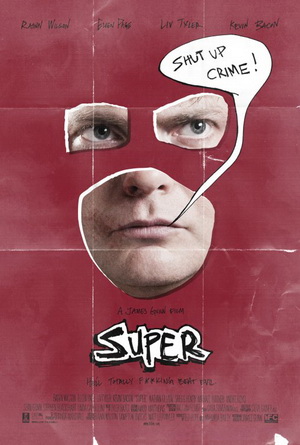
Super, written and directed by James Gunn, is about a short order cook, Frank (Rainn Wilson), whose wife, Sarah (Liv Tyler), is stolen from him by a drug dealer, Jacques (Kevin Bacon). Frank becomes depressed, and after watching a TV show about a religious superhero, he has a religious vision in which he is told to become a superhero himself. He goes to a comic book store to do research on how to be a superhero, and there he meets Libby (Ellen Page), a store employee who helps him find appropriate comic books. Franks makes a red costume for himself and takes the moniker, “The Crimson Bolt”. He roams the streets at night, attacking criminals with a wrench. (Frank’s idea of “criminals” includes a man who cuts in line at a movie theatre.) Libby eventually finds out about what Frank is doing, and she demands that he make her his sidekick, “Boltie”. However, it soon becomes clear that Libby is less interested in fighting crime than in clobbering people. Frank’s feelings towards her become conflicted, but then he has a vision telling him he must rescue Sarah. He takes Libby with him for an attack on Jacques’s heavily guarded mansion.

I found Super mostly funny in a very dark sort of way. However, towards the end the film suddenly becomes merely mindlessly violent. (The turning point comes at about the point when Frank sets a man on fire.) I suppose that itself is intended as a sort of joke. Perhaps Gunn meant this film to be an elaborate shaggy dog story: the ending is less than what we are led to expect it to be.

Rainn Wilson and Ellen Page both give very good performances. (Page is wonderfully disturbing as Libby.) I wish I could give this film an unqualified endorsement, but I can really only recommend about four fifths of it.

Phil Ochs: There but for Fortune

May 6, 2011

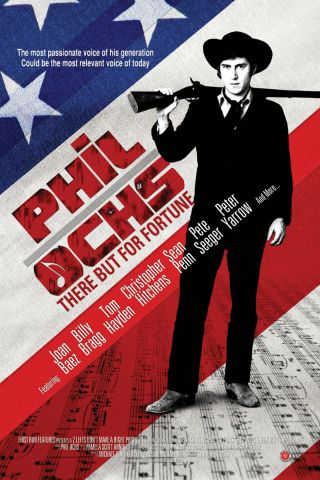
Phil Ochs (1940-1976) was a folksinger and brilliant songwriter who gave us such songs as “I Ain’t Marching Anymore”, “There but for Fortune”, “Love Me, I’m a Liberal” and “The War is Over”. Kenneth Bowser has put together a film documenting Ochs’s life and career. Ochs (pronounced “oaks”) came from a non-political middle class family that moved around the country as he grew up. Ochs attended a military academy, which is a bit ironic, in view of his later anti-military views. While he was still very young, he simultaneously became interested in politics and in the burgeoning folk music scene of the early 1960’s. He moved to Greenwich Village, where he met Pete Seeger and Bob Dylan, and where he began to perform in coffee houses. Ochs was initially a supporter of John F. Kennedy, but in response to the civil rights and anti-war movements, he became increasingly radicalized, especially after the police riot at the 1968 Democratic convention in Chicago.

Ochs was associated with the Yippies for a time, but he eventually came to the conclusion that their tactic of carrying out public pranks was divisive and counterproductive. He believed that the Left needed some way to reach out to a wider range of people, including the working class. He argued that what the country needed was a “combination of Elvis Presley and Che Guevara”. He tried to find ways to broaden the appeal of his act, at one point going so far as to wear a gold lamé suit in imitation of Presley. These efforts yielded mixed results, but I think Ochs was right in believing that the Left has to find new ways to reach out to people.

Ochs supported the Allende government in Chile. The military coup in that country was a great emotional blow to him, especially since his friend, the folksinger Victor Jara, was brutally murdered by the army. (Ochs rightly suspected that the CIA was involved in Allende’s overthrow.) Ochs suffered from bipolar disorder and from alcoholism, and these conditions began to worsen at this time. His behavior became increasingly erratic, and he eventually stopped performing. He committed suicide when he was only 35-years old.

The film has many interviews with people who knew Ochs. Inexplicably, it also has an interview with Christopher Hitchens, who is precisely the sort of warmongering liberal that Ochs despised. Aside from that, Bowser’s film is a moving tribute to a remarkable human being. I highly recommend seeing it.

Bin Laden

May 4, 2011

It seems these government officials just can’t resist the urge to lie about military operations. Initially, we were told that Bin Laden took part in a firefight with the Navy Seals and that he used his wife as a “human shield”. The government now admits that never happened. Moreover, we are now told that Bin Laden was unarmed. If it is true that the Seals were to try take Bin Laden alive, then their killing him has to be considered a blunder.

Bin Laden was an evil man, and he caused nothing but suffering in the world. Some have pointed out that the U.S. military have killed more people than Bin Laden did. This is true, but it was Bin Laden who provided them with a convenient excuse to carry out their wars. Without the September 11th attacks, it would have been a lot harder for the U.S. government to persuade people to support the invasion of Iraq. Of course, that is what Bin Laden wanted: the U.S. sending its troops into Muslim countries. No doubt he derived satisfaction from this, though the only people who have benefited have been corporate CEO’s.

Will this change anything? The Arab revolutions have made Al Qaida largely irrelevant. With Bin Laden’s death, however, the emotional justification for the U.S.’s interventions in the Muslim world is gone. I have heard a number of people say that the U.S. should leave Afghanistan now. The Stratfor website has speculated that Obama may start pulling troops out of Afghanistan soon. I hope that they are right, though I fear that the government will find some other excuse to continue the occupation.

COINTELPRO

May 2, 2011

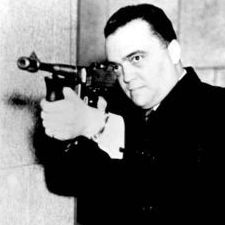
I recently saw the film, COINTELPRO 101. As the title suggests, the film is meant as an introductory work, rather than an in-depth examination of the FBI’s secret war on left groups. The film is only 56 minutes long, presumably so it can be shown in classes. While I respect the producers’ intentions, it seems to me that the film should provide more details. For example, it gives the impression that COINTELPRO began in 1960. It actually began in 1956, and its intended target was the Communist Party. I think it is important for people to know this, so they are aware of the historical continuity between the government’s suppression of the CP and the attacks on left groups during the 1960’s and 1970’s.

One thing I did like about the film was that it talked about the FBI’s persecution of Puerto Rican nationalists, a topic that usually doesn’t get as much attention as it deserves. It also talked about the FBI’s attacks on the American Indian Movement and the framing of Leonard Peltier for the killings of two FBI agents. There is a lengthy discussion of the FBI’s efforts to destroy the Black Panther Party.

One thing I found questionable was a section devoted to the murder of the Chicano activist, Ricardo Falcon. I couldn’t see the reason for including this, since the film offered no evidence that the FBI were involved. (And I don’t know that there is any evidence that they were.)

The film could have instead discussed the FBI’s attempts to undermine the Socialist Workers Party. This story at least has a happy ending of sorts, since the SWP eventually successfully sued the FBI for its harassment. The late Peter Camejo reported that when he ran for president on the SWP ticket in 1976, the FBI had sixty-six informants working in his campaign. This shows you the lengths they were willing to go to try to quash any political movement outside the two party duopoly.

At the screening I went to, Chuck Hunt, who was an anti-war activist during the 1960’s, got up to talk after the film was over. He pointed out that many of the illegal activities that the FBI carried out under COINTELPRO are now legal thanks to the USA Patriot Act.

Into Eternity

April 25, 2011

Nuclear energy has always struck me as a bad idea. The idea that you can simply bury radioactive waste in ground and forget about it (I once heard an MIT professor make this very argument) has always struck as naive. This stuff remains radioactive for one hundred thousand years. We have no idea what the world will look like in one hundred thousand years.

In his documentary, Into Eternity, Michael Madsen investigates the construction of the Onkalo nuclear repository in Finland. (Onkalo means “hiding place” in Finnish.) It is a massive underground tunnel blasted out of granite bedrock. It will be used to store radioactive waste from nuclear plants. It will be closed off after one hundred years, sealed forever (one hopes).

The film is filled with interviews with scientists and engineers working on the project, as well as with the man responsible for detonating the explosives that carve the tunnel out of solid rock (I must say, he is poetic in his observations). They all come across as intelligent and well-intentioned. They discuss the problem of trying to deter people in the future from disturbing the tunnel and its contents. The idea of putting up warning markers, in all the world’s major languages, is the preferred solution. Someone suggests putting up ominous jagged sculptures to frighten people away. Someone else actually suggests that they should simply “forget” about the structure after its done, though this idea is (wisely, I think) rejected.

There are lingering shots of the inside of the tunnel. There is something eerily beautiful about the place, especially since one knows that it will eventually be sealed from human sight forever.

When Madsen asks an engineer if perhaps nuclear energy is more trouble than it’s worth, the latter replies that it is better than global warming. This assumes that our only choice is between nuclear and coal. Madsen doesn’t make the argument that what we need to do is develop renewable energy sources. This would be a far better plan than riddling the Earth’s surface with radioactive tunnels.

Noam Chomsky

April 23, 2011

Noam Chomsky spoke at the University of Oregon earlier this week. An estimated 2000 people turned up to hear him. Chomsky admitted he had left his notes in his hotel room, so he would have to wing it. The title of his talk was “Global Hegemony: Its Facts and Images”. Chomsky began by quoting Adam Smith’s “Vile Maxim of the Masters of Mankind”: “All for us, nothing for everyone else.” Chomsky believes that this is increasingly how the ruling class thinks. From this he proceeded to talk about how economic power increasingly determines political power. He quoted Thomas Ferguson to the effect that elections are when investors gather to control the state. Obama’s victory in the presidential election was due to support from financial institutions. The result of this financial control of the government is that the country is at its highest level of inequality ever. The richest one tenth of one percent of the population have become spectacularly wealthy.

Chomsky argued that the Bretton Woods agreement resulted in a period of unparalleled economic growth in the years following World War II. However, Bretton Woods was abandoned during the 1970’s, one result of which was a sharp growth in the size of financial institutions. This has resulted in the weakening of banking regulation in the U.S. Chomsky argued that the concentration of wealth leads to a concentration of political power. Bush’s tax cuts, for example, were designed so that half of them went to the richest one percent of the population. He pointed out that during the last months of 2010, Obama imposed a pay freeze on federal employees, which amounts to a tax increase for them. He renewed the Bush tax cuts, and he reduced funding for Social Security, which, Chomsky believes will eventually lead to its privatization. He pointed out that the Savings and Loan scandal of the 1980’s resulted in criminal prosecutions. There have been no prosecutions of the criminal behavior that caused the financial meltdown of 2008. Bankers now have no incentive to obey the law, because they know they will not be punished.

Smith’s “Masters of Mankind” want the government to focus on cutting the deficit, not on stimulating the economy. Public education is being dismantled. Why this attack on Social Security and on education? They’re based on the principle that one should care about other people. This violates the Vile Maxim. Half the deficits are from military spending, but the rich don’t want this cut.

To some extent, this is built into our political system. James Madison, one of the founding fathers, said that power must be in the hands of the wealthy, because they are the most “responsible” members of society. Madison, according to Chomsky, was “pre-capitalist”. He imagined the wealthy to be benevolent aristocrats. He failed to foresee the rise of corporations that no longer care about the welfare of the country.

The market is based on the theory that consumers make rational choices. Business undermines this through advertising, which gets people to make irrational choices. They undermine democracy the same way.

The problem of capitalism has become an existential one, because corporations regard the survival of the species as an externality, meaning that is of no concern to them because it has nothing to do with them making a profit.