Libya

April 22, 2011

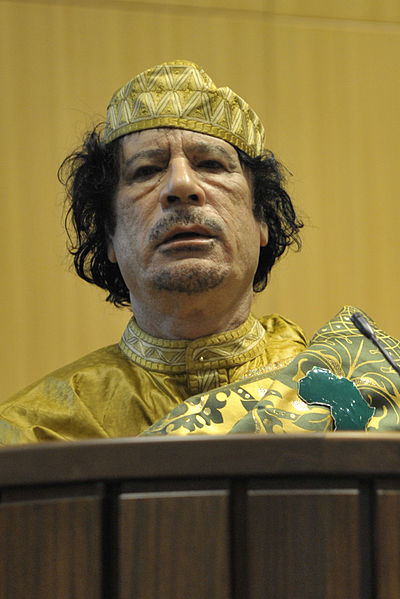
The U.S., Britain and France have been carrying out bombing raids in Libya. Originally, the stated purpose of these raids was to create a “no-fly” zone, to keep Libyan rebels from being wiped out by Moammar Gaddaffi’s forces. Now, we are told that the aim is to remove Gadaffi from power, and that special forces troops may have to be sent in to do this. This is a classic example of what in the military they call “mission creep”. The involvement of Western troops means that whatever government replaces Gadaffi, it will be one that designed to protect the interests of the Western powers, not the Libyan people. In effect, the West has intervened in the revolutionary upsurge sweeping the Arab world in order to protect its interests. At the same time that the U.S. has purportedly intervened to save the rebels in Libya, it has given the green light to Saudi Arabia to crush the uprising in Bahrain. And it has supported the government in Yemen, which is trying to crush protests in its country, which it denounces as “un-Islamic” because they include women as well as men. Clearly, the U.S. is not concerned with spreading democracy in the Arab world, but with defending its own interests.

There are some on the Left, such as Gilbert Achcar and Juan Cole, who have defended the intervention in Libya. They argue that a no-fly was necessary to defend the rebels. But as Lance Selfa has pointed out in Socialist Worker:

    Reportedly, the Libyan National Transition Council appealed to European governments with a list of demands, including the handing over of sequestered Qaddafi funds to the rebel government. The European governments chose to ignore most of the demands, but to accept the proposal for a no-fly zone.

    In other words, the notion that “there was no other choice” but a no-fly zone already accepts a compromise of the Libyan movement’s independence. In the coming weeks, we may learn if the West extracted other concessions from the Libyan opposition in exchange for support for its action–for example, honoring the Qaddafi government’s debts or giving preferential oil contracts to particular Western interests.

    As SocialistWorker.org has argued, Western intervention has many other motivations besides the “humanitarian” claims in support of Resolution 1973: preserving the flow of Libyan oil; preventing mass migrations of Libyans to Europe; getting rid of a “failed state” in Libya; and stopping the Arab revolution from overthrowing another dictator through its own efforts.

As Mike Marqusee has pointed out:

    The current intervention ensures that if Gaddafi falls, his replacement will be chosen by the West. The new regime will be born dependent on the Western powers, which will direct its economic and foreign policies accordingly. The liberal interventionists will say that’s not what they want, but their policy makes it inevitable.

At the opposite end of the spectrum from Achcar and Cole are people who have defended Gaddaffi, claiming that he is an anti-imperialist. In fact, since 2003, and possibly earlier, Gadaffi has been cooperating with the West. Some have even claimed that the rebels are motivated by racism against the country’s black African immigrants. In fact, it is the Libyan government that has been promoting racism. In the 1990’s, the Libyan government allowed black Africans to enter the country because it needed a source of cheap labor. Since then it has promoted tensions between these immigrants and the Libyan population. In 2000, there were attacks against blacks that killed at least 135 people. What’s more, Gadaffi has presented himself a gatekeeper against black immigration to Europe. During a trip to Rome in 2010, he declared:

    We don’t know what will happen, what will be the reaction of the white and Christian Europeans faced with this influx of starving and ignorant Africans…We don’t know if Europe will remain an advanced and united continent, or if it will be destroyed, as happened with the barbarian invasions.

Researchers Gregor Noll and Mariagiulia Giuffré have written:

    In the last two years, hundreds of migrants and asylum-seekers intercepted at sea have been driven back to Libya without any chance of setting foot on European soil to claim asylum. But in Libya, migrants and refugee are victims of discriminatory treatment of all kinds. They live in constant fear of being arrested, in which case they will be indefinitely confined in overcrowded detention centers, where they are exploited, beaten, raped and abused. Refugees who have no possibility of applying for asylum or accessing any other effective remedy, thereby run the risk of being forcibly returned to countries of origin, where they may face persecution or torture.

An interesting question presents itself here: if Gadaffi has been doing the bidding of the West, why are they now trying to get rid of him? My guess is that they decided that it was worth sacrificing Gaddaffi to regain control over the situation in the Arab world. They have used the fighting in Libya to make it appear that the West is on the side of democracy, while the West’s allies in Bahrain and in Yemen crush the revolts in those countries. There may also be domestic considerations behind this decision. In Britain, the government of David Cameron is deeply unpopular because of its drastic cuts. The Sarkozy government in France is also unpopular. This war is one way to distract people’s attention from the problems in those countries.

Back in February, Defense Secretary Robert Gates told an audience at West Point that the U.S. cannot afford any more wars like the ones in Iraq and in Afghanistan. I doubt that Gates would have said that if he didn’t believe it. The U.S. has been limiting its involvement in the fighting, no doubt in the expectation that Britain and France will carry most of the burden. However, if those countries are unsuccessful, there will be pressure on the U.S. to intervene more aggressively, perhaps even send in troops. Having declared the removal of Gadaffi as its goal, the U.S. cannot afford to allow him to survive. The U.S. may find itself draw into the Libyan conflict against its will.

The people of the Arab World must be allowed to decide their own future. That is why we should oppose the West’s intervention.

Donald Trump

April 20, 2011

When you think about it, a Trump presidency makes perfect sense. He personifies as much as anyone the self-delusion and mindless hype that characterize contemporary capitalism. This is a man who has filed for bankruptcy three times, yet the media celebrate him as a financial wizard, a modern-day King Midas. Who better to preside over a government that gives money to bankers who collapsed the economy? Who better to preside over an unwinnable war in Afghanistan? Who better to preside over a bubble economy heading for another crash?

The downside to a Trump presidency is that we will have to spend four years looking at his weird hair.

Fun Fact: Donald Trump and John Boehner both belong to the same orange-skinned hominid species!

The Conspirator

April 18, 2011

Robert Redford’s new film tells the story of the trial of Mary Surratt (Robin Wright), who was accused of being one of the conspirators in the assassination of Abraham Lincoln. Surratt owned the boardinghouse where the conspirators met. Surratt’s assigned attorney, Reverdy Johnson (Tom Wilkinson) persuades a young lawyer, Fredrick Aiken (James McAvoy) to take over the case. Aiken, who was wounded while serving in the Union army, is at first reluctant, but he becomes convinced that Surratt, who is being tried by a military tribunal instead of a civilian court, is being treated unjustly. His attempts to get a fair trial for Surratt are opposed by the Secretary of War, Edwin Stanton (Kevin Kline), who argues that “swift justice” is necessary to keep the country together after the shock of Lincoln’s death.

The parallels with recent events are obvious. This film is an argument for the need to maintain the right to a fair trial even during a national emergency. The film is honest in that it doesn’t try to make a heroine out of Surratt. It makes clear that Surratt knew that the conspirators were up to something, even if she didn’t know all the details. However, the film also makes the point that if Surratt’s son, John (Johnny Simmons), who was one of the conspirators, had been captured right away, she probably would not have received the death penalty. Also, it shows that some of the witnesses against Surratt were not completely honest.

This film’s greatest strengths are the intelligent script and the fine performances. Wright is especially good as Surratt, making the character human without seeming pitiful. Kline exudes a brutal earnestness as Stanton. I recommend seeing this film.

Ayn Rand

April 17, 2011

Before you ask: no, I do not plan on seeing Atlas Shrugged, Part 1. I have better things to do with my time and money. I had a college professor who was an Ayn Rand disciple, and for a time I had a subscription to a “libertarian” magazine. That is about as much exposure to Randian bullshit – excuse me, “objectivism” – as any one person should have to suffer through in a lifetime.

It never ceases to amaze me that people can actually take Rand seriously. Her hero was a serial killer. She collected Social Security and Medicare benefits, while denouncing other people for doing the same. Her disciple, Alan Greenspan, helped wreak the U.S. economy. I guess this is what it takes to be considered a great thinker.

About that Ayn Rand disciple professor. Years ago I took classes at an underfunded state university in Massachusetts. One of the courses I took was in environmental science. The instructor was this fat, bald, baby-faced man. When he talked, he sometimes looked like an infant angrily working its mouth. I couldn’t help finding this comical. I would sit in the back of the class holding my hand over my mouth, but this didn’t fool him. One day, after class, he confronted me and angrily demanded to know what I thought was so funny. I pretended not to know what he was talking about, and I managed to change the subject by asking a question about solar energy. Even at that moment, I had to clench my jaw to keep from smiling.

Any way, one day this professor read to the class this long, mind-numbing rant by Ayn Rand, the upshot of which was that environmentalists are evil people who want to take away our electric toothbrushes. (Those fiends!) He also informed us that critics regard Atlas Shrugged as a great work of literature, although he didn’t say whether he had read it himself. On other occasions, this guy would urge the students to get into as much debt as they possibly could. He had this idea that if people got into huge amounts of debt and then defaulted on their loans, it would bring about the collapse of our mixed economy, thereby making possible the creation of a free market utopia.

Most of the students at this school came from working class or lower middle class backgrounds. Over the years I’ve sometimes wondered how many of them ruined their lives because they listened to this guy’s advice. Of course, Rand would have said that he was merely eliminating “inferior types”.

Sidney Lumet (1924-2011)

April 17, 2011

Sidney Lumet has died. He was a prolific director who made films of varying degrees of quality, but he will always be remembered for Dog Day Afternoon, which was one of the best American films of the 1970’s. Lumet was a type of director that we don’t see that much of any more. At a time when the emphasis in Hollywood has been on special effects and on “high concept” stories, Lumet was known as an “actor’s director” who liked to make socially relevant films. His ability to work with actors was justly praised. Even in a creaky Agatha Christie vehicle like Murder on the Orient Express, the performances are fun to watch. He will be greatly missed.

Henry Adams on Robert E. Lee

April 16, 2011


Henry Adams


Gen. Lee

This year is the one hundred and fiftieth anniversary of the beginning of the Civil War, so there has been a lot of interest in that transformative event in our nation’s history. Robert Redford has made a film about Lincoln’s assasination, The Conspirator, which has been getting mixed reviews. I will have to see it.

I recently saw a rebroadcast of Ken Burns’s documentary series about the Civil War. Although it has flaws (there is no discussion of Reconstruction) it is nonetheless powerful to watch. One thing that struck me in the series was a quote from Henry Adams:

    I think that Lee should have been hanged. It was all the worse that he was a good man and a fine character and acted conscientiously. It’s always the good men who do the most harm in the world.

This is a remarkable dissent from the generally respectful way that Lee has been treated by historians. Yet I think I can see what Adams was trying to get at. The fact that Lee was generous and courageous only served to give the Confederate cause an appearance of respectability that it didn’t deserve. It would have been better for the whole country if Lee had been a coward and a buffoon.

Annals of Unemployment, Part 4

April 13, 2011

I mentioned in an earlier post that I had gotten a job. What I didn’t mention was that it was a temporary job. After the Christmas rush petered out in January, I was laid off. My boss told me that the company laid off 167 people, so at least I knew I was not alone. (Misery loves company, as they say.) Since then, except for a one-week temp job, I have been unemployed. I check Craigslist every day. I send out maybe a dozen resumes every week. One day I came across an ad for a “Graphic Designer/Web Marketing Copywriter”. It said:

    Local manufacturing company seeking graphic designer / web marketing copywriter for part-time position. Primary duties are to create product flyers and to create and upload web-marketing copy to our new site using a CMS interface. Please send resume and work samples for consideration.

Since I am a graphic designer who has done some writing, this sounded like something I could do, so I sent them my resume. The next day I got a phone call from a woman at the company, asking to set up an interview with me. I naively assumed that because I had gotten such a quick response, they must have been impressed by my resume and by my online portfolio. I soon learned otherwise.

It was a small company that made specialty audio equipment for recording studios and whatnot. I met with the company’s business manager. She told me that the company was dissatisfied with their website, so they had decided to build a whole new one. Someone had already made templates for the new site. Basically they needed someone to write text for it, as well as for some flyers. I told her about the writing I’ve done. She was unimpressed. She explained with a slight tone of impatience in her voice that whoever wrote their copy must have a background in marketing. The most logical thing for me to say at this point would have been: “Does it say on my resume that I have a background in marketing? Why are you wasting my time like this?” Of course, I didn’t say that. Instead, I smiled at her. A small part of my brain was clinging to the hope that I might still be able to get some sort of job out of this. After all, they had invited me in for an interview, hadn’t they? Surely, that must mean something?

The woman kept talking. Suddenly, she started saying that in addition to a background in marketing, the copywriter also had to have a knowledge of audio science. So, what they were really looking for was someone who had a double major in marketing and audio engineering. It was becoming embarrassingly obvious that this woman had no idea what she was doing. My smile must have looked awfully strained at this point. The corners of my mouth were starting to hurt. When I sensed that this “interview” was coming to an end, I asked her when she expected to make a decision. She said when she found the right person. “I’m interviewing a number of people,” she said. To which I should have said: “And I’m sure you will wast their time just as you have wasted mine.” Instead, I smiled.

This was the first job interview I’d had in months, and it was a complete joke. I’m starting to get desperate. I’m actually thinking about going to graduate school. Heaven help me.

Nostalgia for the Light

April 10, 2011

Nostalgia for the Light the latest film by the Chilean director, Patricio Guzmán, is about the Atacama desert in Chile. It is widely considered to be the driest place in the world. Because of its perpetually clear skies, Atacama is the home to a number of astronomical observatories. It is also of great interest to archaeologists, because of the ruins and numerous petroglyphs left by pre-Columbian peoples.

The place is also the site of a concentration camp used by the Pinochet government. It was originally an abandoned mining camp, but the government found it could easily be converted to a prison. (The point here being that the miners were little more than prisoners themselves.) We meet a former inmate. He talks about how he and other prisoners formed a club devoted to learning about astronomy. Thinking about the vastness of the universe made him feel free. (Interestingly, the film tells us that the Pinochet government was hostile towards science.)

We meet women who spend their time digging in the desert, looking for the bodies of people killed by the Pinochet regime. We also meet an employee at one of the observatories, whose parents disappeared under Pinochet.

Nostalgia for the Light is a meditation on the nature of the past and of the importance of memory. In some ways, it is a subtle rebuke to those Chileans who want to forget the dark moments from their country’s history. In various ways, the film makes the point that the past is always with us.

Of Gods and Men

April 10, 2011

Of Gods and Men, a French film directed by Xavier Beauvois, is based on a real incident. It tells the story of a group of Trappist monks living in a monastery in the Atlas mountains during the Algerian Civil War of the 1990’s. The leader of the monks is Christian (Lambert Wilson). One of the monks, Luc (Michael Lonsdale), is trained as a doctor. He provides treatment for people from the nearby impoverished village. They learn that Islamist rebels have been targeting foreigners. An official urges the monks to return to France, because the government cannot guarantee their safety, but the monks refuse. Luc treats the wounds of one of the rebels. After that, the government suspects the monks of providing aid to the rebels. (In one scene, we see the look of disgust on an officer’s face when he sees Christian praying over the dead body of a rebel.) The monks try to maintain the routines of their existence, despite the pressures on them.

The film mostly depicts the daily lives of the monks. We see their rituals, their prayers, their chores, their dealings with the villagers. The slow pacing of this film may test some people’s patience, but Beauvois wants us to get a sense of how these monks experience time. They grapple with the question of whether they should stay or leave. Although they are afraid, they feel obligated to remain. They have completely committed themselves to their way of life.

In the film’s last scene, we see seven of the monks being led away by the rebels. In the end, faith, duty and honor are not enough to protect us in this world.

James Cockcroft

April 9, 2011

James Cockcroft, scholar, activist, and author of numerous books on Latin America; recently gave a talk on Mexico at the University of Oregon, to promote his new book, Mexico’s Revolution: Then and Now. He began by calling Mexico a “social volcano”. He pointed out that in the 2010 elections in that country, nearly half the eligible voters didn’t vote. There is a deep alienation from the government in that country. He said that after Felipe Calderón stole the 2006 presidential election from López Obrador, he launched a “reign of terror” in the name of the “war on drugs”. He put down the uprising in Oaxaca, and attacked political dissidents. Calderón claims to be fighting against the Mexican drug cartels, but what he has actually done is side with the Sinaloa cartel against the Juarez cartel. The leader of the Sinaloa cartel, who is known as “El Chapo”, is one of the richest men in the world. Every year, billions of dollars in Mexican drug money is laundered through U.S. banks.

Cockcroft argues that Mexico is not a failed state. Quite the contrary, it carries out all the tasks of neoliberalism. Rather, it is a state of failed law. Assassinations and kidnappings are common. The military controls whole regions of the country. 40,000 people are dead as a result of the “war on drugs”. Cockcroft believes that the formation of a civilian-military dictatorship is in progress. He also sees a U.S. occupation of Mexico as a real possibility. He pointed out the Mexican congress is considering a bill that would allow foreign troops to enter Mexican territory. And he claimed that U.S. drones are already flying over Mexico. Because Mexico is the third largest provider of oil to the U.S., as well as the U.S.’s largest trading partner, the U.S. has an interest in how the country is run.

Cockcroft sees three movements of resistance in Mexico: 1) the labor movement (non-corrupt labor unions), 2) the broad-based non-violent movement led by López Obrador, and 3) the Zapatistas. So far, these movements have been working independently. What is needed is for them to come together to challenge the government.

Cockcroft recalled that 105 years ago, the Mexican anarchist, Ricardo Flores Magón, predicted that if the Mexican Revolution were crushed, it would be a disaster for workers in the U.S. Corporations would move their factories south to exploit Mexican workers with no political rights. We saw this begin to happen with the ratification of NAFTA.

Cockcroft concluded by asking a question: Tunisia, Egypt, Libya, Madison, Mexico? He believes the seeds of revolt exist.

The day before his talk, I met Cockcroft at a dinner at a friend’s house. He told stories from his long career as a writer and activist. He recounted how when he was a student at Cornell in the 1950’s, he and some friends invited the black-listed writer, James T. Farrell, who wrote Studs Lonigan, to speak at their school. He arranged to have Farrell have dinner at his apartment, so he cooked some steaks To his amazement, Farrell ravenously devoured one steak after another. Cockcroft had to go out to buy some more, which Farrell duly wolfed down. “I’ve got nothing,” Farrell explained. “If you hadn’t invited me here, I don’t know what I would have done.” This was one of a number examples of he gave of the destructive effects of black-listing. He recounted something I had never heard before, which was that there was a wave of black-listing in the early 1970’s. Many left-wing academics lost their jobs and had to go to other countries to find work.

Cockcroft is a remarkable speaker, and if you get the chance to see him, I strongly urge doing so.