Foxcatcher

February 18, 2015

Foxcatcher_First_Teaser_Poster

Foxcatcher, directed by Bennett Miller, from a screenplay by E. Max Frye and Dan Futterman, is loosely based on real events. In a way, this film is similar to Winter’s Sleep, in that it portrays how wealth creates distances between people, although it is structurally quite different.

Mark Schultz (Channing Tatum) is an Olympic Gold Medal wrestler who is just barely scraping by financially. John du Pont (Steve Carell), an heir of the du Pont fortune, offers Schultz a job coaching a wrestling team that will train on the grounds of his family estate. As time goes by, however, Schultz realizes that du Pont actually wants to replace him with his more charismatic brother, Dave (Mark Ruffalo).

Du Pont is depicted as emotionally stunted and prone to self-delusion. It becomes clear that he is using the team both to promote himself and to fulfill his own fantasies about being an athlete. Both Mark and Dave Schultz work for him only because of the generous pay and state-of-the-art facilities he can afford to give them. In one scene, du Pont tells Mark that his only friend when he was growing up was the son of his mother’s chauffeur. He eventually found out that his mother was paying him to be his friend. Du Pont’s relationships with other people are all basically about money.

A sense of growing uneasiness pervades this film. Du Pont’s delusions of grandeur are combined with a hidden resentment of Mark and Dave. He envies them not just for their athletic ability, but also because they are situated in the real world in a way that he can never be. Their relationships with other people are not all defined by money. The film’s tragic climax is shocking, but at the same time oddly unsurprising. Foxcatcher is an examination of the subtly corrupting power of money.


More Thoughts on Reading ‘The Origins of Totalitarianism’: The Enigma of Stalin

February 16, 2015

joseph-stalin

In her book, The Origins of Totalitarianism, Hannah Arendt notes numerous similarities between Nazi Germany, on the one hand, and the Soviet Union under Stalin on the other. In particular, the use of terror – that is, the violent persecution of whole sections of the population – which Arendt sees as the defining characteristic of totalitarianism. (According to Arendt, the Soviet Union became totalitarian in 1930, whereas Nazi Germany didn’t become fully totalitarian until the Second World War.) According to Arendt, the aim of this terror is “total domination”, which will eventually lead to some ultimate goal: in the case of Nazi Germany, “world conquest”; in the case of Stalinist Russia, “world revolution”. I think Arendt was right about the first, but wrong about the second. It seems to me that Stalin pretty much gave up on world revolution after Hitler came to power in Germany (and maybe before then). Whet, then, was Stalin’s aim? Some have suggested that it was rapid industrialization, but Arendt argues that Stalin’s purges actually hampered industrial development. Scientists, engineers, and managers were swept up in the purges, depriving Soviet industry of needed expertise. Others have argued that Stalin was paranoid, although this fails to explain the deep trust that Stalin showed towards Hitler. (Stalin refused to believe his agents when they told him that Germany was preparing to invade the Soviet Union. According to Krushchev, Stalin suffered a nervous breakdown when he was informed of the attack.)

So, what was Stalin’s aim? It seems he enjoyed wielding power as an end in itself. He persecuted people because he could. At the time of his death, he was planning another massive purge, one that would begin by targeting Jews. It’s hard to see what this could possibly have accomplished. After Stalin’s death, the purge plans were dropped, and the Gulag was emptied out. According to Arendt, the Soviet Union ceased to be totalitarian at this point, reverting to a one-party dictatorship.

One is struck by how much Stalin’s personality drove events in the Soviet Union. As someone who has always been critical of the “Great Man” view of history, I find this troubling. As a Marxist, I have always tried to take as strictly materialist approach to historical events, but there seems to be times when this approach becomes inadequate.

Timbuktu

February 8, 2015

Timbuktu_poster

Timbuktu, a film by Abderrahmane Sissako, is about the 2012 occupation of the ancient Malian city by the Islmaist group, Ansar Dine. In episodic form, the film depicts the suffering and passive resistance of the city’s residents.

Ansar Dine forbids people from listening to music (including religious music), smoking, and playing soccer. They require women to veil themselves and wear gloves. They carry out floggings and stonings of people who violate their rules.

The film is centered around Kidane (Ibrahim Ahmed), a herdsman who lives with his wife, Satima (Toulou Kiki), and his daughter, Toya (Layla Walet Mohamed), outside the city. When Kidane kills a man during a fight, the Islamists arrest him. One of the leaders tells Kidane that he can pay “blood money” to the victim’s family in the form of forty cows. When Kidane tells them he only has seven cows, they condemn him to death.

One of the strengths of Timbuktu is that it depicts the brutality of the Islamists without demonizing them. Instead, the film show how their own desires and interests conflict with the severe form of Sunni Islam that they’ve embraced. For example, one of the leaders has to hide the fact that he smokes from his men. In one scene, we see some of the soldiers discussing World Cup soccer. Another soldier clearly has reservations about what Ansar Dine is doing, but he is afraid to break with them. One of the leaders argues with an imam who criticizes what they are doing.

Timbuktu is a great film. It is a profoundly moving condemnation of religious fundamentalism and an assertion of human dignity.

Winter’s Sleep

January 30, 2015

Winter_Sleep_(Poster)

Nuri Bilge Ceylan’s film, Winter’s Sleep, is set in a village in Cappadoccia. Aydin (Haluk Bilginer) is a hotel owner and also a landlord for many of the people in the town. He lives with his young wife, Nihul (Melisa Sözen), and with his sister, Necla (Demet Akbağ). During the course of the film, Aydin gradually becomes aware that many of the people in the town dislike him. He also learns that Nihul and Necla are both unhappy with him.

Winter’s Sleep is about how wealthy people are often unaware of how their actions look to other people or even how these actions affect other people. Aydin writes a newspaper column, in which he makes high-minded pronouncements about how people should behave. Yet when one of his tenants falls behind on his rent, Aydin sends men to take his TV as payment, and they beat up the man when he tries to resist them. Aydin thinks of himself as a generous person, but at times he reveals contempt and mistrust towards the townspeople. When, for example, Nihul forms a charitable group, Aydin worries that they might try to swindle her. Aydin’s wealth creates both a material and a psychological gulf between him and other people.

There are long scenes in this film of Aydin talking to Nihul or to Necla. These scenes may test some people’s patience. (They tested mine.) However, if you stick with this film, it is ultimately rewarding. Ceylan is similar to Chekhov in that he is interested in people who feel unfulfilled in their lives.

Hannah Arendt on the Mob Mentality

January 26, 2015

_80176239_80176238

In The Origins of Totalitarianism, Hannah Arendt writes:

    For the propaganda of totalitarian movements which precede and accompany totalitarian regimes is invariably as frank as it is mendacious, and would-be totalitarian regimes usually start their careers by boasting of their past crimes and carefully outlining their future ones. The Nazis “were convinced that evil-doing in our time has a morbid force of attraction”…”

Arendt goes on to say:

    The attraction of evil and crime for the mob mentality is nothing new. It has always been true that the mob will greet “deeds of violence with the admiring remark: it may be mean but it is very clever.”

By mob, Arendt means “a group in which the residue of all classes are represented.” In other words, the mob consists of people who, through economic or political circumstances, have been deprived of their class standings and impoverished. Arendt tells us that “the mob hates society from which it is excluded.”

This put me in mind of the Islamic State (or ISIS or ISIL or Daesh or whatever you want to call it.) Reports of its atrocities – massacres, beheadings, the raping of women and girls – have actually resulted in it attracting jihadis from all over the world. This is clearly a case of evil-doing having a “morbid force of attraction”.

Consider the case of Cherif and Said Kouachi, the Charlie Hebdo shooters. Abandoned by their parents and placed in foster home, they moved to a northern suburb of Paris where they engaged in petty theft and drug dealing before they gravitated toward radical Islam.

The mob, which was the mains support of the Nazis, may well be the main support of IS as well.

Chris Kyle, Michael Moore, and the Irrelevance of Heroism

January 22, 2015

04author_2-articleLarge
Chris Kyle

The enormous popularity of Chris Kyle’s memoir and the movie based on it shows that many Americans are still unwilling to face the truth of what happened in the Iraq War. This war was not about “fighting terrorists”, but about invading a country in order to control its resources. Unless and until people are willing to acknowledge this, they will not be able to make sense of this country’s recent history. Unfortunately, many people prefer a Hollywood fantasy about soldiers fighting “savages” to the truth.

The Iraq War was based on bluster and self-delusion. It is only fitting then, that its most famous hero was a liar and a braggart. The many stories Kyle made up suggest that he may have had difficulty distinguishing fantasy from reality, which would make him very typical of our times.

A few days ago Michael Moore tweeted:

    My uncle killed by sniper in WW2. We were taught snipers were cowards. Will shoot u in the back. Snipers aren’t heroes. And invaders r worse

Moore’s remark was clearly aimed at Kyle, but when he was pressed on the matter, he became coy, changing the subject by saying that he liked Clint Eastwood’s film about Kyle. (“Costumes, hair, makeup superb!” Well, now you know what Michael Moore looks for in a movie.)

Moore has always had a thing about cowardice. You may recall that he spent much of the 2000’s trying to prove that George W. Bush had gone AWOL from the Texas Air National Guard. This was a matter of grave concern to Moore as well as to many other liberals at the time. These people seemed to have suddenly forgotten that the Vietnam War was both immoral and unpopular. They thrilled to John Kerry’s Vietnam War stories of derring-do. If you ask me, Bush’s avoidance of serving in Vietnam actually speaks well of him. (It is the only thing that speaks well for him.)

Whether it’s John Kerry or Chris Kyle, heroism in the service of an immoral war is not something to be proud of.

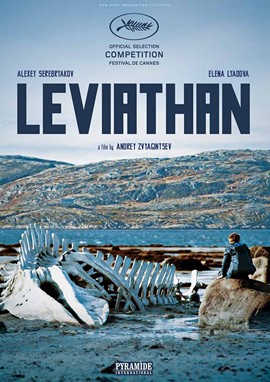
Leviathan

January 21, 2015

Leviathan_2014_poster

Leviathan, directed by Andrey Zvyagintsev, is a powerful film about corruption and decay in contemporary Russia.

Kolia (Alexei Serebriakov) lives in a run-down town on Russia’s Arctic coast with his wife, Lilya (Elena Lyadova), and his son, Roma (Sergey Pokhodaev). The property his house stands on is coveted by the town’s corrupt mayor, Vadim (Roman Madyanov), who connives to have it taken away from him. Kolia gets an old army fried of his, Dimitri (Vladimir Vdovichenkov), who is now a lawyer, to help him fight the mayor.

Zvyagintsev shows frequent shots of abandoned and decaying buildings. Leviathan was filmed in the town of Kirovsk, located near Murmansk. This town has been steadily losing population since the break-up of the Soviet Union. Indeed, one possible interpretation of the film’s title is that the characters are living in the decaying carcass of the Soviet Union. In one scene, some of the characters go target shooting. They use for their targets pictures of Soviet leaders.

It’s perhaps an indication of Maxim’s venality that instead of fixing up one of the abandoned buildings, he desires a property that is occupied. Maxim expresses open contempt for Kolia as well as for the other residents of the town. His closest confident is the local high priest. When at one point, Maxim considers giving in to Kolia, the priest tells him, “All power comes from God. As long as it suits Him, fear not.” This moment sets off the series of events that ultimately destroy Kolia.

In the final scene, we see the rich people of the town listening to the high priest give a sermon. Maxim leans over and whispers to his son, “God is watching you.” This is the intertwining of religion and corruption.

Leviathan is a great film.

Selma

January 18, 2015

Selma_poster

Selma, directed by Ava DuVernay based on a screenplay by Paul Webb and DuVernay, depicts the struggle for voting rights in Alabama, which resulted in the passage of the Voting Rights Act. Although the film is about historical events, it has a topicality due to the recent undermining of the Act and the efforts to disenfranchise black voters in some states.

The script is highly didactic. Almost every scene seems to drive home a particular point. Many of the scenes consist of two or three people talking, in which they present contrasting points of view. This can be effective at times, but it becomes a drawback in the scenes between Martin Luther King (David Oyelowo) and his wife, Coretta (Carmen Ejogo). The two of them sound so high-minded and professorial, that one wonders how they didn’t drive each other crazy.

Selma touches upon King’s complicated attitude towards violence. It makes clear that one of the aims of non-violent resistance was to provoke a violent response from authorities, in order to cause them to lose legitimacy in the eyes of the world. The film shows King struggling with the possible consequences of this tactic. In one scene, he calls off a march -much to the consternation of his supporters – because he fears that the police have set a trap.

One thing I liked about Selma is that it doesn’t try to prettify anything. J. Edgar Hoover and George Wallace are portrayed as being every bit as vile as they were. Some people have criticized the film’s portrayal of Lyndon Johnson (Tom Wilkinson), particularly its implication that Johnson got Hoover to try to blackmail King. However, we know that Johnson was not above playing dirty, and at the very least he was aware of Hoover’s hostility towards King, so one has to admit that this part of the film is at least plausible. (Fun fact: it was Robert Kennedy who ordered the FBI to spy on King and his associates.)

Selma is a timely film that everyone should see.

I Lost an Argument with Michele Bachmann

January 14, 2015

Gas Tax

I always find it hard to admit I was wrong about something. Back in October of 2011, I posted an article titled Alexander Cockburn Gets Peak Oil Theory Wrong. In it, I took a potshot at Michele Bachmann:

    That’s why it’s delusional for Michele Bachmann to claim that she can bring back $2 a gallon gasoline by allowing more oil drilling. Barring a total collapse of the world economy, we will probably never see $2 a gallon gasoline again.

In many parts of the US, the price of gasoline is now less that $2 a gallon. In my defense, let me say that I used the word “probably” in my assertion. I never claimed to be Nostradamus. Besides, it wasn’t more oil drilling in the US that brought about the drop in prices, but the fact that Saudi Arabia has maintained its oil production at the same level during a world-wide economic slowdown. What is more, low gasoline prices mean less economic incentive for off-shore oil drilling. So, Bachmann’s dream of turning America’s coastal waters into dead zones has been frustrated.

For now, anyway.

After Charlie Hebdo

January 11, 2015

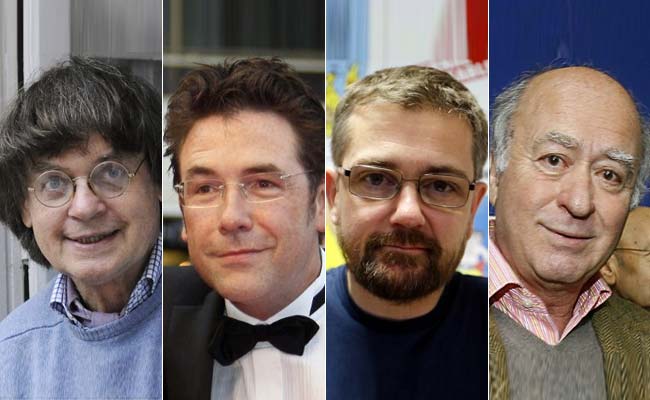
Charlie_Hebdo_cartoonists_AFP_650-bigstry

The men who carried out the attack on Charlie Hebdo are dead. The discussion we need to have at this point is how do we keep the political right from capitalizing on this tragic event. (This would be a more useful discussion than arguing about whether or not the cartoons in Charlie Hebdo were racist.) Already the right is on the march. The media mogul, Rupert Murdoch has tweeted:

    Maybe most Moslems peaceful, but until they recognize and destroy their growing jihadist cancer they must be held responsible.

So, 1.5 billion Muslims should be held responsible for the actions of three (maybe four) people. This is grandstanding, of course, but it shouldn’t be regarded as harmless or inconsequential. The idea of collective punishment has a strong emotional appeal for some people. And there are people who would really like to see the US invade another country, preferably a Muslim one.

And then there is the “liberal” “comedian”, Bill Maher, who recently announced that “tens of millions” of Muslims supported the Charlie Hebdo attack. As with many of his ideas, Maher pulled this out of his ass. Whether or not he realizes it, Maher is helping to recreate the atmosphere of fear and hysteria that preceded the invasion of Iraq. (The fact that Maher says that liberals have turned the US into a “pussy nation” perhaps indicates what his real intentions are.)

We must confront and condemn advocates of prejudice and drum-beaters for war.