Potiche

June 16, 2011

The wikipedia article on François Ozon, says he is “a French film director and screenwriter and [sic] whose films are usually characterized by sharp satirical wit and a freewheeling view on human sexuality.” In Potiche (Trophy Wife), Ozon’s latest film, there is some of the latter and only a little bit of the former.

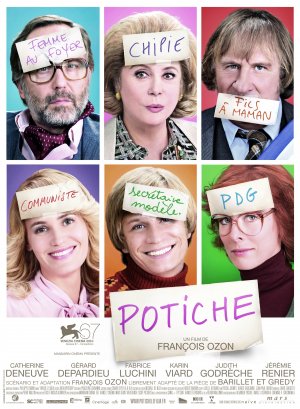
The time is the 1970’s. Suzanne (Catherine Deneuve) is the stay-at-home wife of Robert (Fabrice Luchini), who runs the umbrella factory that belonged to Suzanne’s father. Robert has affairs with other women, including with his secretary, Nadège (Karin Viard). When the workers at the factory go on strike, Robert assaults one of them. The workers retaliate by taking Robert hostage. Suzanne appeals to Maurice (Gérard Depardieu), a Communist member of Parliament who also happens to be Suzanne’s onetime lover, to intervene. He persuades the workers to release Robert, promising them there will negotiations to address their grievances. After his release, Robert suffers a heart attack. Suzanne, who has never worked before in her life, takes his place. She negotiates a new contract with the workers. She hires her children, Joëlle (Judith Godrèche) and Laurent (Jérémie Renier), to help her run the business. The company begins to prosper. Suzanne finds that she likes being a businesswoman. She begins seeing Maurice. When Robert returns from the hospital, he demands that Suzanne turn the business back over to him. Suzanne refuses, and she tells Robert that he should stay at home from now on. Meanwhile, Maurice becomes indignant when he learns that he was only one of several lovers that Suzanne had when she was young. He helps Robert in a scheme to take control of the business away from Suzanne. She retaliates by running for Maurice’s parliamentary seat.

Suzanne’s transition from trophy wife to businesswoman and then politician is apparently supposed to be seen as personal liberation. Yet her political campaign is inane. Her slogan is “Liberty Lights our Way”, which doesn’t really mean anything. We are never told what her positions are, or even if she has any. We see her visit a dairy farm, where she talks about how wonderful cheese is. In the final scene, she addresses her supporters after she has just won the election. She tells them they are her “children”. She then sings C’est beau la vie. The film ends with an overhead camera shot, with Suzanne looking upwards, surrounded by her supporters gazing adoringly at her. So, is this Ozon’s idea of feminism? The politician as Super Mom? For Ozon’s sake, I would like to believe that he is trying to be ironic here, but the cynical part of me tells me that he isn’t. After all, many liberals admire the vapid, self-promoting Arianna Huffington. What’s more the film gives the idea that there would be no problems with capitalism if we just had “good people” (most likely women) running things. If only the world were that simple.

Midnight in Paris

June 14, 2011

Instead of watching the Republicans debate, I found a better way to spend my time by going to see Woody Allen’s latest film. A Hollywood screenwriter, Gil Pender (Owen Wilson, who talks and even gestures like Woody Allen in this film), travels to Paris with his fiancée, Inez (Rachel McAdams), and with her uptight Republican parents (Kurt Fuller and Mimi Kennedy). There they run into Inez’s friends, Paul (Michael Sheen) and Carol (Nina Arianda). Since this is a Woody Allen movie, Paul turns out to be a pretentious pseudo-intellectual. Gil eventually gets weary of listening to Paul’s gaseous lectures, so he goes wandering off by himself and gets lost. When a clock strikes midnight, an antique car suddenly appears, and its occupants invite Gil to join them, which he does. Gil suddenly finds himself transported back to the Paris of the 1920’s, where he meets Scott and Zelda Fitzgerald, Hemingway, Gertrude Stein and other famous artists and writers from that era. Gil discovers that by going to the same spot every night at midnight, he can make these magical journeys into the past. During one trip, he meets a model, Adriana (Marion Cotillard), with whom he falls in love. Gil feels increasingly torn between his life in the present and his life in the 1920’s.

The famous people that Gil meets in the twenties all behave the way we imagine they would. Allen has the most fun with Hemingway (Corey Stoll), whose dialogue sounds like a parody of Hemingwayesque prose.

Midnight in Paris pokes fun at our tendency to romanticize the past. We try to escape the problems of our lives by imagining that the past was better. A very funny comedy.

13 Assassins

June 11, 2011

Takashi Miike is a prolific Japanese director whose work has acquired something of a cult following. I have previously only seen two of Miike’s films. The Happiness of the Katakuris is a musical comedy with grisly elements in it. Yatterman is a superhero fantasy with CGI effects, musical numbers, and cheesy low-budget sets and costumes. One thing the two films have in common is a very dark sense of humor. The comedic high point – or low point, if you will – in the first film comes when a 500-pound sumo wrestler suffers a fatal heart attack and crushes his underage girlfriend to death.

13 Assassins is a very different film from these two. For one thing, there’s not much humor in it – which is perhaps a good thing. There are no musical numbers – which is definitely a good thing. It is an example of what the Japanese call a jidaigeki, a historical film that (so far as I could tell) is very accurate in its period detail. It is reportedly based on a real incident.

In the early nineteenth century, the Shogun’s brother, Lord Naritsugu, is a depraved murderer and rapist. His sadistic crimes threaten to provoke a rebellion from the people. Lord Doi, a high government official, decides that Naritsugu must be assassinated before he tears the country apart. He calls upon a respected samurai, Shinzaemon (Kōji Yakusho) to carry out the deed. Shinzaemon recruits the best fighters he can find to help him. They hide out in a village, where they plan to ambush Naritsugu, who is traveling with a small army.

With its story about a small group of samurai fighting against a much larger force, 13 Assassins invites comparison with Seven Samurai. While this film is bloodier and more graphic than Kurosawa’s masterpiece, the characters are not as complex or as interesting as the ones in the latter. It also lacks Kurosawa’s narrative skill: the sword fighting scenes start to get a bit repetitive after a while. Still, if you just like an entertaining samurai film, you will surely enjoy this.

Winter in Wartime

June 6, 2011

Usually when an historical event recedes into the past, people tend to regard it with greater objectivity. However, as World War II recedes into the past, Americans seem less able to view it objectively. Instead, the media in recent years subject us to bombast about the “greatest generation ever”. When I was young, people read books like Catch-22 and Slaughterhouse-Five, two novels that took a distinctly unsentimental view of the war. Nowadays, people swoon over sentimental trash like Saving Private Ryan, in which Tom Hanks sacrifices his life, so Matt Damon can go home to his Mommy and Daddy. I think one reason for the difference is that many people in my generation had fathers or uncles who served in the war. (My father was at the Battle of Bulge.) I think that connection made the war seem more real to us than it does to young people today.

What set me to thinking about this lately is that I recently saw the Dutch film, Winter in Wartime, which was directed by Martin Koolhoven, based on a novel by Jan Terlouw. It takes place in a town in German-occupied Netherlands in January, 1945. Michiel (Martijn Lakemeier) has mixed feelings towards his father (Raymond Thiry), the town’s mayor, who tries to maintain a neutral stance towards the the Germans. He prefers his uncle, Ben (Yorick van Wageningen) who has ties to the resistance. When a British pilot, Jack (Jamie Campbell Bower) is shot down, a local member of the Resistance helps him hide from the Germans. Michiel soon learns of this, and he becomes obsessed with the idea of helping Jack escape back to Britain, even though this endangers himself and his family. In addition to being a war story, this is also a coming-of-age story, as Michiel’s illusions are eventually shattered.

As World War II adventure movies go, this one is pretty good, although there are some things in it that I found hard to believe. When, for example, the resistance hide Jack, they put him in an underground hideout that is accessed by a wooden trap door with branches glued to it. It clearly looks like a trap door, yet we’re supposed to believe that the Germans, who are combing the woods looking for Jack, fail to see it. Maybe they just have bad eyesight.

This film was released in the Netherlands in 2008. It was a huge hit in that country. Yet this film wasn’t released in the U.S. until spring of this year. Why is that? Could it be that nobody thought that people in this country would want to see a World War II movie in which the good guys are not Americans? This brings me back to the point I made at the beginning. It seems to me there is a reluctance in the media to admit that most of the war did not involve the “greatest generation ever”.

Jack Kevorkian (1928-2011)

June 4, 2011

Jack Kevorkian has died – from natural causes, ironically enough. Kevorkian was an advocate of assisted suicide. The media dubbed him “Dr. Death”. (I think it would have been more clever if they had called him “Suicide Jack”.) I have always had deeply mixed feelings about Kevorkian. On the one hand, I technically agree with the argument he was making. On the other hand, I was put off by the, shall we say, enthusiastic manner in which Kevorkian made his argument. (Derek Humphrey, of the Hemlock Society, called Kevorkian “a zealot”.) Kevorkian promoted himself in such a way that at one point he began to seem like a McDonald’s of death. Still, he was attacked in a manner that struck me as hypocritical. Kevorkian spent eight years in prison for second-degree murder, yet in what way was he any worse than, say, the state of Texas, which has executed hundreds of people, including at least one innocent person?

I actually began to pine for Kevorkian’s voice when the Republicans cynically tried to whip up public hysteria over the Terri Schiavo case. This whole episode deeply offended me. I remember when I went to see my father during the final weeks of his life, I found a notice taped to his refrigerator door, which was signed by my father and by his physician. It was an instruction to emergency medical technicians that under no circumstances was my father to be resuscitated. My father was continually ill during the last ten years of his life. He spent his final months flat on his back. There are times when the most humane thing to do is let go.

Why Some People Don’t Trust Doctors

June 1, 2011

I went to get my annual check-up the other day. The doctor asked me if anything was bothering me. I told her that I feel tired much of the time, even though I get eight hours of sleep every night. She said she thought I might have sleep apnea, so she would refer me to a clinic where I could get tested for that. She then asked me if I had any other problems. I said that my back has been feeling stiff for the past few weeks. She said she would give me something that would help with that. She then went out of the room for several minutes. When she came back she handed me a referral for the clinic. She then handed me a piece of paper with a prescription written on it. She said it was for a muscle relaxant. I was to take a pill twice a day. She then told me that I shouldn’t drive or operate heavy machinery while I was taking this medication, because it will make me drowsy. Now, I had just complained to this doctor about feeling tired, and here she was giving me a prescription for something that will make me drowsy. Metaphorically speaking, this seemed to me like pouring gasoline on a fire. Moreover, I, like most people in this country, don’t live near public transportation, so I pretty much have to drive everywhere. When I protested to her, she merely said I would have to stay home while I was taking it. So, I was supposed to remain at home all day and take naps, just so my back wouldn’t be stiff. I would rather have a stiff back and get things done.

This is an example, I think, of why some people don’t trust doctors. She apparently felt obligated to prescribe me something, even if it was something that I didn’t want or need. I think it is because of this sort of thing that people are attracted to dubious “alternative” medicines and treatments.

American: The Bill Hicks Story

May 31, 2011

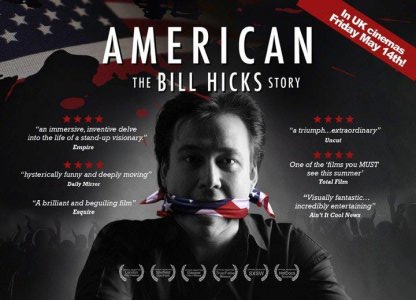
Matt Harlock and Paul Thomas have produced this documentary about Bill Hicks, who died of pancreatic cancer at the age of 32. We learn about Hick’s childhood, growing up in a Southern Baptist family that moved around the South before settling in Texas. Hicks began doing stand-up as a teenager in Houston. His act developed with remarkable speed, and within a few years he was performing at the Comedy Store in Los Angeles. At around this time, he began experimenting with drugs and drinking heavily. He became notorious for getting drunk before going on stage, an absolute no-no in stand-up comedy. When clubs started banning him, he sobered up and quit drinking.

In his act, Hicks began to deal increasingly with controversial issues such as religion, patriotism and militarism. He was an outspoken critic of the first Gulf War. Posing as a journalist, he witnessed the Waco massacre. He saw a Bradley tank open fire on the Branch Davidian compound. He criticized the media for not reporting this.

Hicks’s death was a great tragedy. He could use someone like him today.

You can find samples of Hicks’s comedy here.

Gil Scott-Heron (1949-2011)

May 29, 2011

The Greatest Movie Ever Sold

May 28, 2011

I was working for Coca-Cola when the first Harry Potter movie came out. Coca-Cola had a tie-in agreement with the producers of the film. They had big cardboard displays up in supermarkets with pictures of the films’ characters and the words, “Taste the Magic”. The idea was, apparently, that just by drinking a bottle of Coca-Cola, you could experience the magical world of Harry Potter. Nobody seemed bothered by the obvious absurdity of this. It seems that people have become so used to the ludicrous claims of advertising, that nobody even thinks twice about them any more.

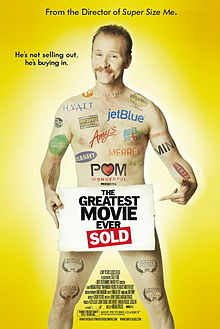
Morgan Spurlock set out to make a film that would be funded entirely by corporate sponsorship. His aim was to explore the effects that advertising have on our world. There are scenes of advertising executives sitting around with straight faces spouting bullshit terms like “brand collateral” and “brand personality”. Some film directors make candid admissions about the use of product placement in films. (An advertising executive boasts to Spurlock about how he once forced a movie studio to re-write a scene that showed Alka-Selzer in an unflattering light.) There’s a creepy segment about “neuromarketing”. People are placed in MRI machines, and their brain activity is studied as they watch various commercials. Spurlock visits a cash-strapped school in Broward County, Florida. The school administrators are desperately trying to raise funds by placing advertisements around the school grounds. (Spurlock gives them a list of his sponsors. They seem very grateful.)

There’s an interesting segment in which Spurlock visits Sao Paulo, Brazil, where the city government has banned outdoor advertisements. Interestingly, nobody seems to miss the old billboards. I couldn’t help but contrast this with the scenes in New York’s Times Square, with its clutter of distracting advertisements. Would our lives be any poorer without this visual noise? I don’t think so.

Throughout the film, Spurlock keeps his tongue firmly planted in his cheek. He hints to us that he may have sold out. (He prefers to say “bought in”.) In one scene, he even tries to get Ralph Nader to buy shoes from one of his sponsors. I found this film amusing to watch, but it lacked any sense of urgency. Spurlock failed to make me feel that I should care about this topic.

Get Out of Jail Free!

May 24, 2011

Just when you were convinced that the Supreme Court is completely worthless, they surprise you. These mighty poo-bahs have ruled that because of inhumane overcrowding in California’s prisons, that state must release 33,000 prisoners. Well, that should be easy! They can start by releasing people who were sentenced under California’s unconstitutional (and insane) “Three Strikes” law. They can then begin releasing people convicted of non-violent drug offenses. Problem solved.

Of course, Gov. Jerry Brown (Alec Cockburn has a man-crush on him) won’t let that happen. He’s talking about transferring prisoners to county jails. Of course, we can’t let reason and logic (or the Constitution) get in the way of locking people up, now can we?